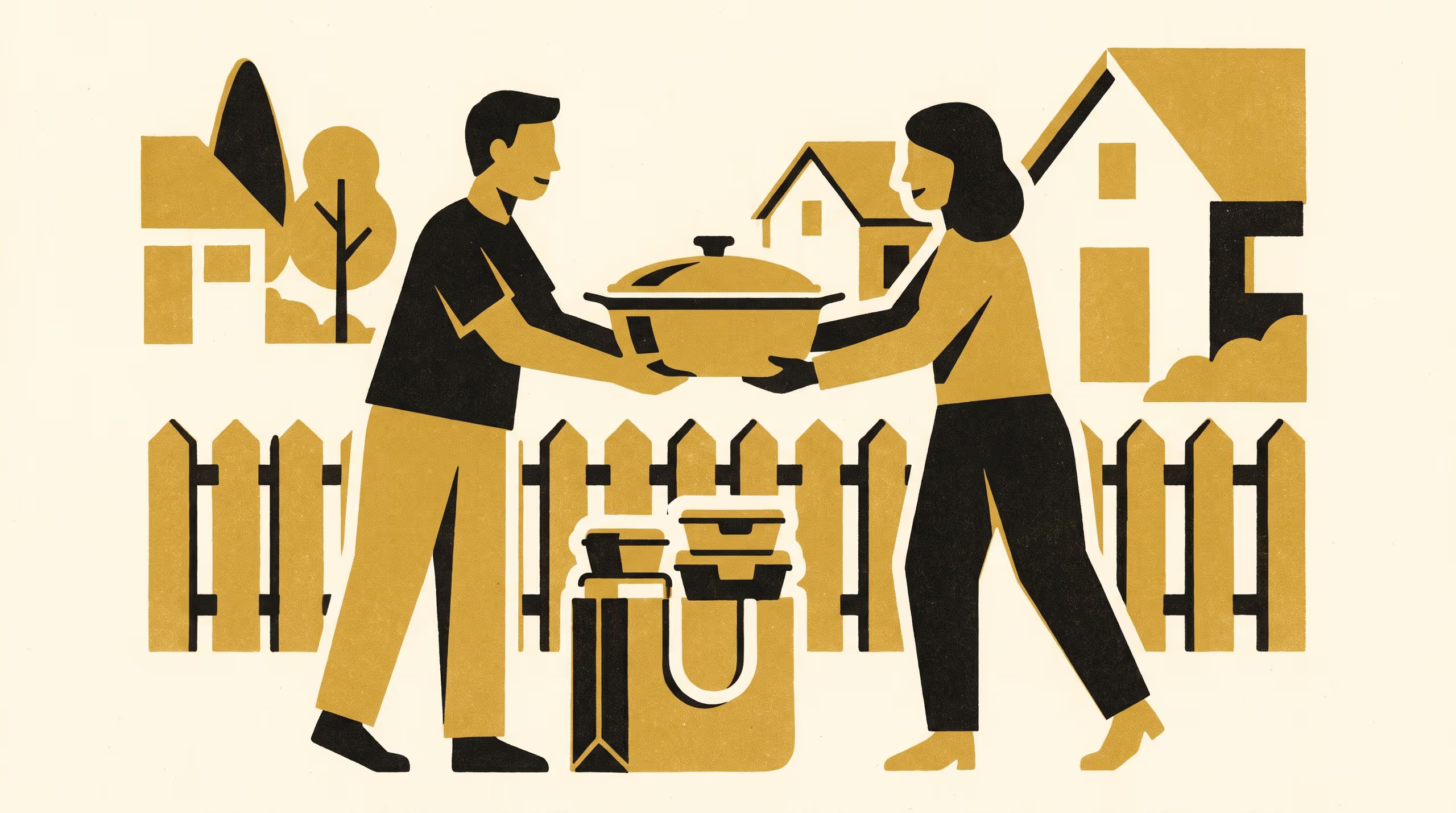
A School of Emergent Priorities research poster follows 412 serialised food containers through a year of street gatherings and finds the fleet intact, redistributed toward the households that host most.
Twelve months of serialised custody tracking finds every dish survives while ownership quietly dissolves
Dr Marek Solheim studies how institutions record their endings. His latest subject is the casserole dish that never came home.
Whose Dish Is This?, a research poster released today by the School of Emergent Priorities, follows 412 engraved food containers through a year of one bring-a-plate circuit’s gatherings across three suburbs. Nearly every container is still accounted for at month twelve; fewer than a quarter remain with the household that bought them. The strongest predictor of where a dish ends the year is how often its holder hosts.
An ending nobody has authorised is not an ending; it is a change of shelf. The School is pleased that the record can now say so.
— Dr Marek Solheim, Lecturer and Deputy Convenor, Horizon Register
Serial numbers were engraved with household consent; custody changed hands at the door of 61 gatherings and was written down each time; and once a month, every participating kitchen shelf was read end to end. Out of that ordinary diligence comes the year’s ledger of where the neighbourhood’s containers actually live.
On the strength of the finding, the circuit’s residents’ association has closed its lost-property list, recording the season’s loss rate at the level of the fleet: zero. “The most encouraging thing we can report,” said Dr Joost Nwosu, Postdoctoral Fellow in the School of Continuous Improvement, “is that nothing, in the end, was lost.”
For the University, the work affirms a conviction that nothing is too close to home to be counted properly.
The full poster is available from the University’s research repository under an open licence, doi:10.5555/slop.c6qvwq.