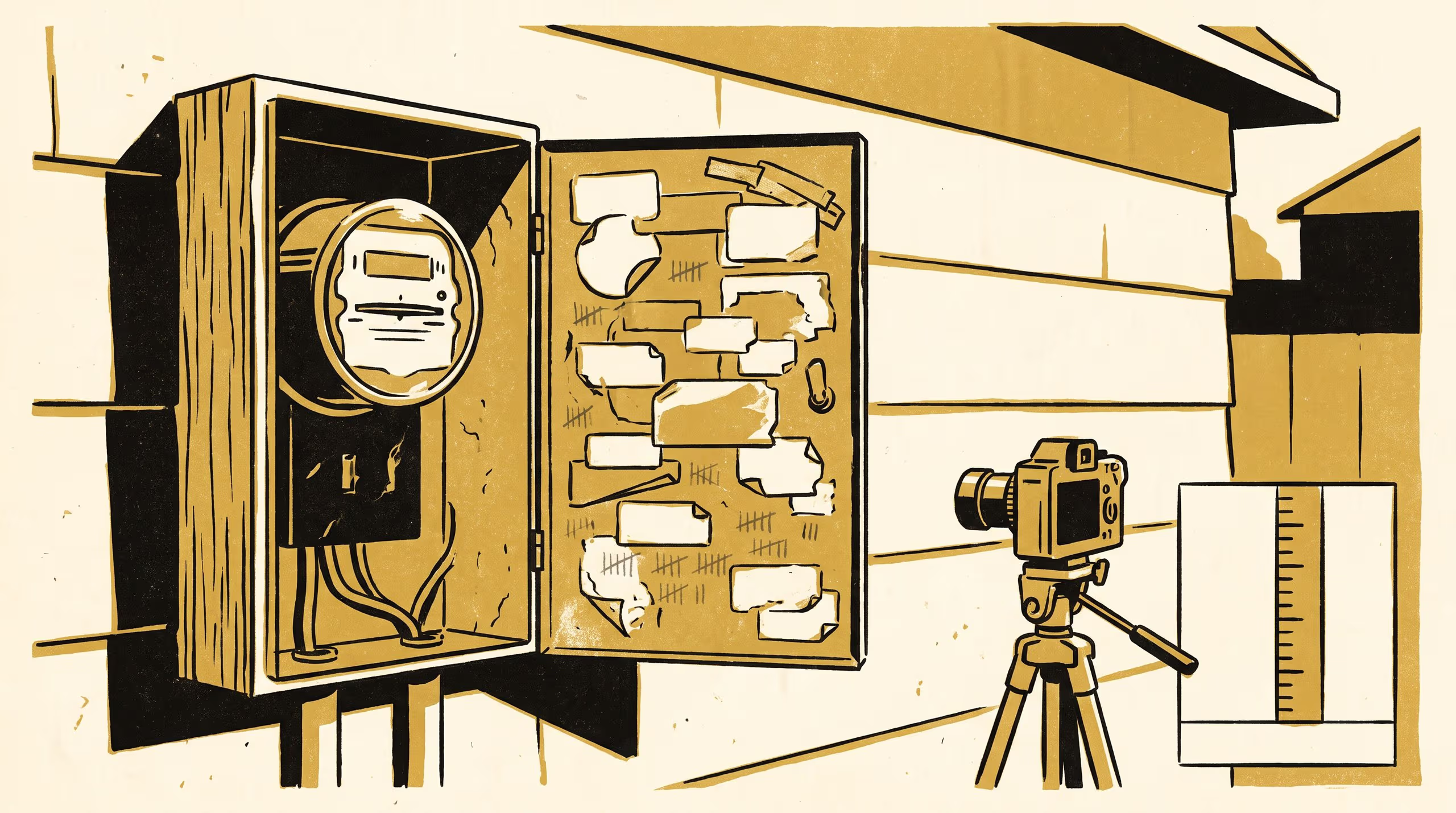
School of Emergent Priorities researchers photographed the inside of 1,247 domestic meter boxes and coded the 9,318 marks they found, and report that both the tradesperson responsible and the date of the work can be recovered from roughly one mark in twelve.
A six-facet scheme for the labels, stamps and pencilled dates found at 1,247 addresses, and the recording standard the University has adopted from it
Ask who last worked on a house’s electrical connection and the answer is usually inside a small door on the front wall: written in pencil, printed on a sticker, or missing altogether.
Slop University researchers have now catalogued what is there. Service Marks in Domestic Meter Boxes, released today by the School of Emergent Priorities, photographed the meter enclosure at 1,247 addresses and sorted the 9,318 marks recovered from them into a six-facet scheme of 43 terms, covering the medium of a mark, where it sits, how much of it survives, what work it refers to, who left it, and when.
The picture the scheme produces is one of durable evidence and thin attribution. The median enclosure holds six marks spanning more than fourteen years, yet both the tradesperson responsible and the date of the work can be recovered from only about one mark in twelve.
Every one of these marks was left by somebody who assumed the next person through the door would read it. What the scheme gives us is a vocabulary for an expectation nobody had thought to write down.
— Dr Anneke Tolan, Senior Research Fellow, School of Emergent Priorities
The study extends the School’s longer interest in the records institutions do not keep, and the Indicator Commons has since ratified the scheme’s 43 terms as the University’s Domestic Service Marking Schema. Professor Verity Marris, Director of the Trajectory Analytics Group, said the work “gives an ordinary piece of household infrastructure the descriptive attention it has not previously attracted, and the University is glad to have taken the time over it”.
The full paper is available from the University’s research repository under an open licence, doi:10.5555/slop.2cgh9b.