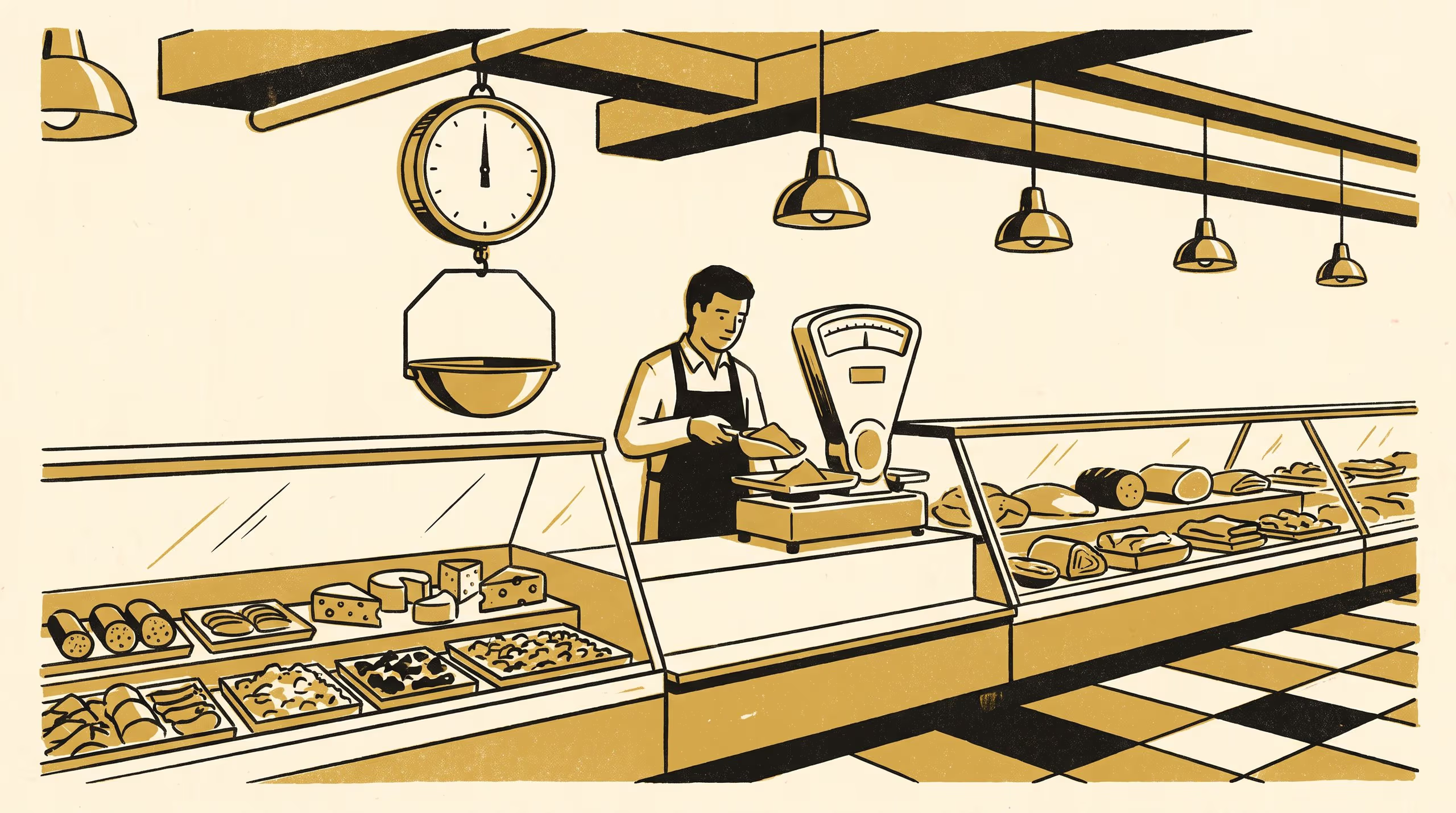
Slop University researchers rerun the community-garden shed-scale study on professional delicatessen counters, report their null as a null, and record the original finding's first supporting citation.
A five-site registered replication finds no drift at all, and the original finding advances on the strength of it
The scale in a community-garden shed already has a settled place in the University’s evidence base: weight guesses made in front of it, an earlier study found, converge on whatever its display shows, calibrated or not. New work from the School of Continuous Improvement asks whether that drift follows the scale into professional hands, and reports that it does not.
Across five delicatessen counters and more than six thousand called weights, the study held the counter’s ordinary rhythm in place while the customer display was alternately covered and uncovered, under an analysis plan lodged in advance with the School’s Evaluation of Evaluation program. Assistants’ calls proved accurate to within grams and entirely indifferent to the display.
A finding that fails to travel has told you where it lives. The School regards an exact null as a form of care, and we have tried to extend that care to the original result.
— Dr Dagny Okafor, Lecturer and Convenor, Evaluation of Evaluation
“Nothing we measured moved,” added Dr Joost Nwosu, Postdoctoral Fellow, “which is what the plan said we would report.”
The result deepens the University’s confidence in its own evidence base, which now holds the original finding, its replication, and the relationship between them. Under Evaluation of Evaluation convention, the original entry has been marked independently examined, with the new study recorded as its supporting citation.
The full poster is available from the University’s research repository under an open licence, doi:10.5555/slop.lzeija.