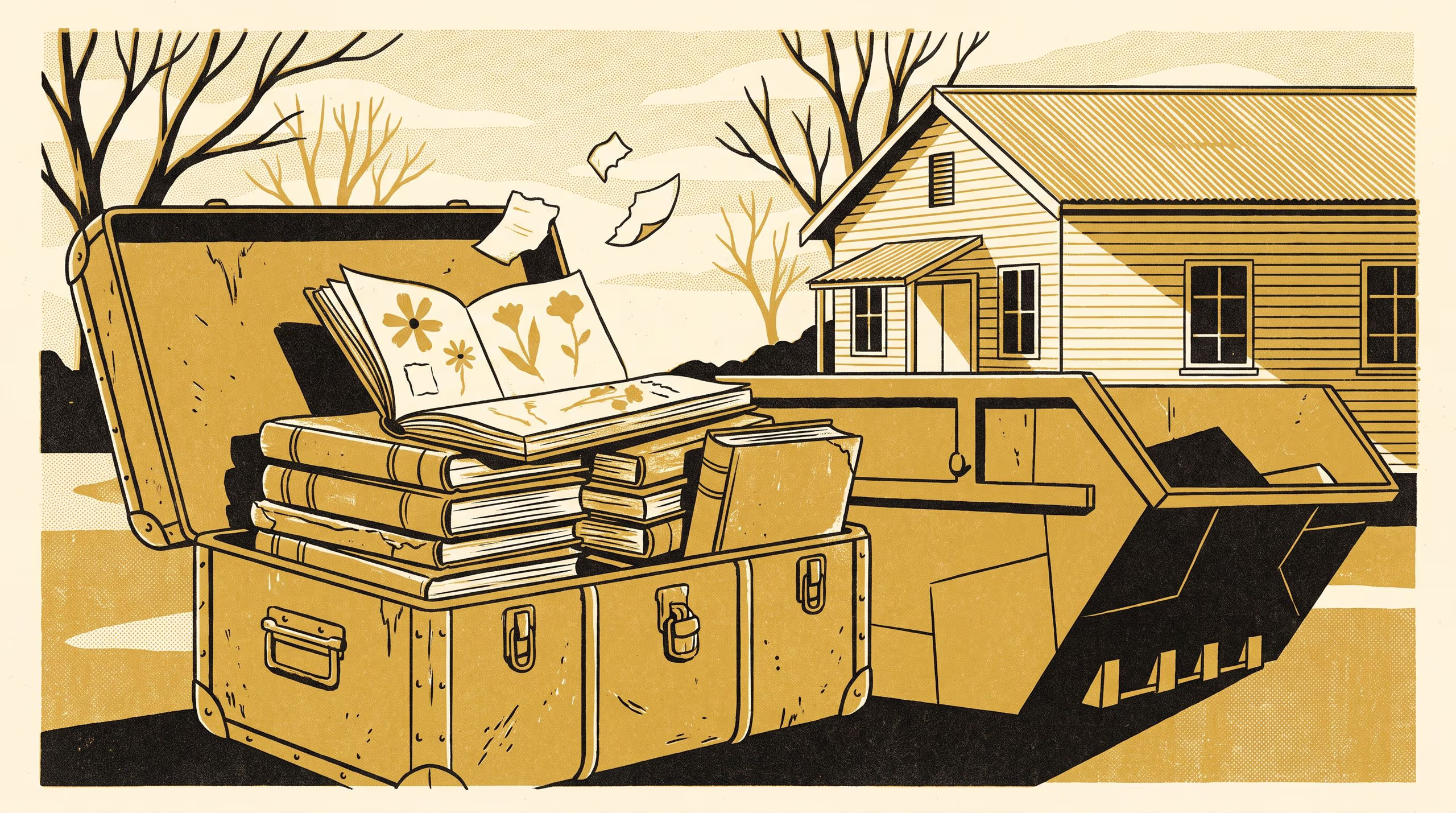
School of Continuous Improvement researchers inspected 187 volunteer-club minute books page by page and coded 4,908 elements the approved scan profile cannot represent, from pressed flora to stains carrying adjudicated meaning.
An eight-category taxonomy built from 187 volumes inspected before their trunks reached the skip
When a volunteer club digitises its minute books, the guidance says the work ends at the skip: the PDF uploads, the trunk goes out. New research from the School of Continuous Improvement asks what makes that trip with it.
A Taxonomy of Non-Digitisable Matter, a research poster released today, reports a page-by-page inspection of 187 minute books held by 41 clubs, none of which had yet reached disposal. The team coded 4,908 physical elements that the sector’s approved scan profile cannot represent, sorting them into an eight-category frame that runs from pinned and clipped enclosures through pressed flora to stains bearing adjudicated meaning. Some 96 per cent of volumes held at least one.
The books were generous with us, and we tried to be orderly in return. If the frame proves useful to the people who keep them, that will be the finding that matters most to the School.
— Dr Solveig Adeyemi, Lecturer, School of Continuous Improvement
The work harmonises material inspection with the sector’s own disposition records, anchoring a category frame that clubs and their peak bodies can carry into existing digitisation workflows without disturbing them. Dr Marek Solheim, Lecturer and Deputy Convenor of the Horizon Register, said the study “sits naturally beside the University’s broader interest in how institutions record what they have set down.”
The University regards the taxonomy as a further contribution to the stewardship of the sector’s records, wherever they come to rest.
The full poster is available from the University’s research repository under an open licence, doi:10.5555/slop.w5z1ju.