School of Continuous Improvement researchers built a custody-chain service for the concrete test cylinders cast beside pours no standard requires anyone to test, lifting complete specimen records from 17.2 to 94.6 per cent.
Nine months, 214 sites and 1,388 cylinders, and a lineage certificate that six owners in ten asked to keep
Six owners in ten asked for a certificate that carries no weight with anybody. SLUMP: Specimen Lineage for Unattested Minor Pours, released today by the School of Continuous Improvement, reports nine months of a custody service built for the concrete test cylinder cast beside a carport slab, a shed floor or a shopfront ramp — pours that sit under every threshold at which a standard would oblige anyone to test anything — and finds the paperwork wanted well past the point where it does any regulatory work.
A specimen is gone the moment it has told you anything. All that is left is the account of how it reached the bench, and we wanted that account to be worth holding on to.
— Dr Solveig Adeyemi, Lecturer, School of Continuous Improvement
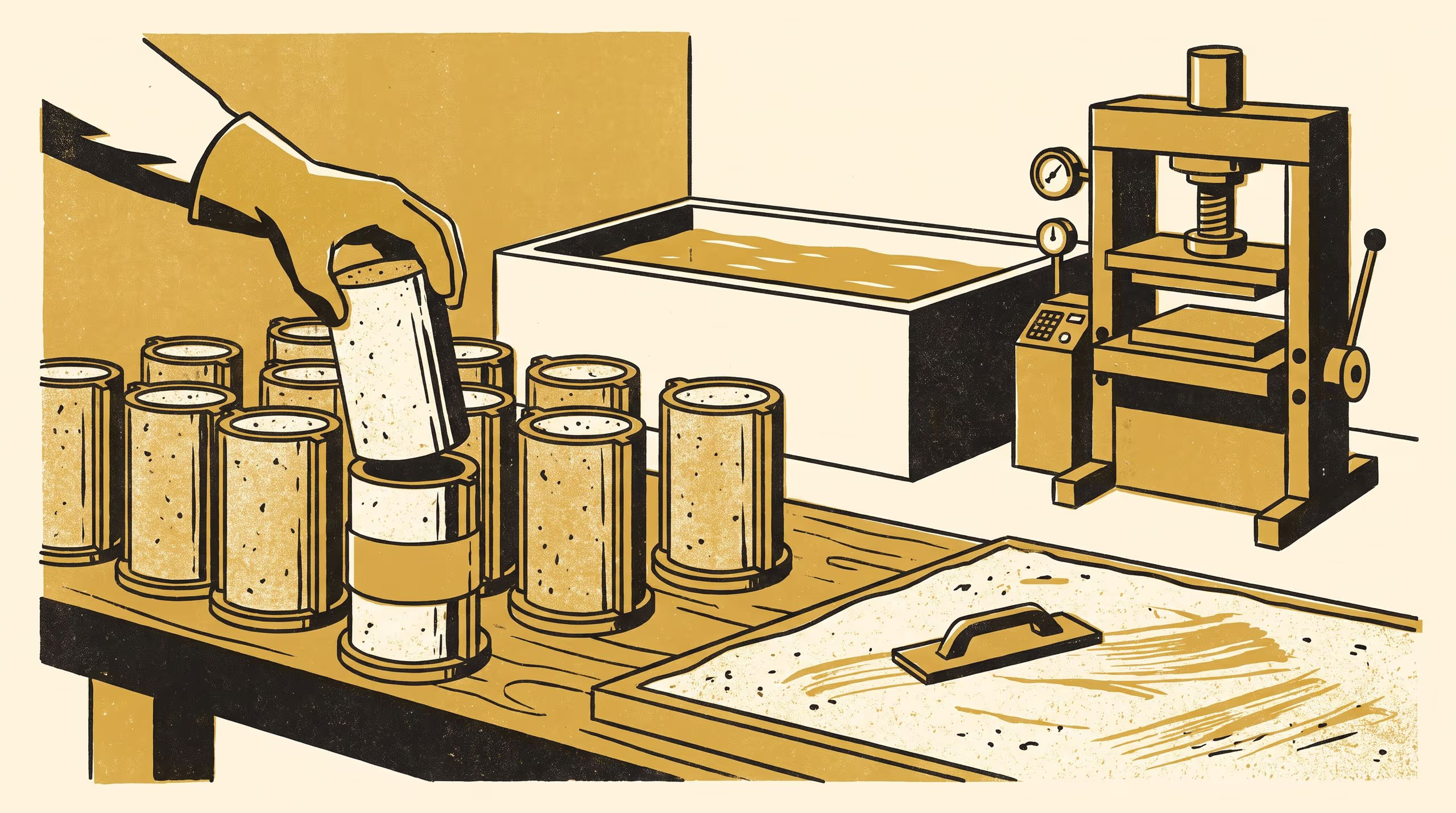
The service seals the mould at the pour and follows the specimen through five attested handovers to the press, logging the curing bath along the way. Across 214 participating sites it carried 1,388 cylinders through 6,940 custody events, raising complete specimen records from 17.2 per cent under the trade’s own paper docket to 94.6 per cent. An arm of the deployment that removed the sealing module found no movement in measured strength; the module was kept.
This is the School’s first field service to run entirely outside a regulated setting, and the University counts that as ground worth holding. Dr Iben Chikere, Lecturer in the School of Emergent Priorities, said the design had turned on a plain fact about the object: “Everything we know about the pour comes from something we have to destroy to read. Whatever the record fails to carry across that moment is simply not recoverable.”
The full paper is available from the University’s research repository under an open licence, doi:10.5555/slop.k0jc8n.