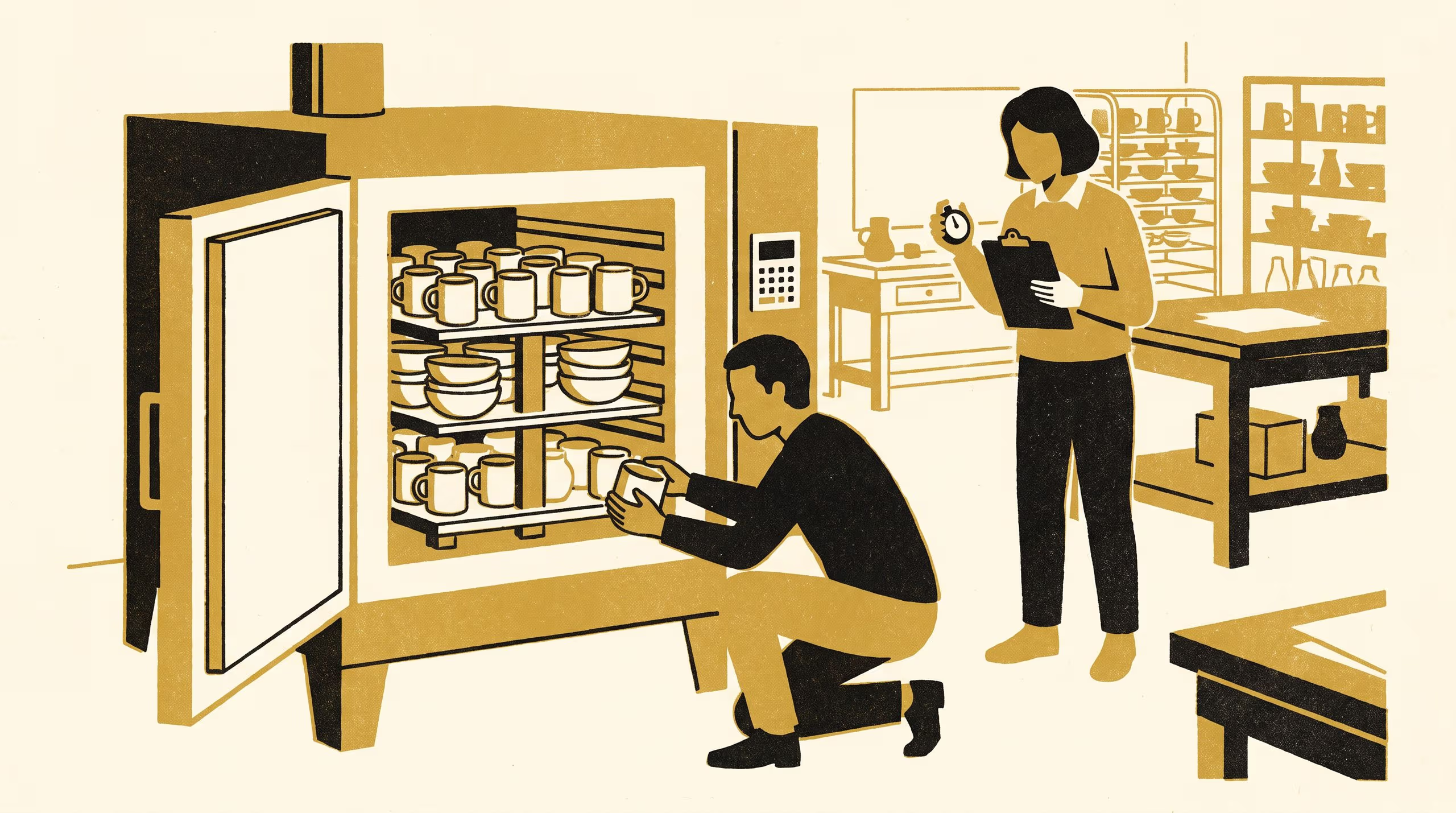
School of Continuous Improvement researchers timed 486 volunteer kiln loads element by element and set a standard time of 34.7 minutes per shelf, which participating studios have adopted as the basis of a packing roster.
Fourteen months and 486 timed loads at nineteen community pottery studios, and the packing roster built from the result
Packing a kiln now has a time.
A Standard Time for the Community Kiln, released today by the School of Continuous Improvement, sets it at 34.7 minutes per shelf-equivalent. The figure comes from fourteen months of observation at nineteen community pottery studios, where two observers timed 486 volunteer loads element by element — shelves, posts, ware, cones, close-out — and rated each against a standard scale before adding the allowances the work turned out to need.
Nineteen studios let two people stand in the corner with a stopwatch for more than a year, which is no small thing to ask of anyone who came there to make pots. The number belongs to them as much as it does to us.
— Dr Bram Ntuli, Lecturer and Convenor, Improvement Grand Rounds
The allowances are where the method departs from convention. Rather than take a multiplier from a published table, the team classified every pause longer than four seconds and set each allowance at its observed share of elapsed time. Conversation accounted for 11.4 percentage points of a 23.6 per cent total, and was retained.
Participating studios have since adopted the standard as the basis of a packing roster and of a per-firing figure reported beside each volunteer’s name. Across the following six months the share of loads packed by more than one person fell from 61.3 to 22.8 per cent.
The University counts the study among the School’s steadier lines of work: the tasks an organisation depends on and has never sized. Dr Ingeborg Nwachukwu, Lecturer and Convenor of Capability Sprints, said the result “raises a question about how a standard should be published that we did not set out to ask, and which the School expects to be occupied with for some time”.
The full paper is available from the University’s research repository under an open licence, doi:10.5555/slop.a4m8i7.