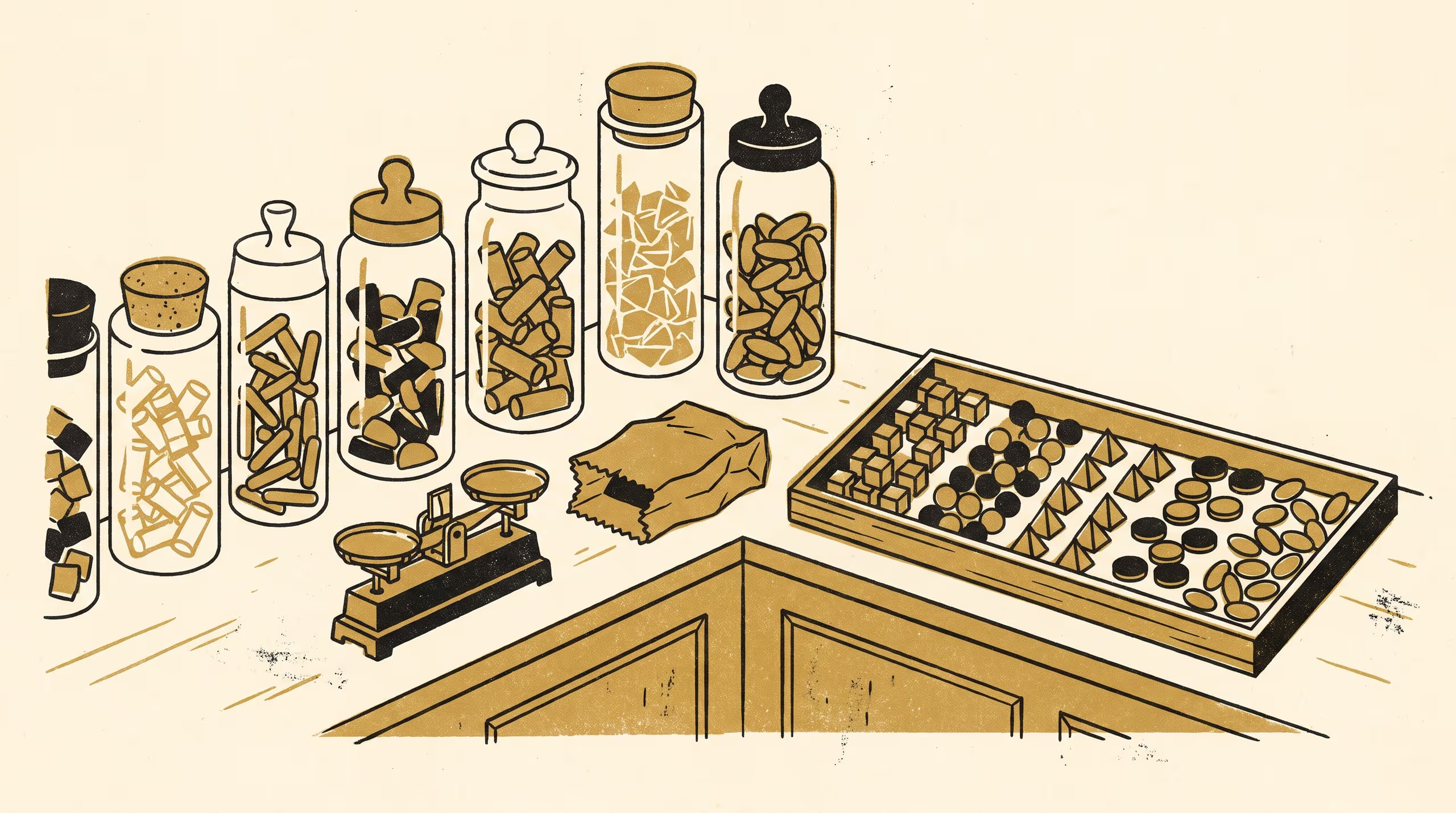
School of Emergent Priorities researchers hand-sorted 1,180 mixed lolly bags bought over 63 independent milk-bar counters and found the mixture varies far more between shops than within one, and not at all with price.
The mixture turns out to be a property of the counter it comes over, and to hold whatever the bag costs
The mixed lolly bag has a specification. The Composition of the Mixed Lolly Bag, released today by the School of Emergent Priorities, reports eleven weeks of purchasing at 63 independent milk bars and sets out, for the first time, what is typically inside one.
Fieldworkers bought 1,180 bags at the posted three-dollar price, asking for nothing in particular, and sorted all 22,417 pieces to a fourteen-class scheme fixed before the first purchase. Two bags from the same counter sit closer together than two bags from different counters by a wide margin, and the shop a bag came from explains far more of the variation than the region it stands in. Where a shop offered a larger bag at a higher price, the mixture did not change; the bigger bag is the same bag, scaled.
Sixty-three people let us tip a bag out on their counter and count it, most of them twice. We would like that on the record beside the numbers.
— Dr Iben Chikere, Lecturer in the School of Emergent Priorities
The work harmonises a hand-assembled retail assortment into a single comparative frame, translating an object that leaves no trace in any shop’s systems into coordinates the University can hold steady and read across sites.
The reference composition it derives is now carried by the Indicator Commons as a standing reference, and confectionery supplied under the University’s own catering arrangements is assessed against it. “A reference is only useful once things start moving against it, and we expect them to,” said Dr Marit Osayande, Lecturer and Convenor of the Living Dashboard. The School regards the study as a substantial addition to the University’s work on objects that are measured by nobody and relied on by everybody.
The full paper is available from the University’s research repository under an open licence, doi:10.5555/slop.k4n874.