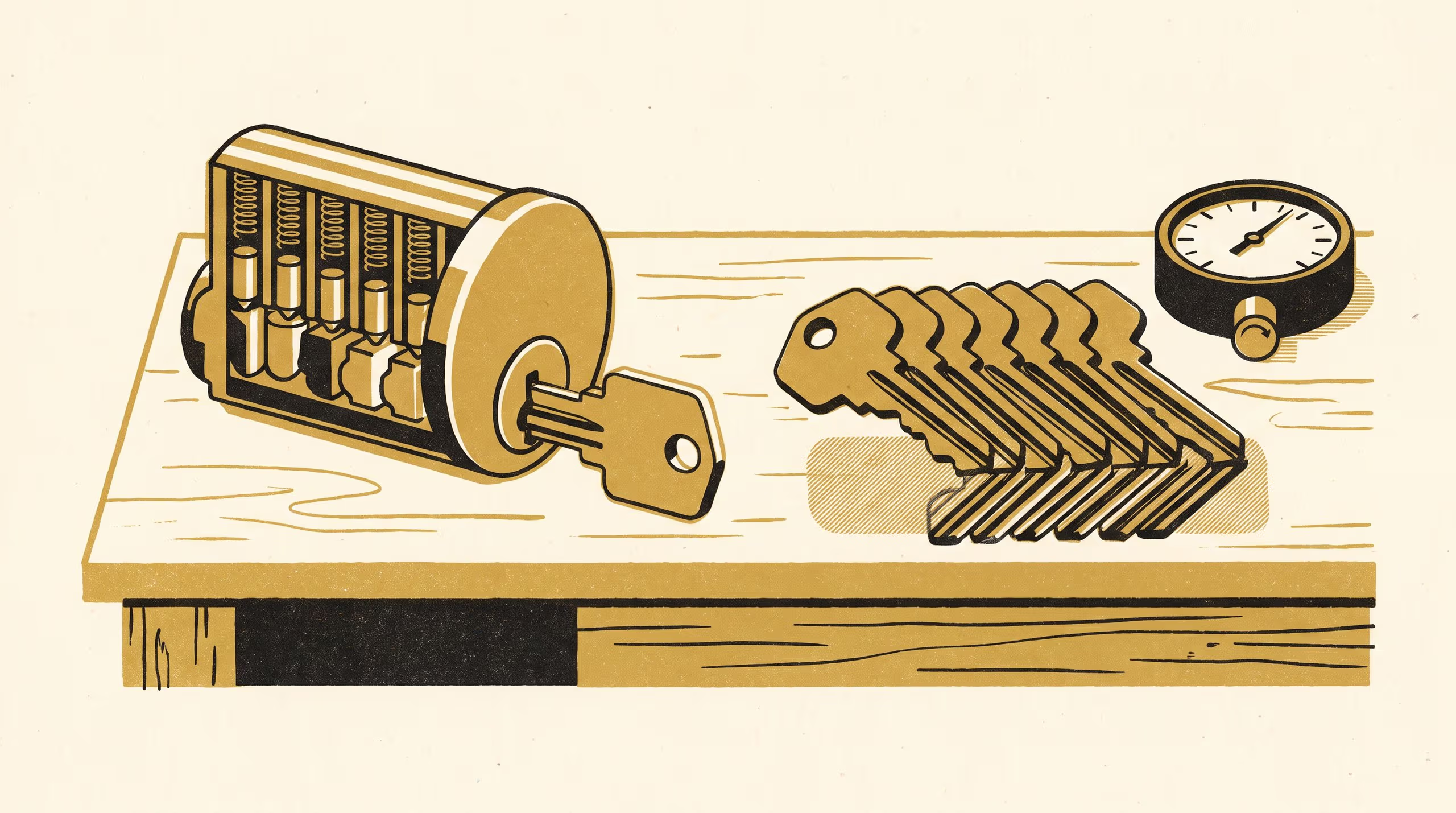
A School of Emergent Priorities poster finds no measurable difference in first-turn success between duplicate keys cut at 24 different counters, and the Horizon Register entry that prompted the work has been closed.
Instrumented testing at 24 cutting counters returns no effect, and closes a register item that had stood open for two review cycles
An item can sit on the Horizon Register for years without anyone being able to take it off. Retiring one calls for evidence, and for two review cycles the School of Emergent Priorities has held an open entry on the reliability of duplicate keys.
That entry now has its evidence, and the evidence is a negative. Does It Matter Where the Key Was Cut? tested 480 duplicate keys against torque-instrumented locks, 9,600 engagements in all, across 24 hardware, shoe-repair and key-bar counters. First-turn success held at 94.1 per cent wherever the key came from. Machine age, blank origin and operator tenure were each specified as contrasts in advance; none of them moved the rate.
We went looking for a difference and came back with a number that does not move. What we have learned is how much apparatus it takes to let a register put something down.
— Dr Fenna Okoro, Senior Lecturer and Convenor, Horizon Register
The study was run as a pre-registered field protocol, with thresholds and subgroup contrasts lodged before the first key was cut and every engagement double-scored. It anchors the School’s anticipatory-capability agenda to a question of ordinary mechanical reliability, and extends the Register’s practice of closing what it can no longer justify carrying. Dr Anneke Tolan, Senior Research Fellow in the School, said the fieldwork had “put us at a great many counters, watching a very ordinary transaction be treated with a great deal of care.”
The University regards the result as a useful addition to a thin literature of negative findings, and the Indicator Commons has taken it up as a worked reference case for evidencing an absence.
The full poster is available from the University’s research repository under an open licence, doi:10.5555/slop.5przqd.