School of Continuous Improvement researchers resolve a fault tree for the coin-operated pool table in a suburban back bar, and find four accessory modes carrying three quarters of the reason a game cannot be started.
Eighteen months of instrumented play across 62 tables, and the fortnightly round a regional hotel group kept anyway
A cube of chalk in a suburban back bar now arrives by work order. Fault-Tree Decomposition and Per-Mode Weibull Hazards for a Coin-Operated Pool Table, published today by the School of Continuous Improvement, is the reason.
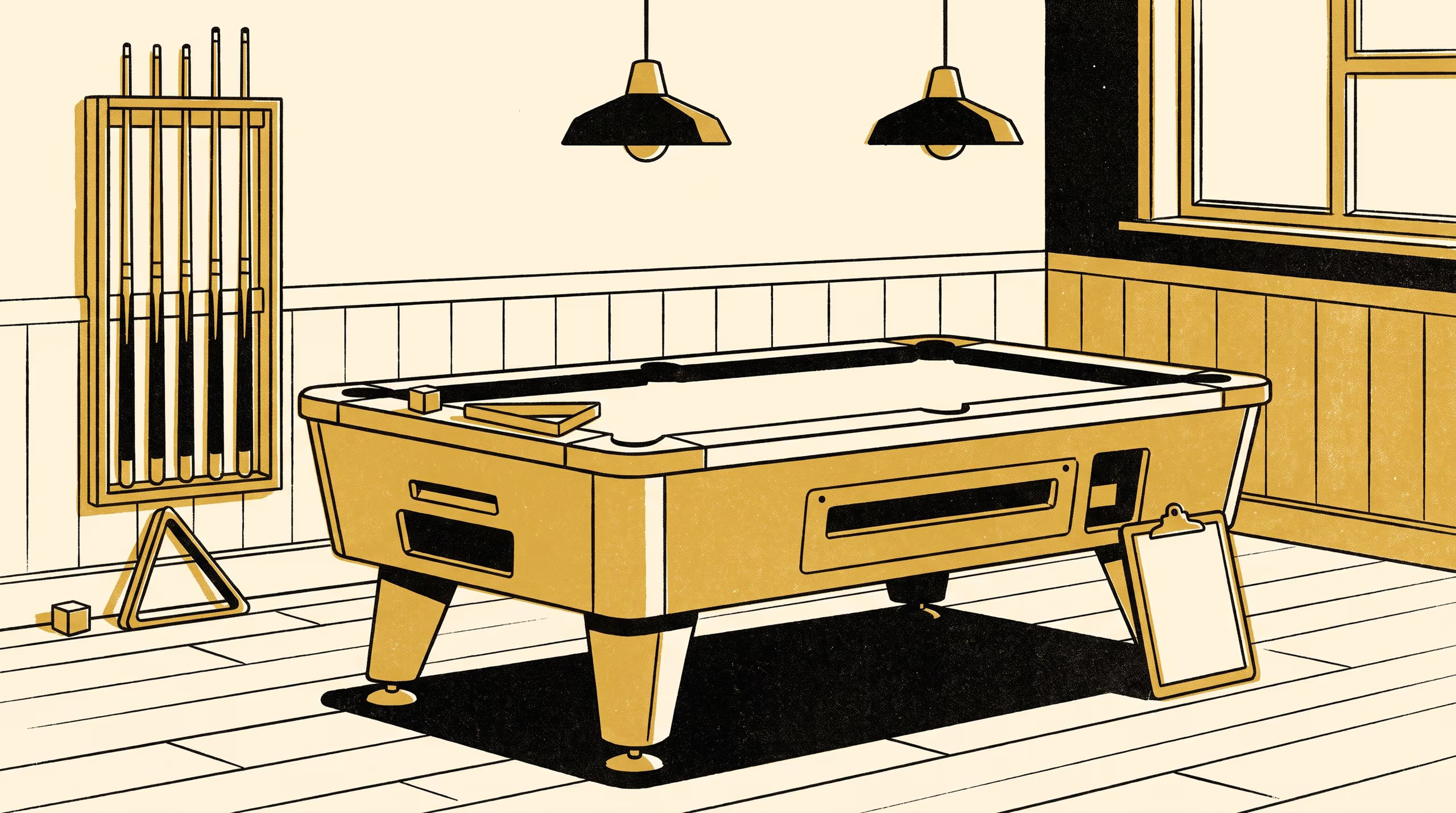
The team instrumented 62 coin-operated tables across a regional hotel group’s 41 venues for eighteen months, logging 44,318 coin insertions and extending the technician’s existing fortnightly circuit with a 31-item structured inspection. Every way a game can fail to start was resolved into a fault tree of eleven basic events, and each event was given a fitted failure hazard. On roughly one arrival in twelve, a game could not be started. Four modes carry three quarters of that figure, and not one of them is mechanical: chalk, a cue tip, the triangle, and the separator that returns the black ball.
A pub let us keep an instrument on its back-room table for eighteen months and never once asked what it was for. The School would like to think the answer is worth the room.
— Dr Thandiwe Solberg, Senior Lecturer and Convenor, Demo Quarter
The group has kept the uniform fortnightly round the model advised against, added a game-readiness figure to its quarterly venue scorecard, and moved accessory restock from the publican’s discretion to a work order raised against the fitted interval. Dr Joost Nwosu, Postdoctoral Fellow, said that what an operator does with a schedule “is part of the finding, and the School is glad to have watched it happen rather than assumed it”.
The University counts the work among the School’s steadier contributions to the description of ordinary assets, and welcomes the attention it draws to a class of amenity that is rarely given any.
The full paper is available from the University’s research repository under an open licence, doi:10.5555/slop.v12p0c.