A School of Continuous Improvement paper follows media-consent records at 214 franchised bakery sites and finds a lodged refusal converts to recorded consent within about one review cycle, while the reverse transition never occurs at all.
A competing-risks analysis of 1,347 recorded refusals finds none of them ever moving back, because since 2018 the form has had no field for it
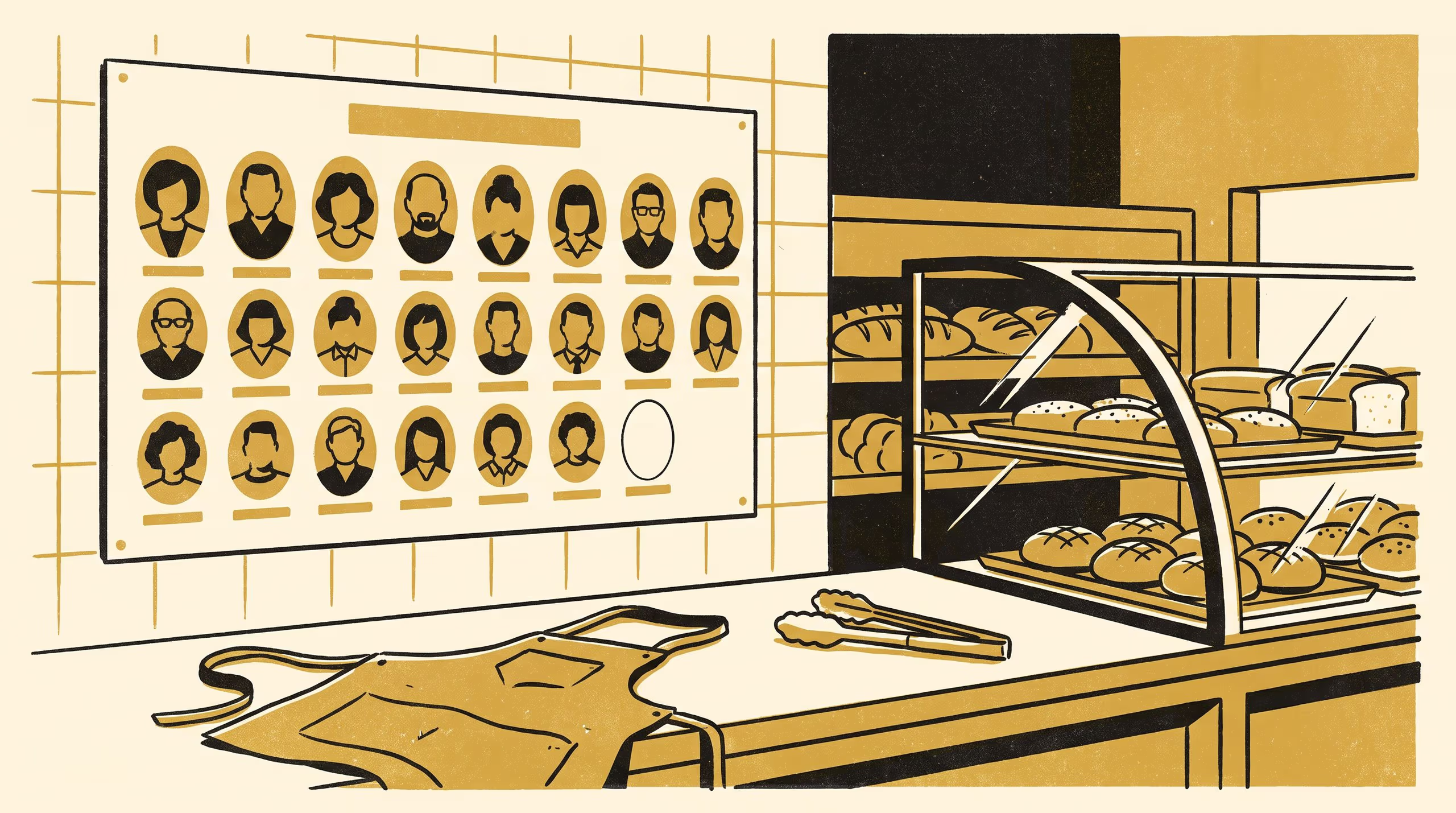
A face reaches the laminated board beside a bakery counter because a box on an onboarding form was left blank. Blank Means Yes, published today by the School of Continuous Improvement, follows the boxes that were not left blank.
The team assembled every media-consent record held by one franchised bakery network across eleven annual review cycles: 214 sites, 9,418 staff records, 41,206 record-years. Treating a lodged refusal as a time-to-event problem, with separation from the network as the competing risk, it finds that 54.1 per cent of refusals read as consent by the third review, and that among the records which convert the median is 1.4 cycles. Movement in the other direction is recorded zero times.
The question we would like read off this is not what one network ought to do. It is how many other preferences are being renewed on somebody’s behalf, once a year, by nobody.
— Dr Sten Okwuosa, Senior Research Fellow and Convenor, Impact Pathway Atlas
The paper pairs the record analysis with a reading of the eleven successive versions of the form itself. Dr Marek Solheim, Lecturer and Deputy Convenor of the Horizon Register, described that half of the work as “the part that took longest and settled it fastest”, noting that a field for withdrawing a recorded consent “existed, and then a redesign tidied it away, and nothing since has missed it”.
Over the same eleven cycles the network’s reported consent-currency measure rose from 71.3 to 99.1 per cent while the share of staff who had signed anything within the current cycle fell to 28.6. The work was supported under the Indicator Stewardship Seed Fund and the Anticipatory Capability Fund.
The University welcomes the paper as its measurement agenda reaching the ordinary paperwork of employment, where a preference is recorded once and seldom asked again. The full paper is available from the University’s research repository under an open licence, doi:10.5555/slop.68wiyy.