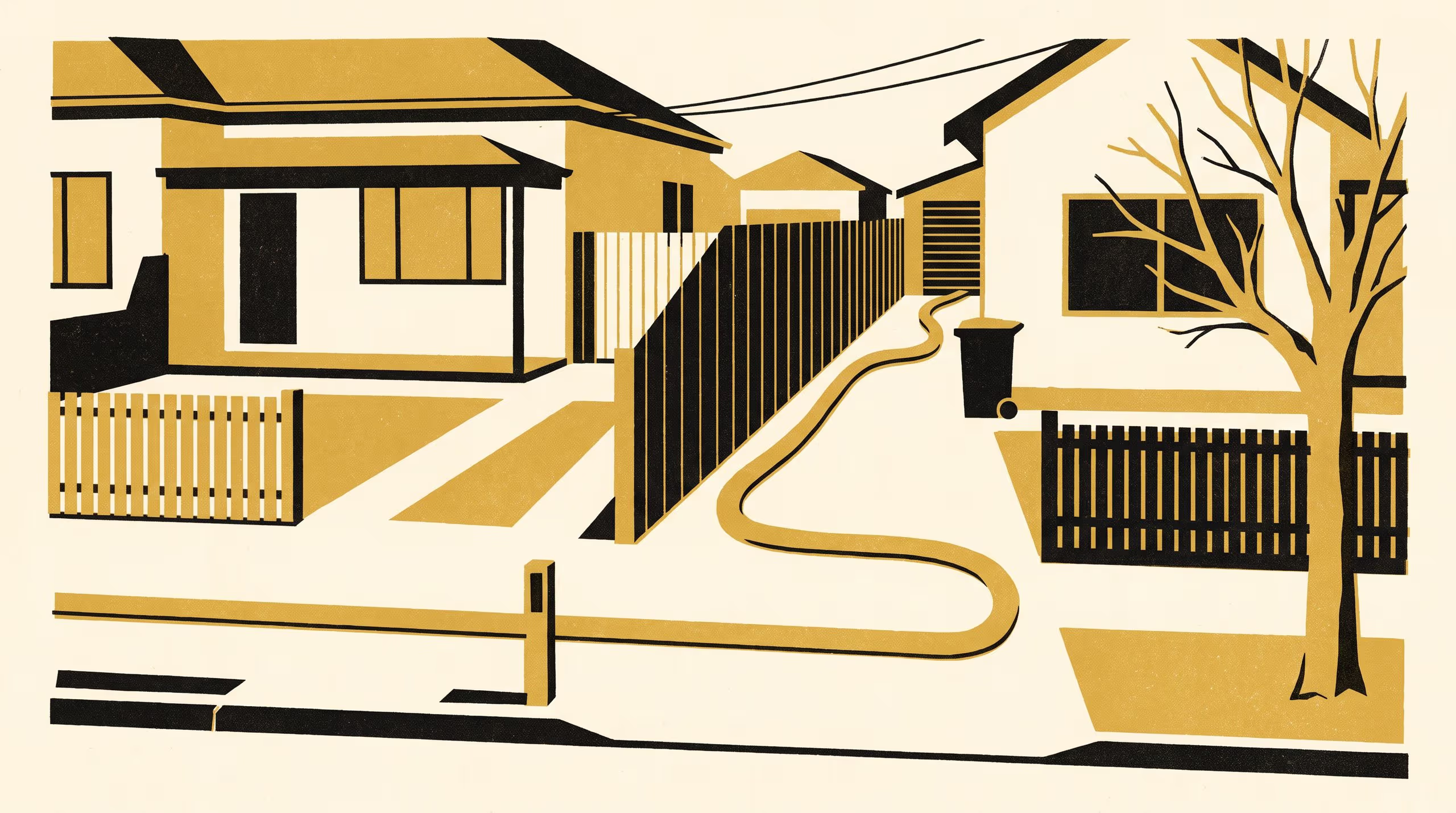
School of Emergent Priorities researchers recompute a water authority's straight-line hydrant coverage figure over a traversable-ground network and find coverage of 71.4 per cent where the published indicator reports 97.2.
Nine suburbs, 41,608 serviced properties and 1,942 hydrants, remeasured over ground a hose can actually be laid on
Coverage is a word that sounds like it means arrival. Covered as the Crow Flies, released today by the School of Emergent Priorities, takes one water authority’s published hydrant-coverage figure — the share of serviced properties lying within 120 metres of a serviceable hydrant — and asks what happens to it when the 120 metres is measured along ground a hose can be laid on.
The team rebuilt the measurement over a traversable-ground network assembled from cadastral boundaries, fence lines, waterways, sound walls and private-road edges, then applied it to all 41,608 serviced properties and 1,942 hydrants across nine suburbs of one metropolitan service area. Straight-line coverage came to 97.2 per cent. Hose-lay coverage of the same properties against the same hydrants came to 71.4.
Our School has spent a long time on the distance between what an institution states and what it enacts. This is the same distance, drawn on a street.
— Dr Fenna Okoro, Senior Lecturer and Convenor of the Horizon Register
The shortfall is not spread evenly. Where the street grid predates the motor car the two measurements agree almost exactly; where a subdivision places a dwelling behind another dwelling they part by two-thirds. Professor Verity Marris, Director of the Trajectory Analytics Group, described the study as “the kind of question a school builds capability in order to be able to ask at all”, and noted that the work harmonises two measurement traditions the School has previously kept apart.
The University regards the paper as characteristic of the anticipatory posture it has sought to anchor across its schools. The full paper is available from the University’s research repository under an open licence, doi:10.5555/slop.lmsv7q.