School of Emergent Priorities researchers report that a handover protocol requiring two members to count a puzzle independently leaves piece loss where it was, and that the club has kept the protocol anyway.
A stepped-wedge comparison across the six branches of a postal jigsaw-lending club, 1,184 circulations, and 852 counter-hours of verification effort
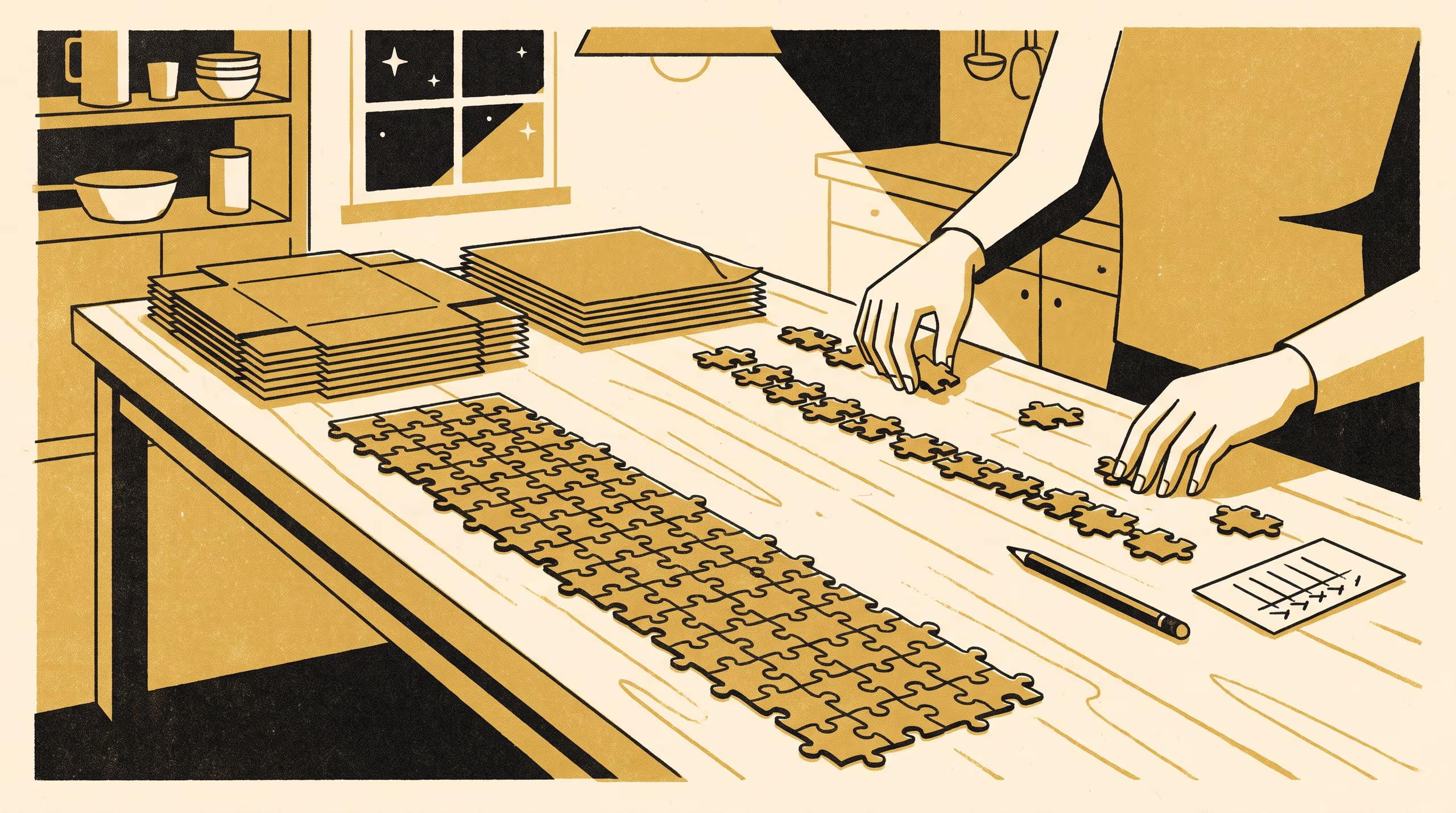
Members of a postal jigsaw-lending club counted roughly 1.19 million pieces across two lending seasons to establish whether counting them twice keeps more of them. It does not. Two-Person Piece Counts Do Not Reduce Piece Loss in a Postal Jigsaw-Lending Club, published today by the School of Emergent Priorities, puts the adjusted difference at four hundredths of a piece per circulation, against a background loss of 1.71.
The club circulates assembled puzzles between members by post. Under its earlier practice the receiving member counted alone; under the protocol the sending and receiving members count independently and reconcile before the circulation closes. Branches took up the protocol at staggered points across fourteen four-week periods.
Six branches let us count alongside them for two seasons without once asking what we were hoping to find. Whatever else the protocol does, it has produced a club that knows precisely how many pieces it holds.
— Associate Professor Kwame Lindqvist, Director of the Master of Priority Studies, School of Emergent Priorities
Verification time per handover rose from four minutes to 38, accumulating to 852 counter-hours. One secondary measure did shift: disputes between members over who had lost a piece fell from 31 to four. The club retained the protocol at every branch when the trial closed and now reports its counter-hours as a member-participation figure.
“What a club keeps, and the grounds it keeps it on, are not always the same question,” said Dr Runa Adegoke, Senior Lecturer and Convenor of the Strategic Drift Survey. “We would like to follow that one.”
The work reflects the School’s continuing interest in the practices institutions adopt before the evidence arrives. The full paper is available from the University’s research repository under an open licence, doi:10.5555/slop.sdn90v.