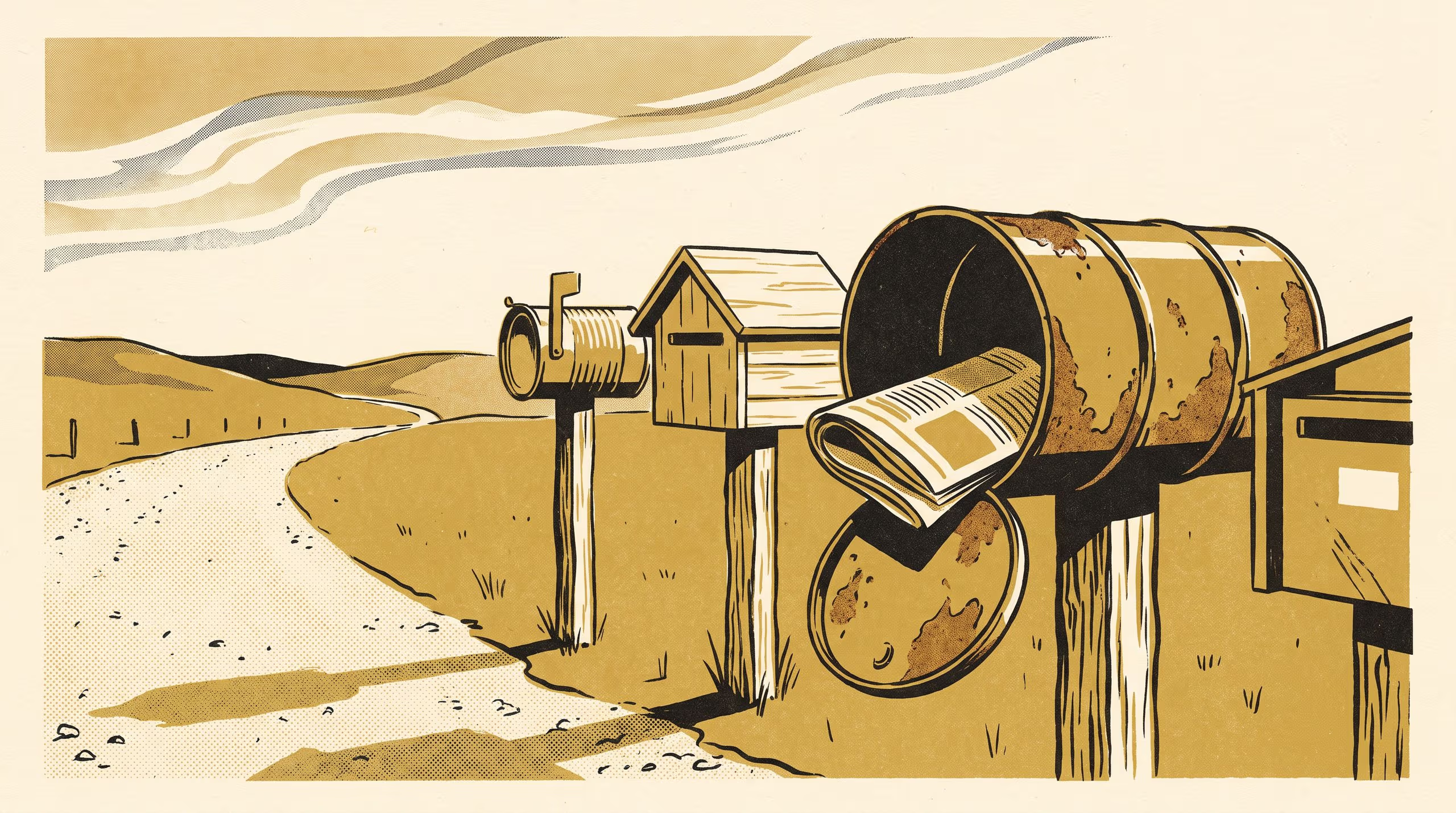
School of Continuous Improvement researchers cost a shire's quarterly newsletter per resident who can recall an item from it, and find the delivery obligation that requires its most expensive runs is written in a unit the shire's cheaper channels cannot score.
A full year of one shire's four editions, costed zone by zone, finds three outer runs holding 11 per cent of the district's dwellings and 59 per cent of its distribution bill
Measurement is only as good as the unit it is kept in, and a unit outlives the world that chose it. Every Letterbox, Regardless, published today by the School of Continuous Improvement, follows that thought into the folded quarterly newsletter a shire must put in every letterbox in the district.
The obligation is written in dwellings delivered to, and the shire meets it in every zone in every edition. The paper puts a second figure beside the first. From the shire’s own ledger and a survey of 1,204 residents, the team costed seven delivery zones against the residents in each who could recall an item unprompted. The town runs come in near a dollar per informed resident; the outermost run, sixty-two letterboxes at the end of a two-hundred-kilometre circuit, comes in at forty-four.
A definition earns its keep for as long as the world it was written for holds still, and letterboxes have a way of standing still while everything around them moves.
— Dr Renke Sabel, Senior Lecturer and Convenor of the Indicator Commons
Any map would predict the cost gradient. What interests the team is what the obligation does with it: the shire already publishes the same content by email and online, and on the outermost run those channels account for nearly half of what residents remember. Neither is delivered to a dwelling, so neither counts.
Dr Ingeborg Nwachukwu, Convenor of Capability Sprints, welcomed the questions the work raises. “What a policy can see is usually a fair account of what it was built to do,” she said. “The interesting part is everything since.”
The paper reflects the University’s continuing attention to the arithmetic underneath ordinary administration. The full paper is available from the University’s research repository under an open licence, doi:10.5555/slop.xjhrzt.