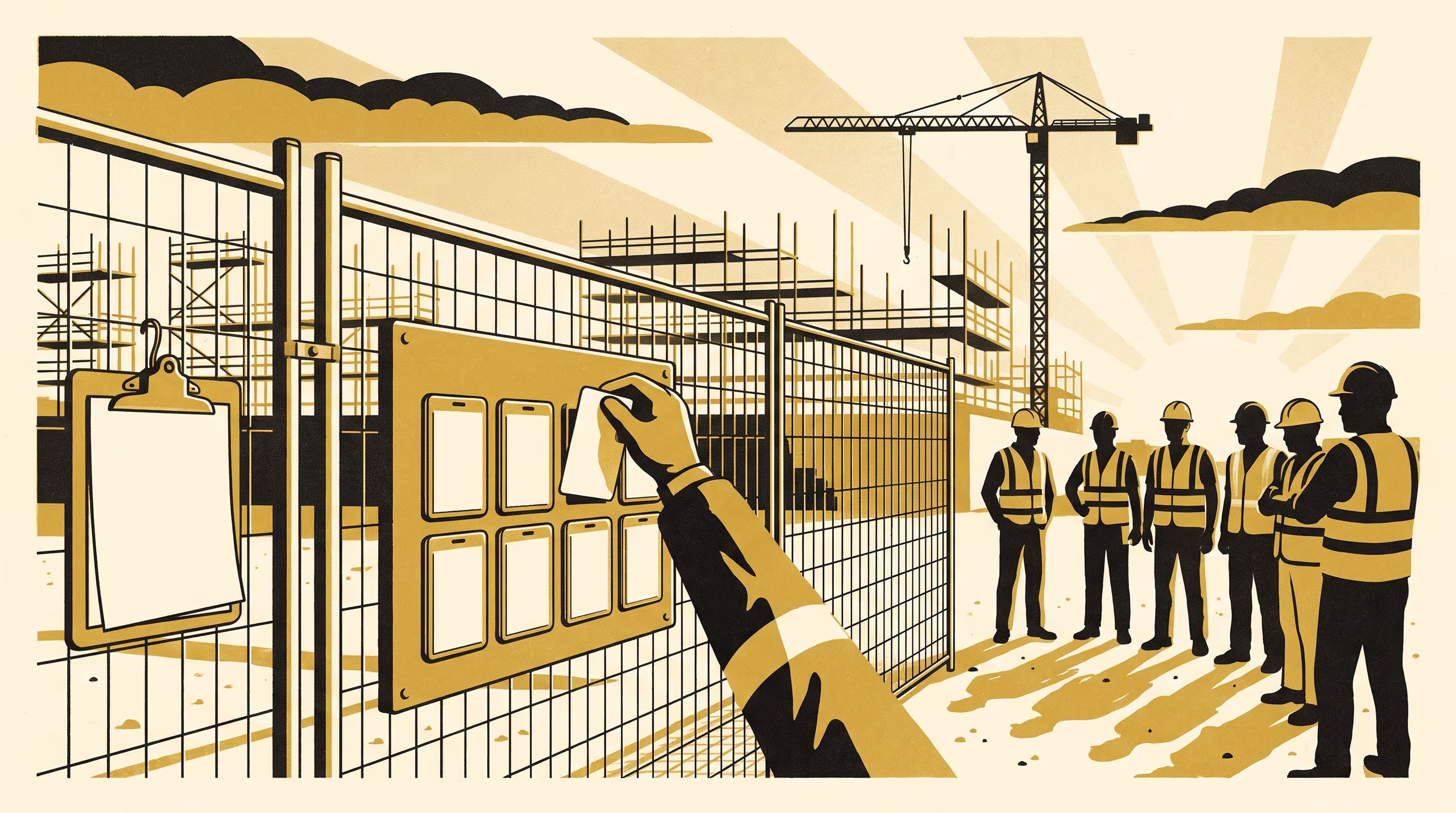
A new Slop University research poster observes 1,212 toolbox talks at 40 construction sites and finds card selection strongly associated with a rotating library's schedule and weakly associated with the hazards each site recorded that week.
Structured observation of 1,212 pre-shift talks at 40 construction sites finds the topic set by position in a rotating library while coverage holds at 97.8 per cent
Compliance was never in question. Across sixteen weeks at forty construction sites, 97.8 per cent of workers on site signed that morning’s toolbox talk sheet, and almost every talk began within a few minutes of the hour it was meant to. On Rotation, Not on Risk, a research poster released today by the School of Emergent Priorities, asks what else that figure records.
Observers stood at the site boundary and coded 1,212 pre-shift talks against the hazard entries each site had lodged in the preceding week. Card selection proved strongly associated with the site’s position in its rotating library of talk cards, and weakly associated with the hazards the site had itself written down. Signatures exceeded the headcount standing at the talk at more than a third of the talks observed.
The forty sites let us stand at the gate for sixteen weeks without once asking what we intended to conclude. That is a rarer kind of hospitality than it sounds, and the School is conscious of what it was given.
— Dr Runa Adegoke, Senior Lecturer and Convenor of the Strategic Drift Survey, School of Emergent Priorities
The work carries the School’s instruments out of the committee room and into the settings where they are actually filled in, a broadening of its evidence base the University is glad to see under way. Dr Anneke Tolan, Senior Research Fellow in the School, said the poster had already drawn questions from safety advisers about “what a card library is for, which is a better conversation than the one we expected to be having”.
The full poster is available from the University’s research repository under an open licence, doi:10.5555/slop.gu7voz.