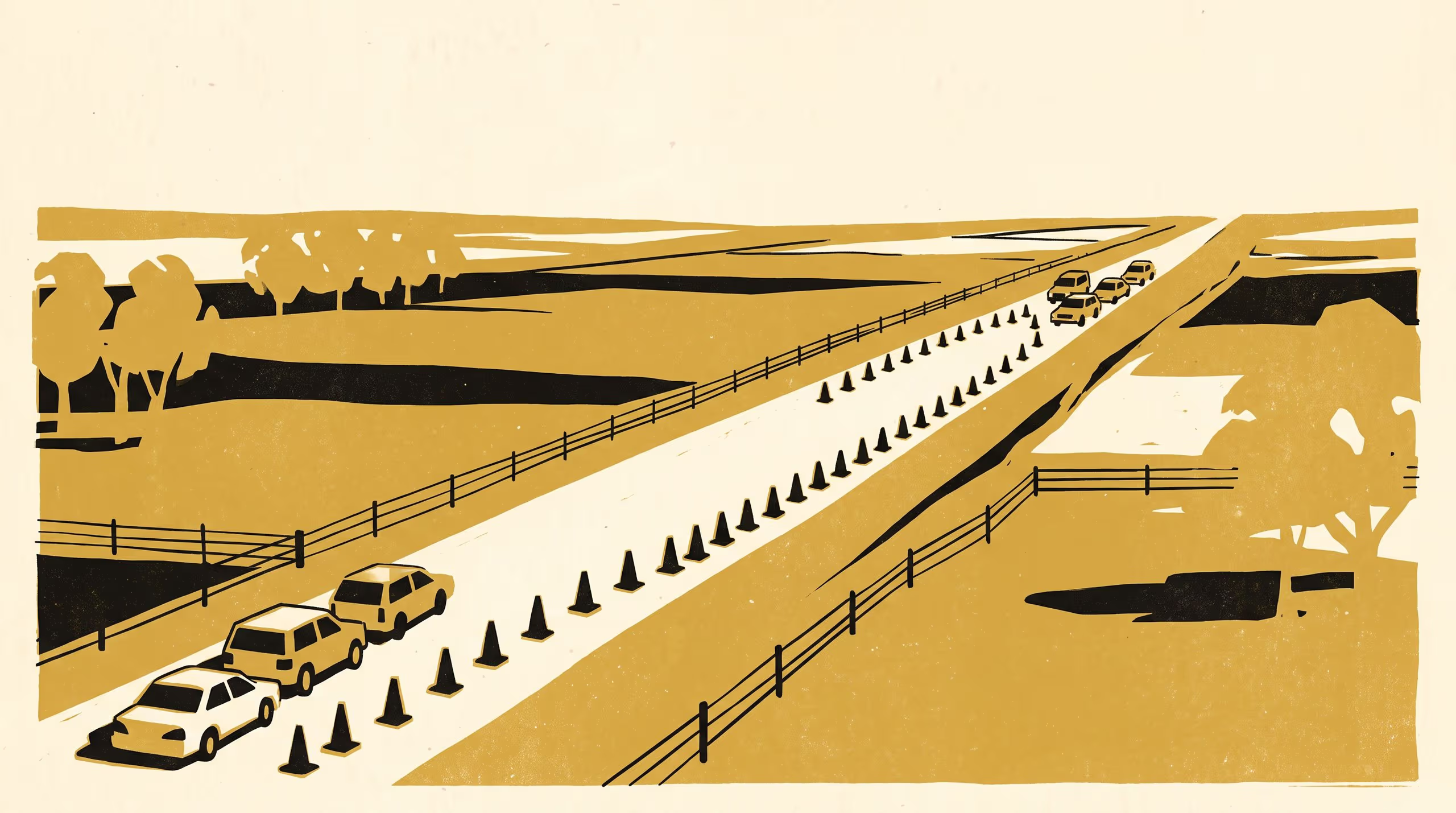
A new Slop University research poster models the stop/go control at twelve country works sites and finds that the throughput a traffic guidance plan is accepted on rises with every minute added to the signal cycle, alongside the wait experienced by every driver stopped behind the paddle.
A discrete-event model of twelve rural single-lane closures finds the setting that lifts a site's rated throughput is the one that lengthens the queue.
Sixty-one hours at the verge of twelve country works sites, every changeover timed to the second, and a model that ran each site ten thousand times over: the School of Emergent Priorities has taken its instrument to the moment a single-lane closure is signed off.
Rated for Traffic That Never Came, a research poster released today, examines the figure that acceptance turns on — the throughput a site’s traffic guidance plan is rated at. That rating is computed from the signal cycle rather than measured on the road, and the School’s model finds it rises with every minute added to the cycle, alongside the wait carried by everyone stopped behind the paddle. Across the twelve sites, no busiest hour came within half of the figure its own plan was rated at.
The number is doing its job. It is simply not the number anyone is sitting in.
— Dr Petra Umbile, Postdoctoral Fellow, School of Emergent Priorities
The work anchors a broader School agenda on the settings that acquire an approval well before they acquire a check. Associate Professor Kwame Lindqvist, Director of the Master of Priority Studies, said the poster “gives us a much clearer view of where an acceptance test stops looking, and why that boundary has held as long as it has”.
The University is glad to see this line of enquiry carried out onto the road, where its consequences are measured in minutes.
The full poster is available from the University’s research repository under an open licence, doi:10.5555/slop.zaofot.