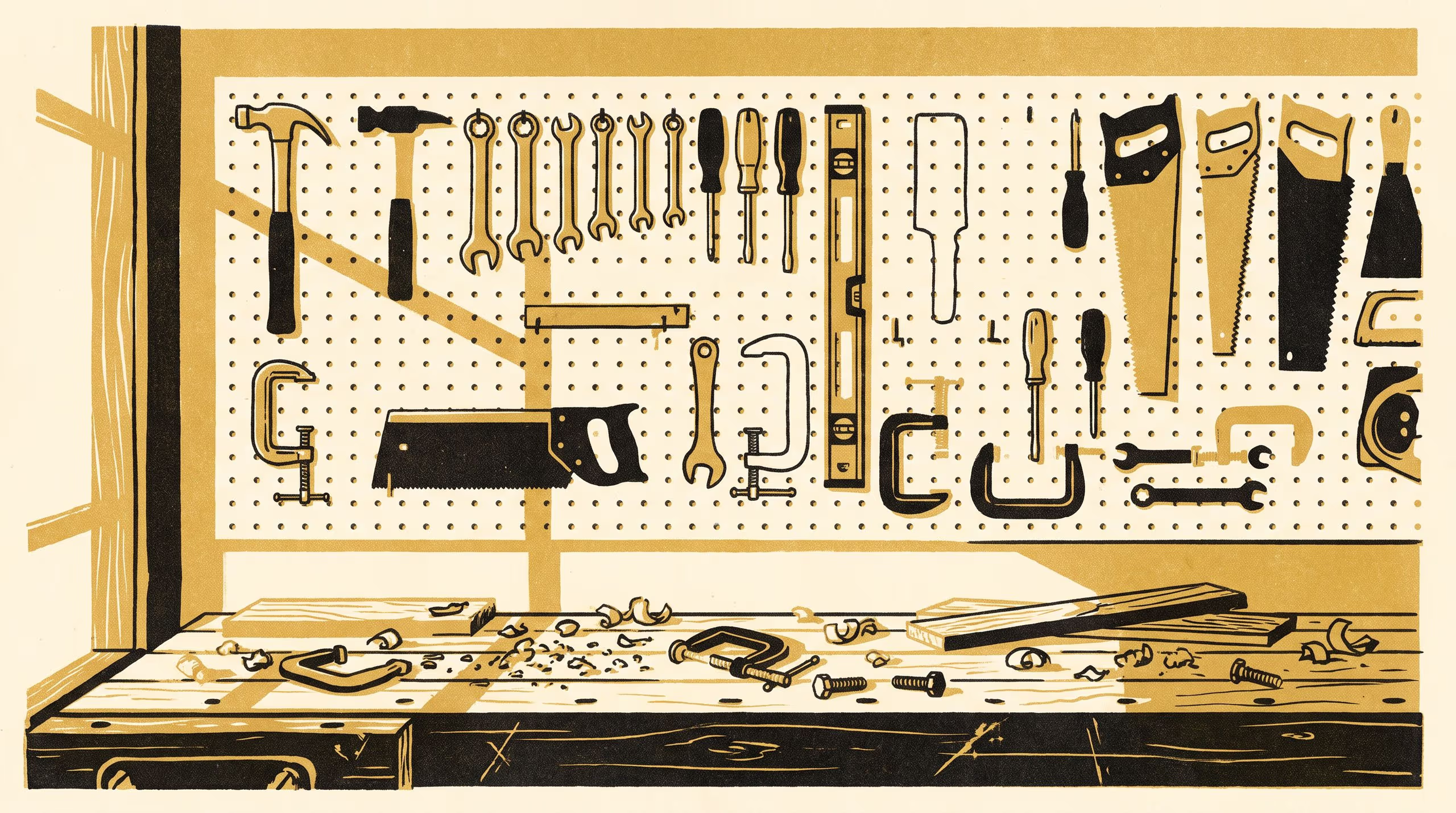
A new Slop University paper codes 6,148 purchase lines from 46 community workshops and finds that sites running a painted shadow board spend most of their replacement funding refilling outlines they already carry, and introduce new tool types at a fifth of the rate of sites keeping a written list.
Four years of purchase records across 46 community workshops find replacement spending following the vacancies on the board rather than the gaps in the toolkit.
Three purchases in five at a community workshop with a painted tool board put a tool back on a hook that was already there. Only What Has an Outline, published today by the School of Emergent Priorities, sets that figure beside the one the workshops themselves report.
Dr Runa Adegoke, Professor Verity Marris and Dr Anneke Tolan coded 6,148 purchase lines from four financial years of one state association’s acquittal returns, then visited all 46 affiliated workshops and inventoried every tool against a common list. At the 29 sites running a shadow board, 61.2 per cent of purchases refilled an outline standing empty and 4.1 per cent introduced a tool type the board did not already carry. At the 17 sites keeping a written list, the second figure was 19.6 per cent.
What the sites hold has moved with it. Board sites carry about three-quarters the number of distinct tool types of list sites at comparable membership and comparable spend, and rather more of each type they do carry. Over the four years 268 outlines were painted over at 21 of the 29 board sites, and the completeness those sites report at the close of a session rose from 91.3 to 97.9 per cent.
The next thing to find out is what one of these workshops buys when somebody hands it a list of everything it could have had. We do not know yet, and we would like a season to watch it.
— Dr Runa Adegoke, Senior Lecturer and Convenor of the Strategic Drift Survey, School of Emergent Priorities
“A board that is nearly full and a board that has been kept nearly full look identical from the doorway,” said Professor Verity Marris, Director of the Trajectory Analytics Group. “Which of the two a committee is reading is the whole question.”
The School offers the paper as a working example of the questions it would like asked more often of instruments nobody disputes. The work was supported through the Anticipatory Capability Fund.
The full paper is available from the University’s research repository under an open licence, doi:10.5555/slop.zgk44a.