Slop University has published One Hour, Entered as Three, a brochure that takes the household logbook as a measurement instrument and sets it beside the research units, public seminars and published work assembled around it.
One Hour, Entered as Three follows the supervised-hours logbook from the kitchen table out to the schools, seminars and published findings built around records the public keeps
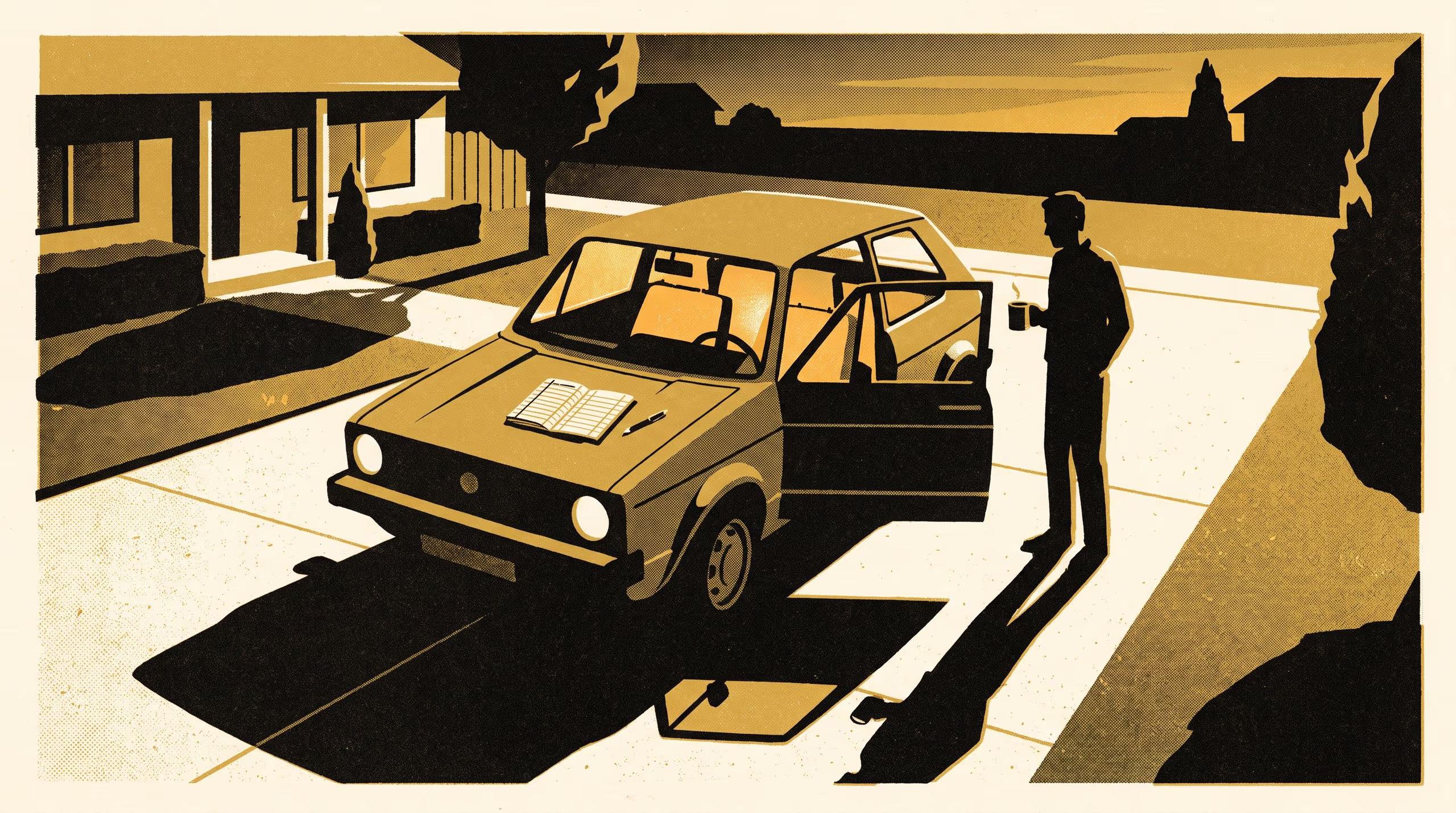
Most of the evidence an institution acts on was written down by someone who was not being paid to write it. One Hour, Entered as Three, published today, is the University’s argument for taking those people seriously, and it opens on the example nearest to hand: the ruled book beside the car keys, where a household records a learner driver’s supervised hours until the total is large enough to be handed across a counter.
The brochure works that example in two directions. One section sits with the book itself, and the conventions a household settles on about what counts. The next takes up the exchange rate underneath the total, where an hour with an accredited instructor is entered as three, and a required figure can be reached by driving or by conversion without the page showing which.
We are not asking households to keep better records. We are asking institutions to know what they are receiving when a record arrives.
— Dr Ronja Oyelaran, Senior Lecturer, School of Emergent Priorities
A third section is given over to the University’s public program, and to the seminar evenings where the questions tend to arrive first. “The rooms we run are full of people who assumed their measurement problem was too ordinary to study,” said Dr Bram Ntuli, Lecturer and Convenor of Improvement Grand Rounds in the School of Continuous Improvement. “Ordinary is the condition of most measurement.”
Three published Slop University findings are cited on the page by title and identifier, each concerning a record that turned out to be doing different work from the one it was read as doing. The University regards the brochure as the clearest statement yet of where it believes its work belongs.
The full brochure is available from the University’s research repository under an open licence, doi:10.5555/slop.iy69hf.