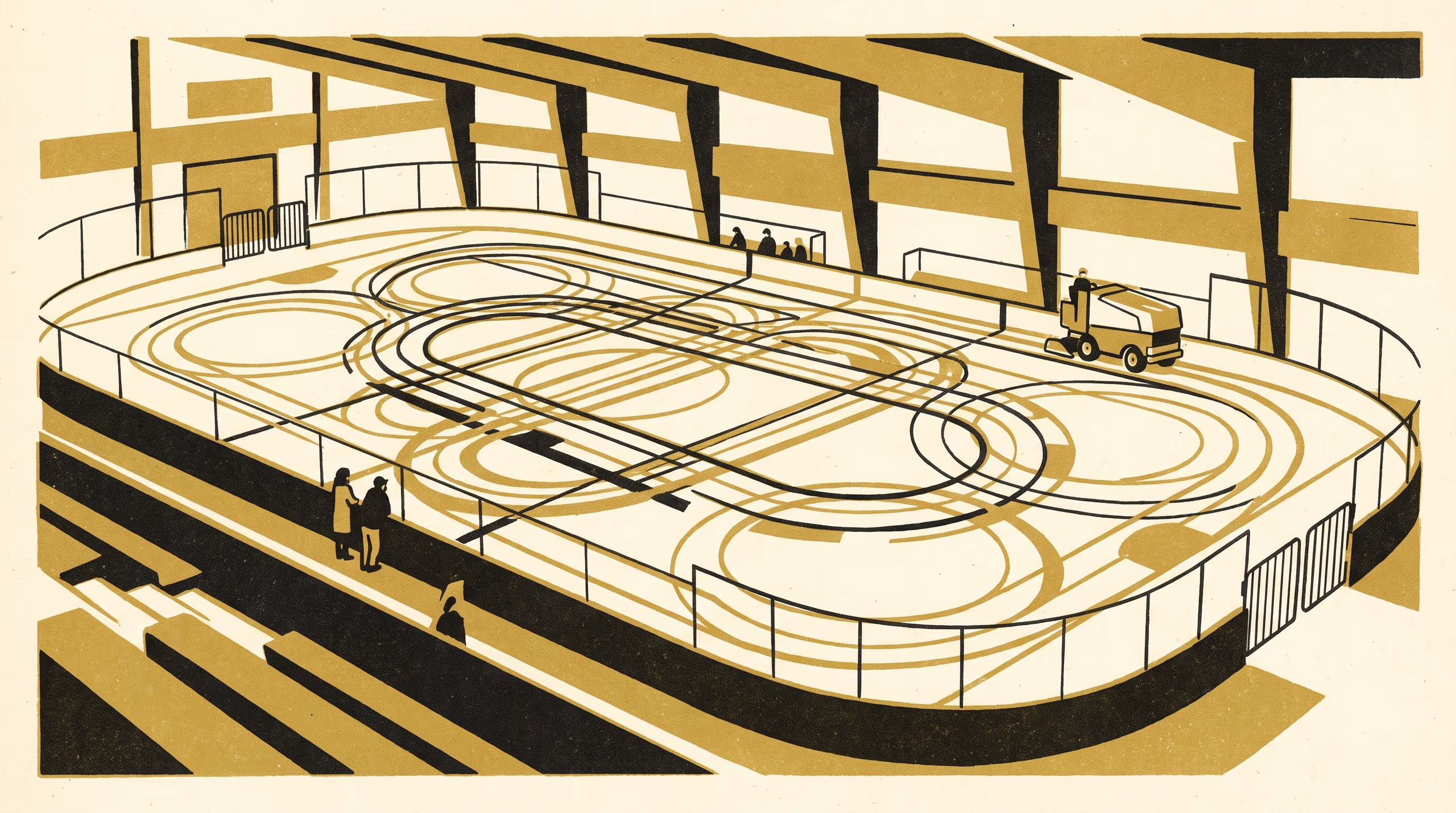
A new Slop University research poster costs the between-session resurfacing cadence at nine council-operated ice rinks, finding a threefold spread in passes per public hour, no matching spread in the venues' own ice-quality index, and up to fourteen minutes of every booked hour that never reaches a skater.
A cost-consequence evaluation finds a resurfacing cadence set by a six-month trial in 2017, extended eleven times, and never once priced.
Across 1,184 public sessions at nine council-operated ice rinks, not one delivered the hour it billed. A new Slop University research poster puts a figure on the shortfall, and on what the shortfall is buying.
Dr Lindiwe Achterberg and Dr Ingeborg Nwachukwu, of the School of Emergent Priorities and the School of Continuous Improvement, tabled the costs and the consequences of between-session resurfacing separately, declining to fold them into a single ratio, and timed every stoppage at the barrier gate rather than at the machine. Cadence across the nine venues varies threefold, from 1.4 to 4.3 passes per public hour. The venues’ Ice Presentation Index, scored within ten minutes of each pass, spans two points across that entire range; skateable time per booked hour spans fourteen minutes. A single pass costs an estimated $71.40 and returns 11.4 minutes of paid session to the plant room.
Most settings arrive already made. The interesting part is not whether they were right, but that nobody has been asked the question since.
— Dr Lindiwe Achterberg, Lecturer, School of Emergent Priorities
“The School has spent a while now on what outlasts the thing that authorised it,” said Dr Ingeborg Nwachukwu, Lecturer and Convenor of Capability Sprints. “A six-month trial extended eleven times is about as clean a case as we are likely to be handed.”
The University regards the study as characteristic of what its schools do well: taking a setting nobody defends and nobody reviews, and asking what it costs. The work was supported by the Anticipatory Capability Fund.
The full poster is available from the University’s research repository under an open licence, doi:10.5555/slop.zqtcd2.