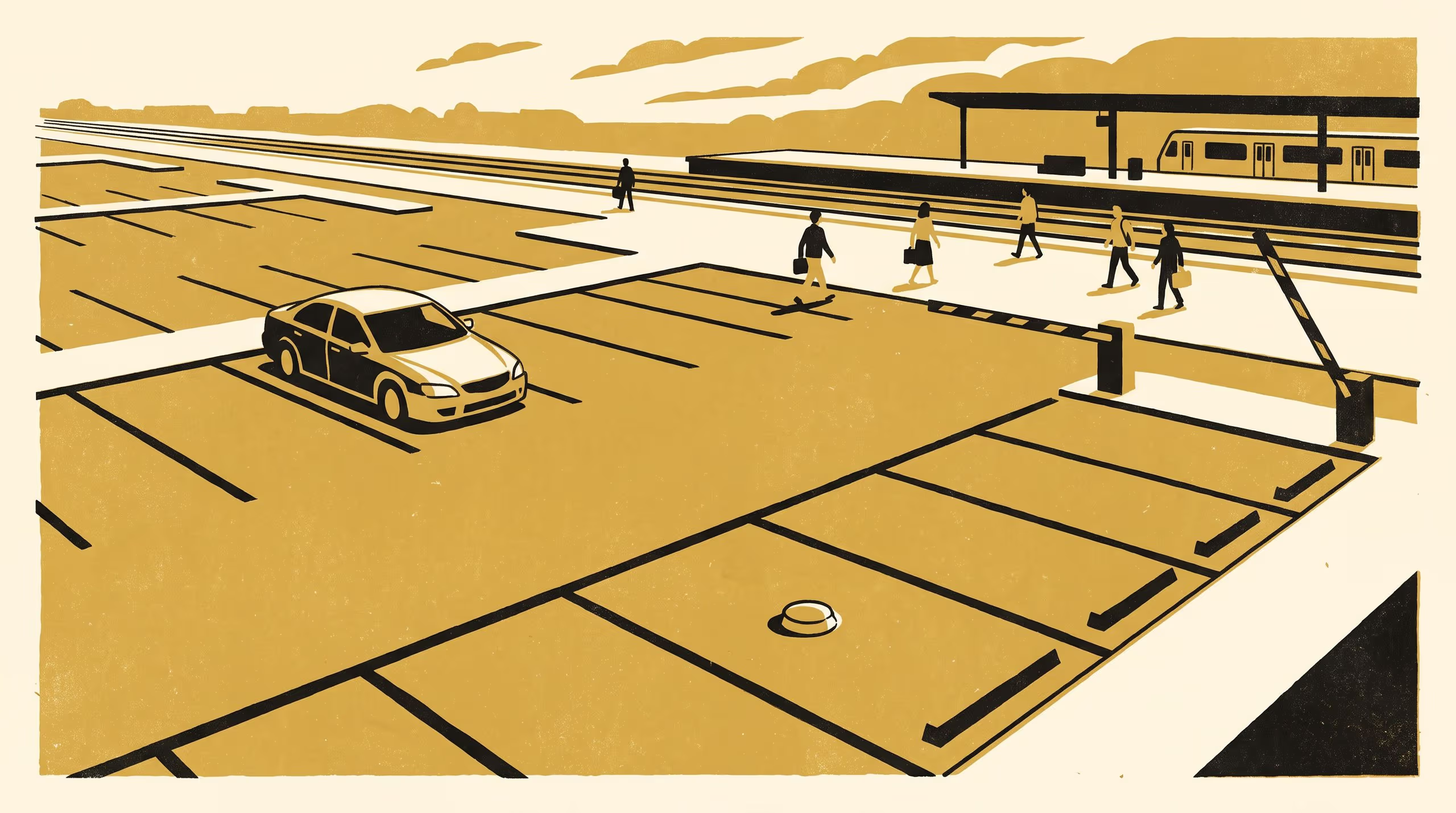
A new Slop University paper validates a park-and-ride carpark network's bay-reservation app against the independent in-ground sensors installed under every bay, finding the app overstates afternoon utilisation and never distinguishes a no-show booking from a parked car.
A six-site study finds a park-and-ride app's occupancy dashboard running ahead of the sensors underneath it, worst by the afternoon commute.
A booking app only knows what a commuter tells it. A new Slop University paper measured how far that gap can drift by the time the afternoon commute starts.
The work, from the School of Continuous Improvement, compares a regional park-and-ride network’s own occupancy dashboard against the magnetometer sensors installed under every bay — a comparison the network’s systems had never made before. The finding lands squarely inside the School’s long-running interest in what a convenient number quietly stops meaning once it starts standing in for the thing itself.
A check-in tap tells you a phone was near a button. We built the whole comparison to find out how long that keeps meaning what a dashboard assumes it means.
— Dr Torun Ezeigwe, Senior Lecturer and Director, Master of Applied Measurement, School of Continuous Improvement
“It’s a familiar shape, dashboard-wise,” said Dr Marit Osayande, Lecturer and Convenor of the Living Dashboard. “The sign at the boom gate is telling a driver something true about a booking and something false about a bay, and it manages both at once.”
The paper compares ten weeks of booking activity against sensor readings across six sites, isolating where the two records agree and where they part company. It finds the earliest part of a reservation the most trustworthy and the tail end of the day the least, a pattern the paper traces back to what the booking app was ever actually built to record in the first place.
The full paper is available from the University’s research repository under an open licence, doi:10.5555/slop.mee3k0.