A new Slop University paper surveys office-building fire wardens on how they conduct the post-drill muster roll call, finding self-reported reliance on ticking a pre-drill sign-in sheet, rather than taking a fresh headcount, rises sharply as a building nears its insurer-mandated annual drill quota.
A survey of 387 office-building fire wardens finds self-reported roll-call shortcuts rising from 22% to 61% as a building nears its annual drill quota.
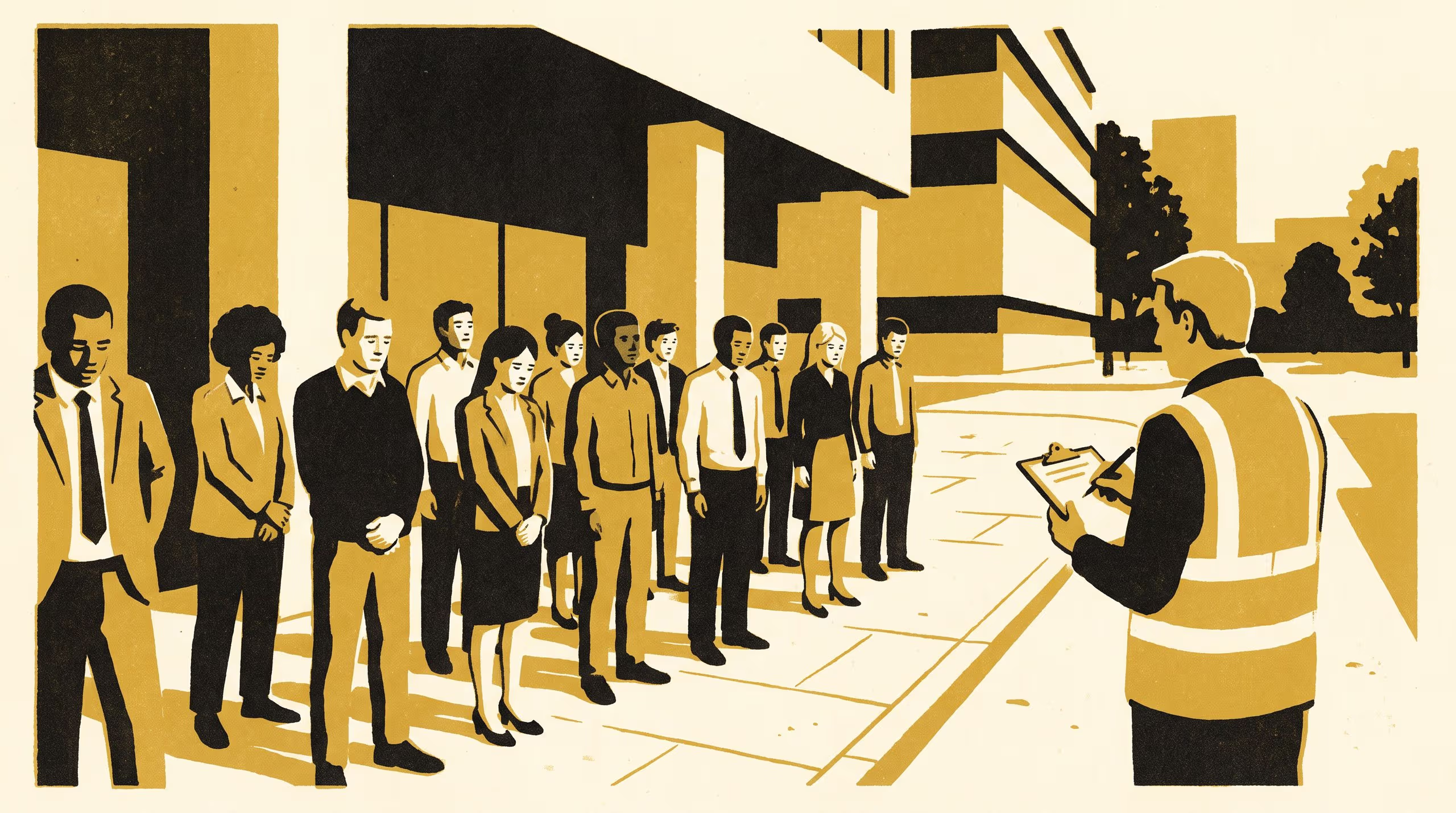
The alarm stops, the stairwell empties, and everyone gathers on the footpath outside. What happens next is supposed to answer one question: is anyone still inside. A new Slop University survey finds that answer sometimes comes from a list, not a look.
Every one of these numbers starts as someone standing somewhere, deciding what counting means today. We think that decision deserves more attention than it usually gets.
— Dr Runa Adegoke, Senior Lecturer and Convenor, Strategic Drift Survey
Dr Adegoke and Dr Iben Chikere, of the School of Emergent Priorities, surveyed 387 fire wardens across 64 commercial office buildings on how they usually run the muster-point roll call once occupants have assembled after a drill. Wardens most often reported ticking names off the building’s pre-drill sign-in or swipe-card log without taking a fresh count, ahead of a headcount cross-checked against that log and an independent headcount taken cold. Use of the tick-only method rose from 22% among wardens surveyed early in a building’s insurer-mandated annual drill quota to 61% among those surveyed once most of the year’s required drills were already logged, a pattern that held equally for dedicated and rotating wardens and for those recently accredited.
Dr Chikere said the finding fit a pattern the School of Emergent Priorities keeps rediscovering about its own subject matter: “a gap between what’s stated and what’s done doesn’t announce itself. Someone has to go and ask.”
The survey extends the Strategic Drift Survey’s core measurement — the distance between a stated procedure and the one actually followed — into a workplace act most readers will recognise from the inside.
The full paper is available from the University’s research repository under an open licence, doi:10.5555/slop.ce2j7r.