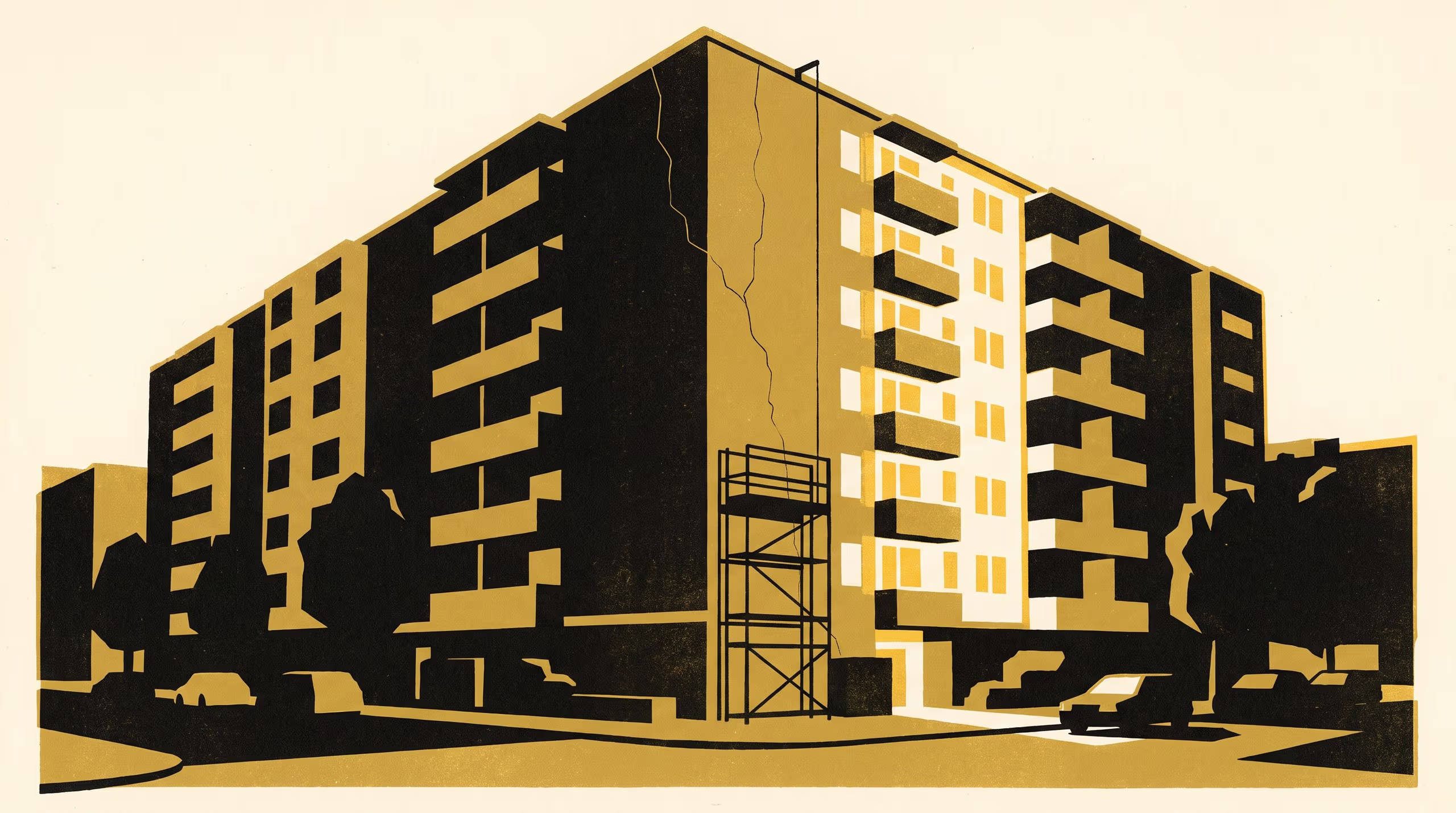
A new Slop University research poster re-codes twelve years of one apartment block's noise-complaint tickets by structural bay rather than by named resident, finding the same shared bay behind five separate "resolved" disputes across five different tenants.
A twelve-year re-read of one apartment block's tickets by structural bay, not by name, finds the same bay behind every resolved dispute.
The School of Emergent Priorities keeps a standing interest in registers that outlive the thing they were built to track. Its newest case study turns that interest on a strata scheme’s noise-complaint log, and finds the log’s own naming habit has been quietly wrong for twelve years.
Dr Fenna Okoro and Dr Solveig Adeyemi, of the School of Emergent Priorities and the School of Continuous Improvement, re-coded 308 noise-complaint tickets from one 44-unit apartment block, spanning 2014 to 2025, against the block’s as-built structural plan rather than against the resident each ticket named. Ticket density clustered overwhelmingly in a single structural bay, accounting for 144 of the 308 tickets logged, across five separate resident turnovers recorded in the block’s own committee minutes. A 2025 renovation opened a ceiling cavity in the implicated bay and exposed a mis-poured slab joint, confirming what the register’s per-resident field had never been built to see.
A register is only as good as the field it was given. Ours gave every ticket a name and never asked whether the name was the point.
— Dr Fenna Okoro, Senior Lecturer and Convenor, Horizon Register, School of Emergent Priorities
“Five people were told the noise was a neighbour they’d never met,” said Dr Solveig Adeyemi. “The one thing the file never told any of them was that four other people had already heard the same thing, from four other neighbours, in the same spot.”
The case study extends the School of Emergent Priorities’ running interest in what an institutional record keeps, and what it quietly retires, once a category has already been chosen for it.
The full poster is available from the University’s research repository under an open licence, doi:10.5555/slop.c4aizu.