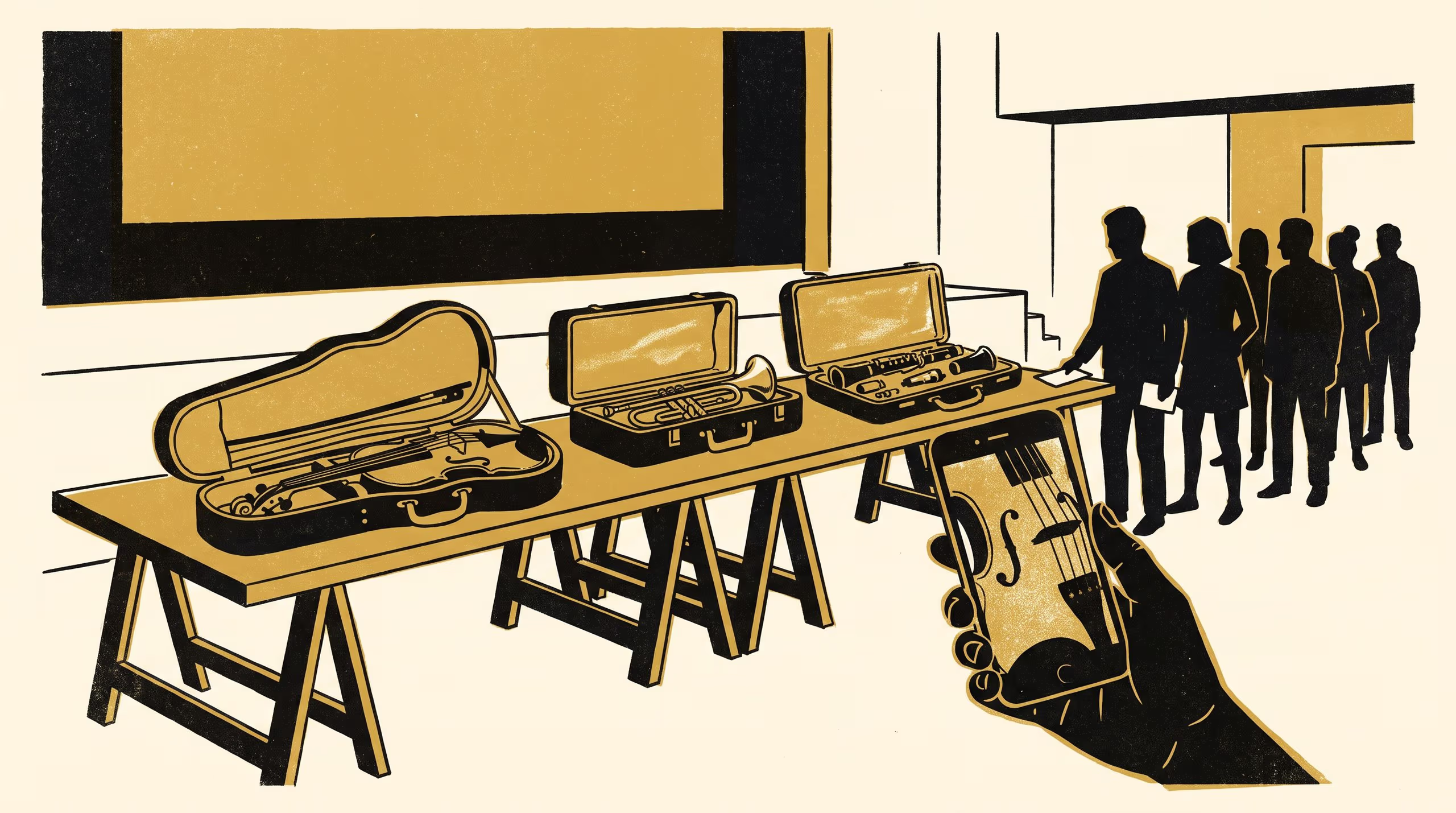
A new Slop University research poster audits a school instrument-hire scheme's automated damage-match flag and finds a successful dispute rarely reaches the record the scheme's own risk score reads.
An audit of 1,142 school instrument hires finds a disputed damage-match flag surviving the very appeal that was meant to clear it.
A family disputes a damage charge on a hired trombone, wins, and is told the flag is cleared. A new Slop University research poster asked whether “cleared” reaches the system that put the flag there in the first place, and found it mostly doesn’t.
Dr Renke Sabel and Dr Solveig Adeyemi, of the School of Continuous Improvement, matched 1,142 instrument hires across three terms and three depots, pairing every family that had successfully disputed a damage-match flag with a never-flagged family borrowing the same kind of instrument at the same rate. Re-flag odds at the next hire came out statistically indistinguishable between the two groups overall — except for brass instruments, which re-flagged at more than double the matched rate, a gap the team traces to the scanner’s own confidence threshold rather than to any family’s history.
A cleared dispute tells a family the matter is closed. It tells us something else: that closing a ticket and closing a record are two different acts, and our systems have only ever really practised the first one.
— Dr Renke Sabel, Senior Lecturer and Convenor, Indicator Commons
It’s the kind of gap the School of Continuous Improvement keeps finding: a record that closes on the surface and keeps running underneath it.
Dr Solveig Adeyemi, the poster’s co-author, said the brass gap was the detail she wanted followed up first: “a shinier surface shouldn’t be able to out-vote eighteen months of clean history, and right now it can.”
The full poster is available from the University’s research repository under an open licence, doi:10.5555/slop.677ori.