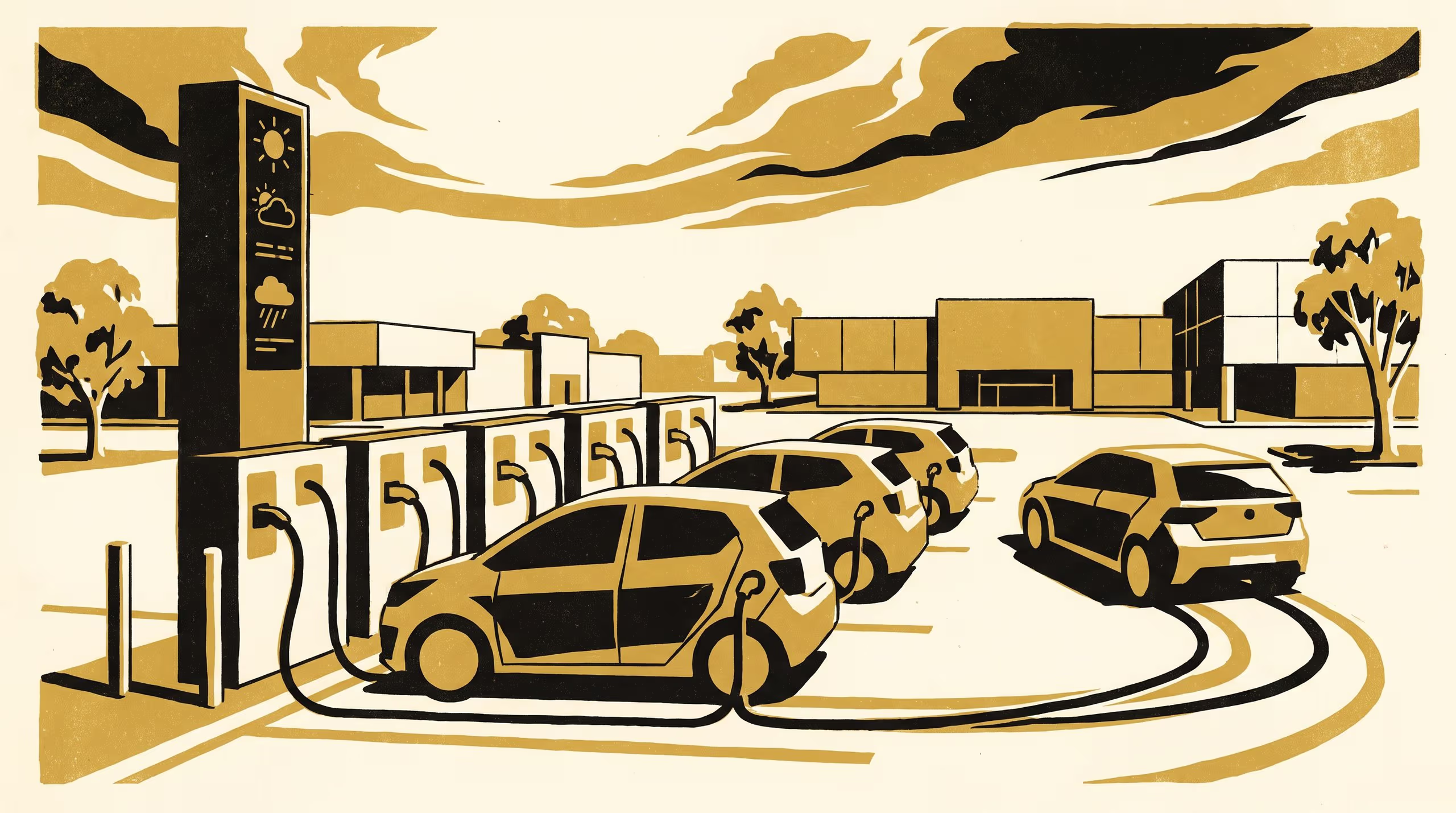
A new Slop University paper pilots a queue-position forecast display at a shopping-centre EV charging bank and finds the posted wait drifting further from drivers' actual waits as more of them learn that leaving the queue and rejoining resets it to a shorter number.
An eleven-week pilot at a shopping-centre charging bank finds the posted wait understating the real one by nearly seven minutes, and a warning banner explaining why does not slow the trend.
Leaving a queue and rejoining it should never make the wait shorter. At one shopping-centre car park’s electric-vehicle charging bank, a new Slop University paper finds it reliably does, and that the bank’s regular drivers worked out the trick largely on their own, no operator disclosure required.
The result belongs to a small, awkward category the School of Emergent Priorities keeps returning to: an instrument that is not wrong so much as increasingly well understood by the people it describes.
A number that is accurate every time a driver looks at it can still settle to something misleading in aggregate, once enough of them have learned which way to look.
— Dr Petra Umbile, Postdoctoral Fellow, School of Emergent Priorities
The display quotes a driver’s wait from one of two formulas depending on how they arrive: a cautious estimate for anyone already standing in the queue, and a shorter, average-case estimate for anyone freshly checking in. Over eleven weeks, the share of drivers leaving and re-entering to claim the shorter number climbed from one in thirty to one in four, and the bank’s publicly posted average wait drifted from tracking reality closely to understating it by nearly seven minutes.
“Nobody involved is breaking a rule,” said Associate Professor Casimir Beng, Lead of the Adaptive Metrics Lab. “The queue simply stopped being described by the number that was supposed to describe it.”
A banner explaining the mechanism, trialled at half the bank’s queue positions from week six, left the rejoin rate unchanged.
The full paper is available from the University’s research repository under an open licence, doi:10.5555/slop.cddmt8.