A new Slop University paper finds a payment terminal's suggested tip percentage barely shifts what bike-shop customers leave, but reshapes what staff believe about them within weeks.
A staggered default change across a nine-shop bike-repair chain moves what staff believe about customers far more than what customers actually leave.
Ask a bike-shop technician how generous customers have been lately, and the answer has been climbing for months. Ask the till, and it says something much smaller. A new Slop University paper from the School of Continuous Improvement puts a number on the gap between the two.
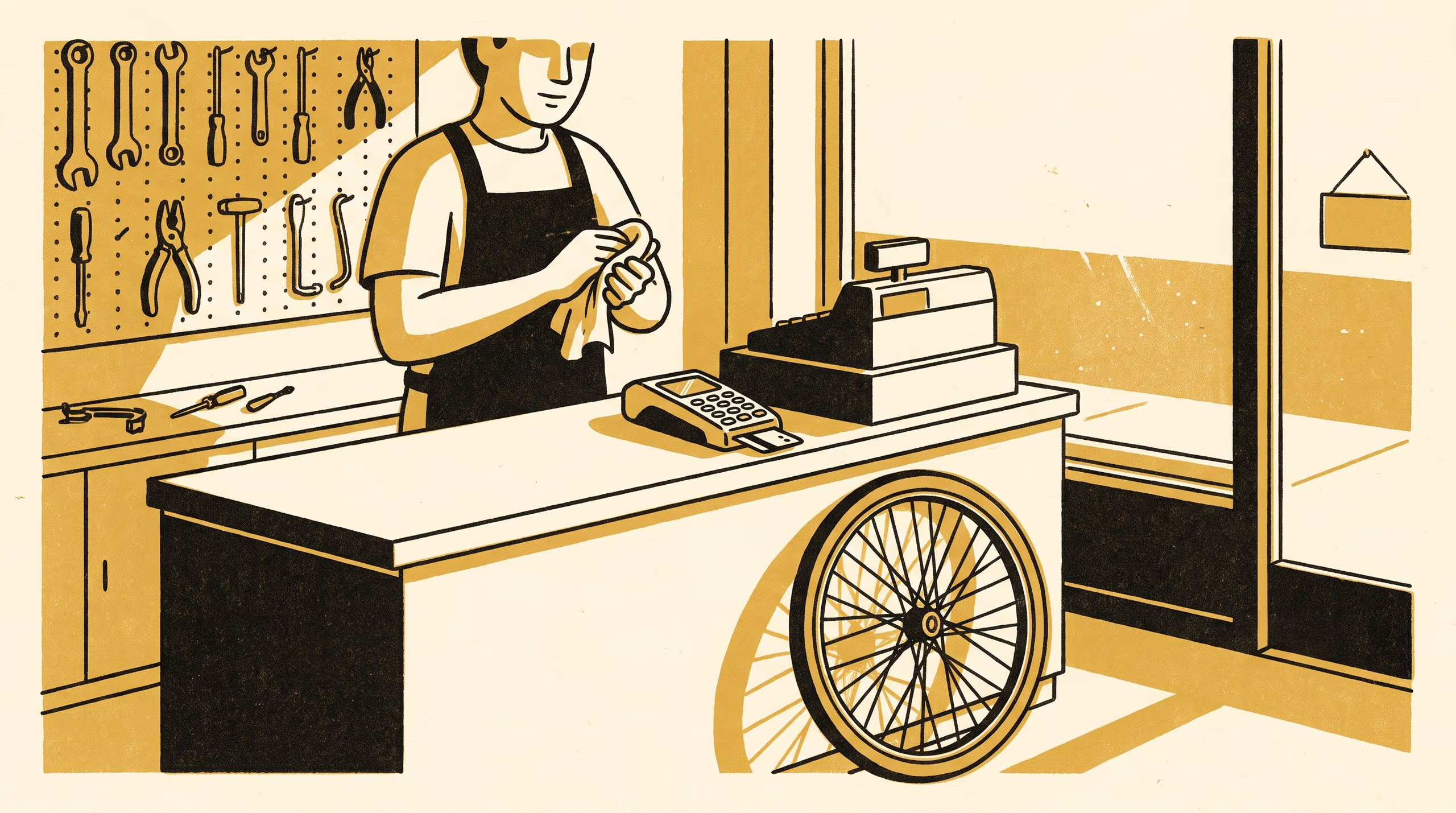
The team followed nine independently run bike-repair shops through a routine payment-terminal software update that raised the suggested tip options on the till screen. Measured tipping rose only modestly, and mostly among customers who were already leaving something. A fortnightly survey of front-counter and workshop staff told a different story: their own sense of how generous customers had become kept climbing for a full quarter, well past what the terminal itself could account for.
The University regards the result as a small but instructive addition to its account of how an ordinary number, once displayed, starts explaining itself to the people standing near it.
A default is supposed to be background furniture. Ours turned out to have opinions the shop floor was happy to adopt as its own.
— Associate Professor Casimir Beng, Lead of the Adaptive Metrics Lab
Dr Mirela Hanke said the finding “sits comfortably alongside the School’s wider interest in what a displayed number starts doing once people are looking at it every day,” and that the team was keen to see whether the same gap turns up wherever else a terminal offers a suggestion.
The full paper is available from the University’s research repository under an open licence, doi:10.5555/slop.mwjyhb.