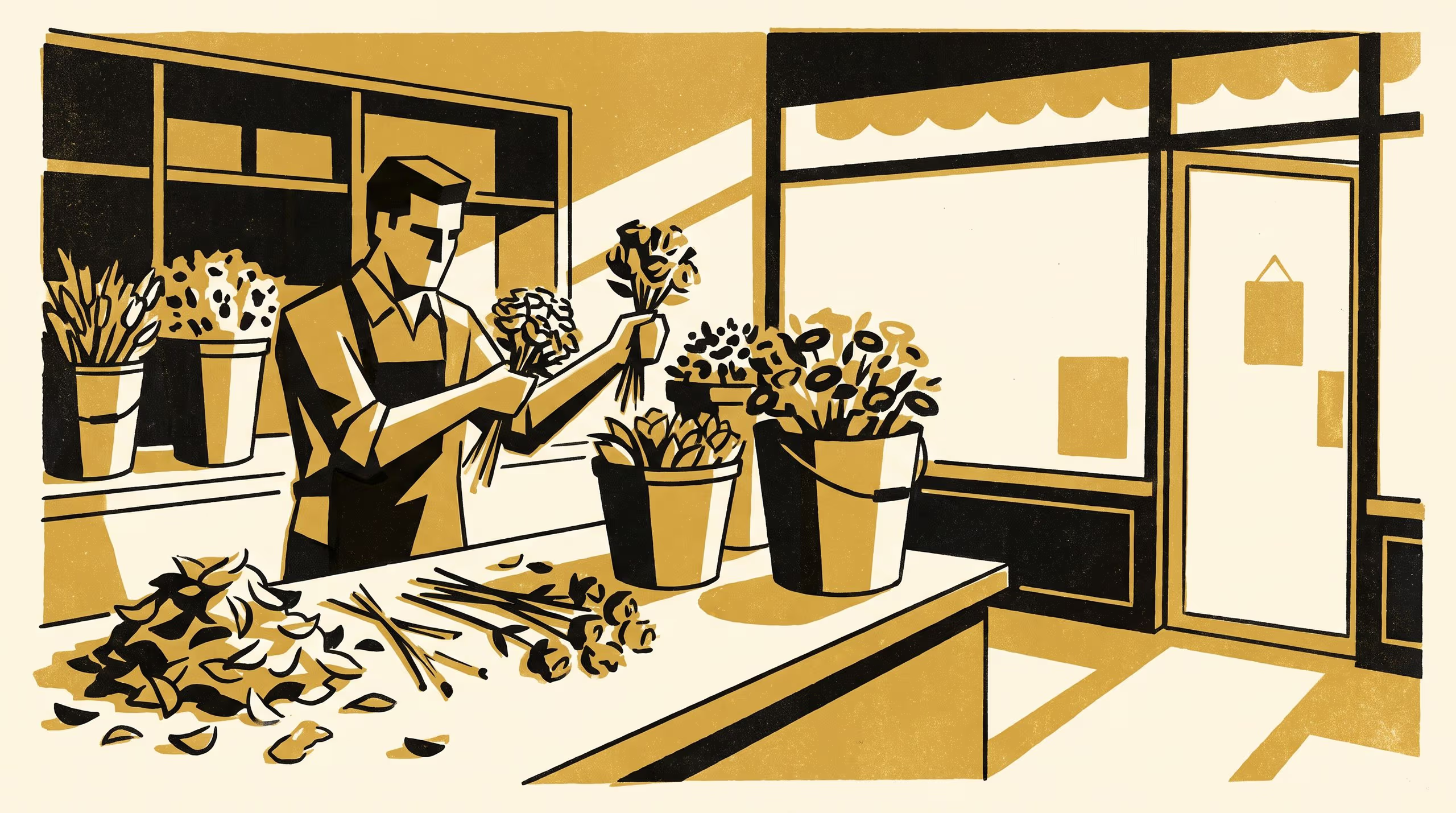
A new Slop University paper builds a six-category taxonomy of florists' informal freshness cues at a supermarket-adjacent flower-shop chain, finding the categories track the chain's automated markdown timer in aggregate but diverge sharply once broken out.
A six-category taxonomy of florists' informal freshness cues at a flower-shop chain tracks an automated markdown timer overall, but diverges sharply cue by cue.
A florist can tell a bunch is done before anyone tells them to pull it. A new Slop University paper from the School of Emergent Priorities asked florists at nineteen stores of one supermarket-adjacent flower-shop chain how they actually know, and built a taxonomy out of the answer.
Dr Iben Chikere and Dr Anneke Tolan spent eleven weeks coding markdown and removal calls into six categories as they emerged — guard-petal condition, colour fade, stem-cut and water-uptake signs, foliage condition, scent shift, and wear from customer handling — then set the resulting record beside the chain’s own fixed hours-since-delivery markdown clock. Across 1,860 logged calls, the two tracked each other closely on average. Broken out by category, they came apart: some cues pulled a bunch well ahead of the clock, others let one run well past it, a divergence that held even once the taxonomy’s rarest category was dropped from the count.
The University places the taxonomy alongside its running effort to give a name to the judgement calls its dashboards keep skipping past.
The timer isn’t wrong to use one number. It’s wrong to assume one number was ever the whole judgement.
— Dr Iben Chikere, Lecturer, School of Emergent Priorities
Dr Anneke Tolan said the pattern raised as many questions as it answered, adding that the team was curious whether the same six categories would hold at a chain selling something less forgiving than flowers.
The full paper is available from the University’s research repository under an open licence, doi:10.5555/slop.epjqzi.