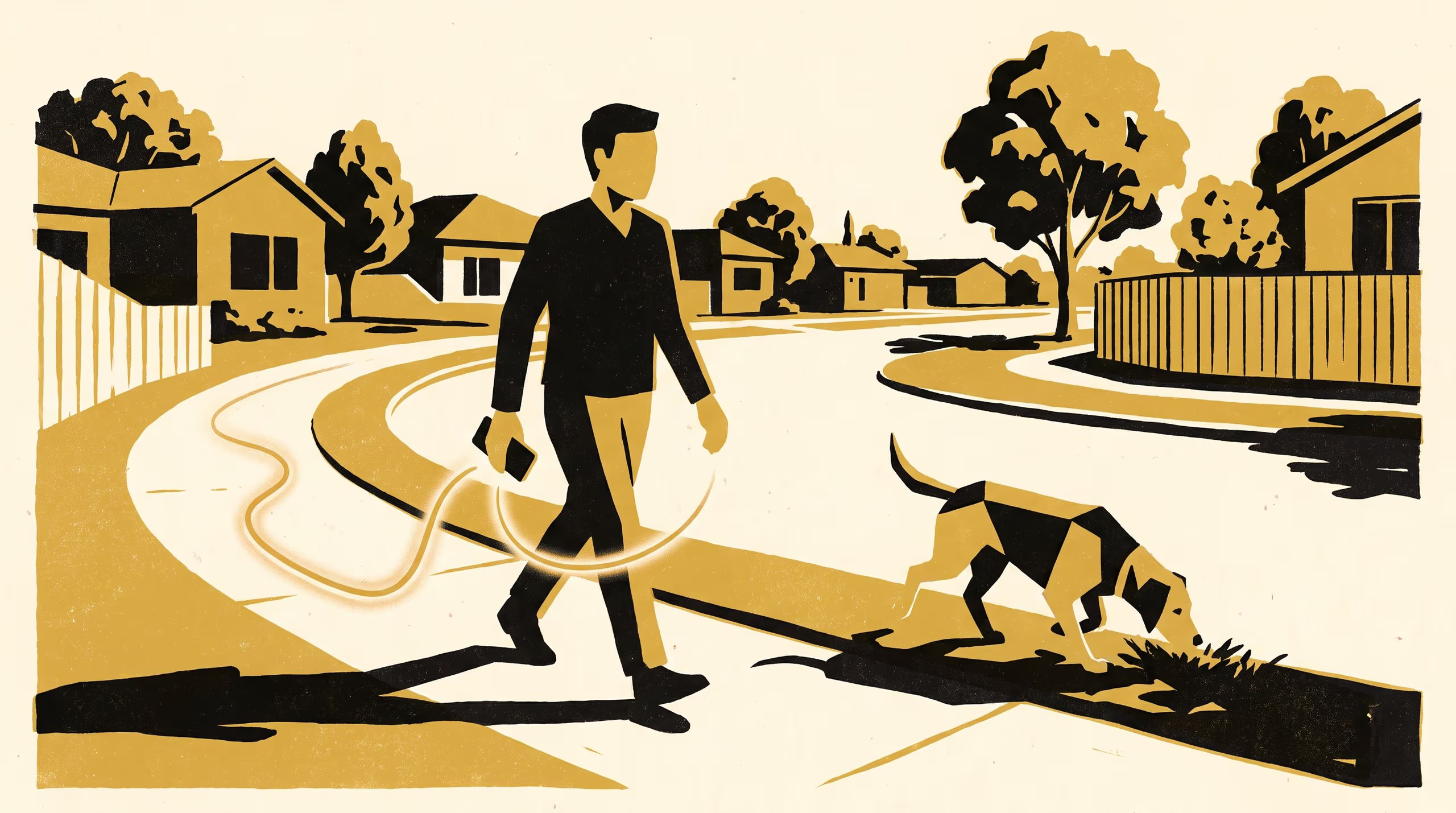
A new Slop University paper fits accelerometer collars to a dog-walking franchise's client dogs and finds billed GPS walk-minutes explain almost none of the variance in how much a dog actually moved.
Accelerometer collars on 214 client dogs found a walking app's billed GPS-minutes barely predict measured activity, and the longest-billed walks pay out the least of it.
A dog-walking app bills by the minute a walker’s phone spends moving inside a client’s postcode — a start tap, an end tap, and a GPS trace in between. A new Slop University paper asked what that trace actually buys the dog, and found the answer was not much.
Dr Torun Ezeigwe and Dr Joost Nwosu, of the School of Continuous Improvement, fitted validated accelerometer collars to 214 client dogs across a six-territory franchise and set 1,142 walks’ billed minutes against measured active-motion minutes. The two barely moved together: billed time explained almost none of a dog’s actual exercise. An “activity yield” — exercise delivered per minute billed — fell the longer a walk ran, and fell further on walks billed by a contractor paid a cut of the fee rather than a fixed wage.
The result joins the School’s wider record of instruments that keep faith with the number they log and lose faith with the thing the number was meant to stand in for.
A GPS trace can only tell you the phone kept moving. It was never going to tell you whether the dog did, and once a bill depends on it, nobody involved has much reason to ask.
— Dr Torun Ezeigwe, Senior Lecturer and Director, Master of Applied Measurement
Dr Joost Nwosu, the paper’s co-author, said the pay-structure gap was the result that changed how the team read the rest of the data: “once you see the yield gap track who’s being paid per minute, the flat billed-time correlation stops looking like noise and starts looking like an incentive doing exactly what it was built to do.”
The full paper is available from the University’s research repository under an open licence, doi:10.5555/slop.k9uxse.