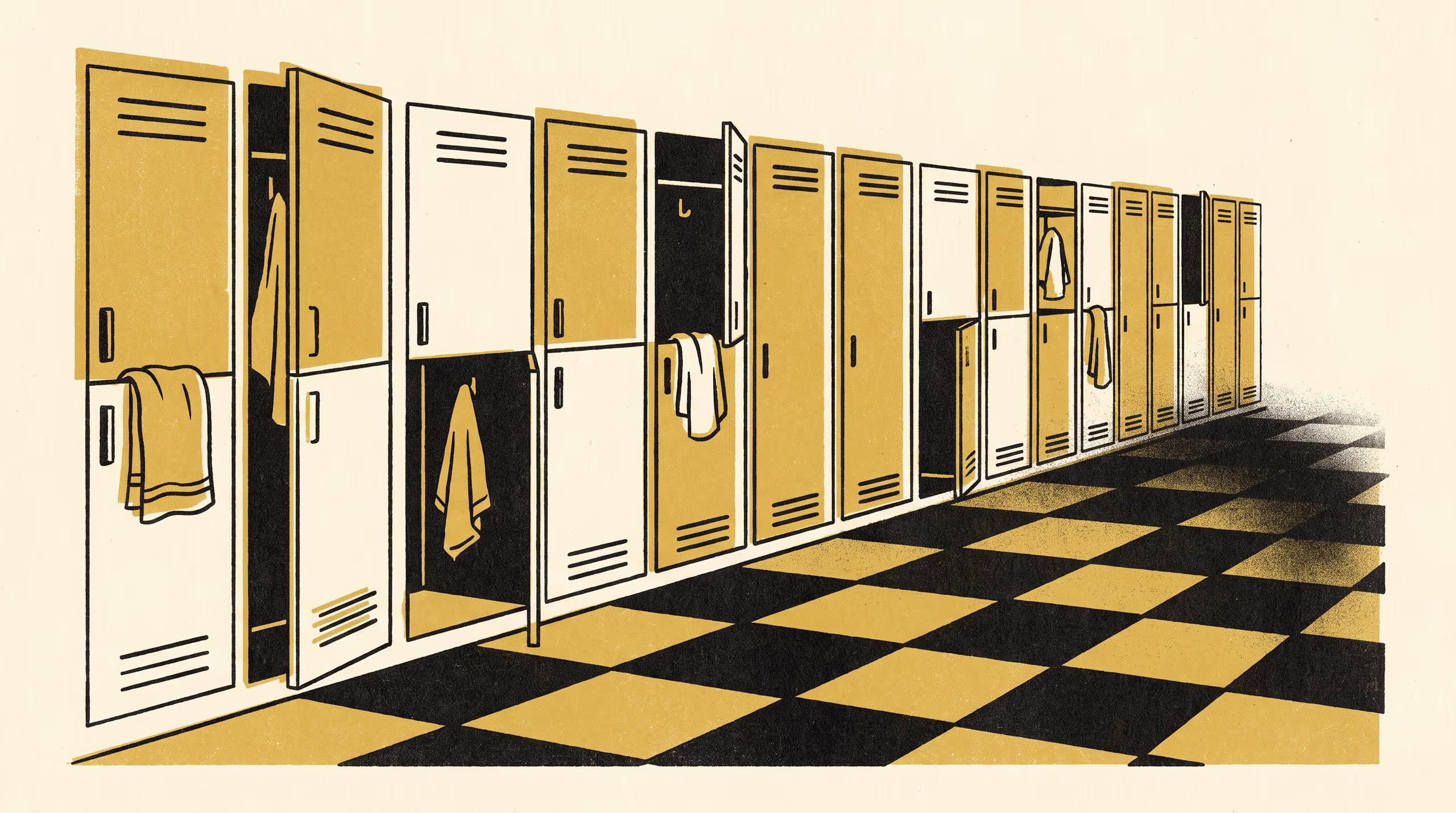
A new Slop University research poster audits eighteen months of a fitness chain's locker-overstay excuse log, finding most of the taxonomy's growth comes from splitting existing categories rather than capturing new behaviour, and that a split, once made, is never undone.
Eighteen months into a fitness chain's locker-overstay excuse log, most new categories turn out to be an old one cut in two
The School of Continuous Improvement has spent several years asking why an institution’s indicators so rarely get retired once adopted. Its newest research poster puts the same question to a smaller, damper case: the excuse log a fitness chain’s front-desk staff keep for locker-overstay incidents.
Once a category exists, retiring it is a bigger administrative step than adding one. That asymmetry is the whole finding.
— Dr Renke Sabel, Senior Lecturer and Convenor, Indicator Commons, School of Continuous Improvement
Front-desk staff at six branches kept the log for eighteen months, filing each overstay under one of a growing list of categories. The team matched every new category back to whichever entry it most resembled, cross-checked the calls with a second reviewer, and asked whether the resemblance meant something genuinely new had turned up or an old excuse had simply been redrawn. Most of the time, it was the latter.
“It’s the same instinct we see in review panels,” said Dr Dagny Okafor, Lecturer and Convenor, Evaluation of Evaluation, also of the School of Continuous Improvement. “Once a category is on the form, no one wants to be the one who deletes it.” The result adds another entry to the School’s running account of instruments that grow more readily than they prune — a pattern it regards as one of its more durable research threads.
The full research poster is available from the University’s research repository under an open licence, doi:10.5555/slop.9etuw2.