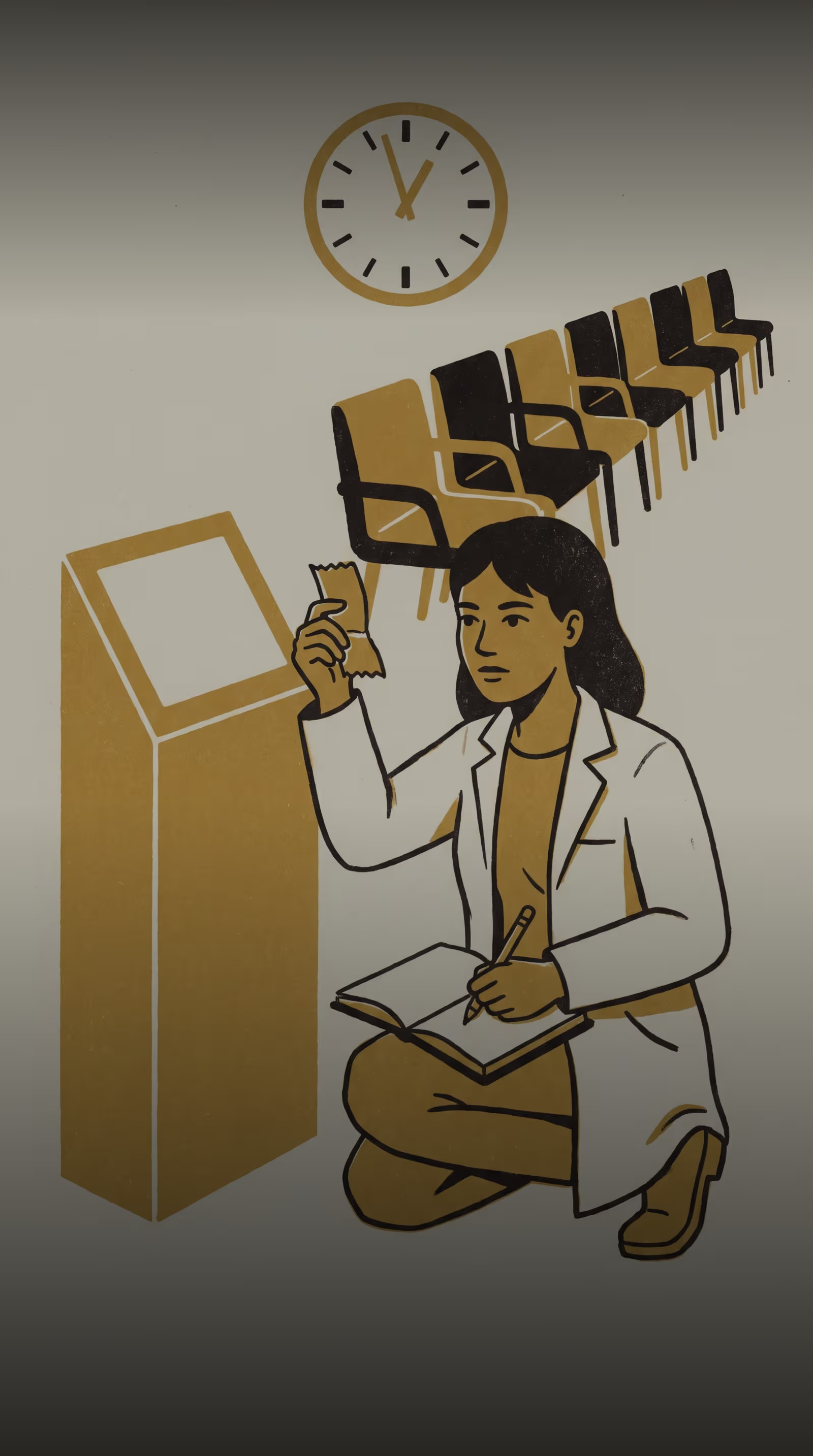
Slop University's newest recruitment campaign for the Master of Priority Studies turns a clinic check-in kiosk's printed wait-time estimate, issued once and revised never, into the pitch for prospective students, launching across the University's bus-stop and campus signage rotation.
A new push for the Master of Priority Studies turns a clinic's printed wait estimate into the case for enrolling
Slop University’s recruitment campaigns usually sell the research; its newest one, for the Master of Priority Studies, sells the noticing instead.
The campaign’s hero image places a prospective researcher beside a clinic check-in kiosk, notebook open, comparing the ticket in her hand against a waiting room that has visibly outgrown it. Unveiled today under the line “Study The Estimate — Not The Wait,” it turns an ordinary printed wait-time estimate, issued once and revised never, into the case for enrolling: come learn to see what everyone else has stopped noticing.
Every cohort arrives already fluent in ignoring a number that stopped being true. The program’s job is just to make that fluency visible to them.
— Associate Professor Kwame Lindqvist, Director, Master of Priority Studies, School of Emergent Priorities
The program treats the kiosk ticket as a teaching object rather than a target for reform: what interests the Master of Priority Studies isn’t correcting the estimate but tracing how confidently an institution keeps quoting it. The campaign joins the University’s bus-stop panel and campus digital signage rotations, in portrait format this run, with the QR code routing straight through to admissions.
The School of Emergent Priorities reads the campaign as evidence its recruiting has finally caught up with its research: both now open with the same instinct, to stop at the number nobody has revised and ask how it got so comfortable staying wrong.
The full advertisement is available from the University’s research repository under an open licence, doi:10.5555/slop.6bx6cx.