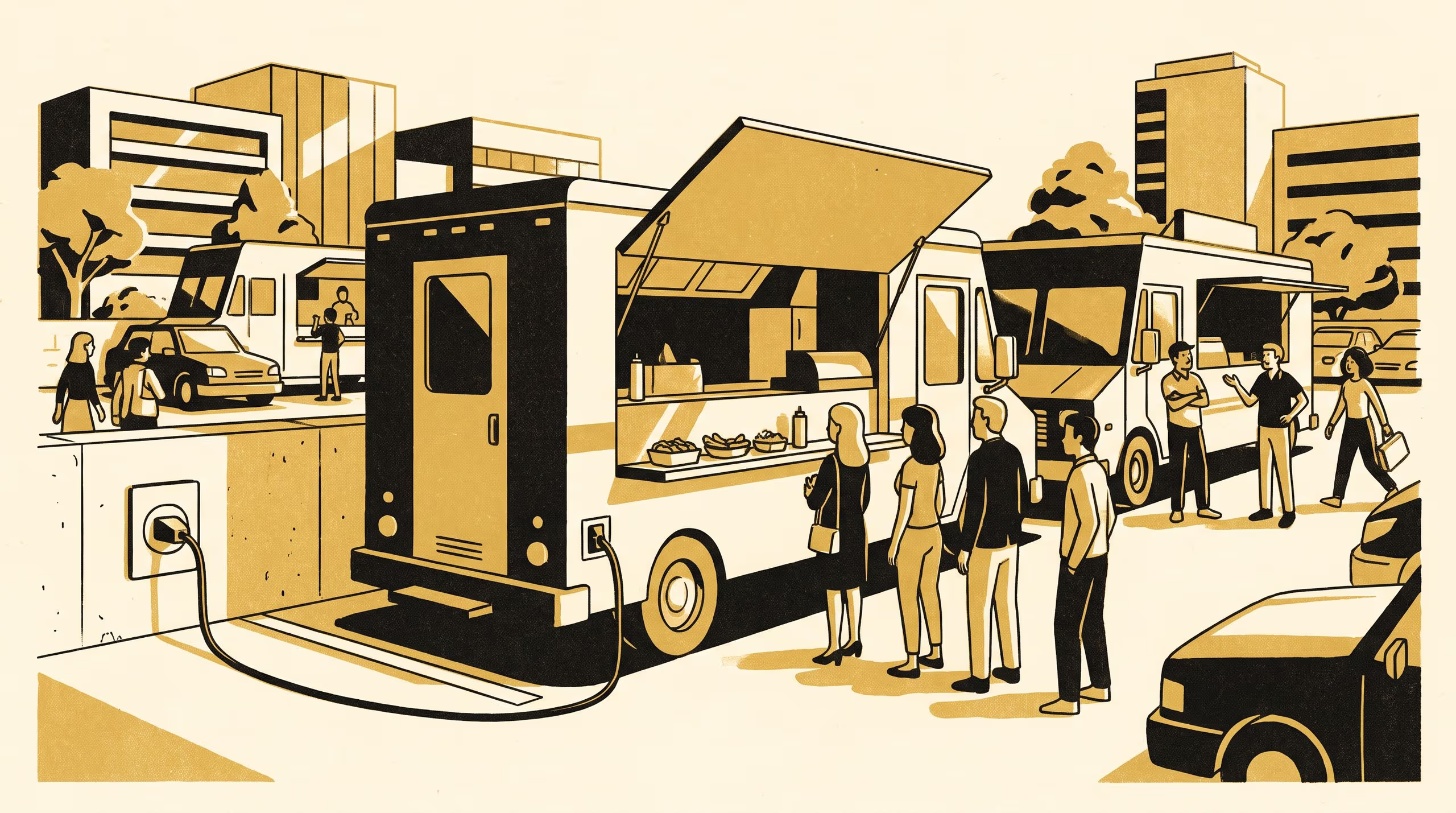
A new Slop University paper interviews and observes food-truck operators across five precincts to catalogue the informal rules that decide who gets a shared power bay, finding a hand-written sign-up sheet introduced mid-season left the pattern of disputes unchanged.
An open-coded study of five precincts finds the priority rule an operator cites shifts with whose win is being explained, not with any written order
Two food trucks can want the same power point at the same time, and only one plug exists to give it to. A new Slop University paper spent a season watching how that gets settled at five precincts, and found the operators disagree, cheerfully, about which rule is actually deciding it.
Operators told us five different rules, sometimes in the same breath, and every one of them made sense of whichever day they were describing. We didn’t set out to referee a dispute; we set out to write down how many ways there are to win one.
— Dr Anneke Tolan, Senior Research Fellow, School of Emergent Priorities
The team, led by Dr Tolan with Dr Ingrid Vasseur and Senior Lecturer Runa Adegoke, spent a fourteen-week trading season embedded across five precincts, interviewing 31 operators and logging more than 300 site-days of who plugged in and why. Coding the interviews surfaced five distinct justifications operators reach for — arrival order, a claim staked in the precinct group chat, an unwritten sense of whose turn it is, a favour owed from an earlier week, and an appeal to whichever volunteer is nominally in charge that day — and found every precinct drawing on several at once, never settling on one. A hand-written sign-up sheet, introduced partway through the season at two precincts to formalise the queue, left the pattern of disputes and how they were settled unchanged.
“A rule doesn’t need to be written down to work, and writing it down doesn’t make it start working,” said Runa Adegoke, Senior Lecturer and Convenor, Strategic Drift Survey. “We’d like to know how long that gap holds before something eventually closes it.”
The University places the finding beside its wider account of what an institution discovers once it finally goes looking for the rule everyone swears is already there.
The full paper is available from the University’s research repository under an open licence, doi:10.5555/slop.x9jhsk.