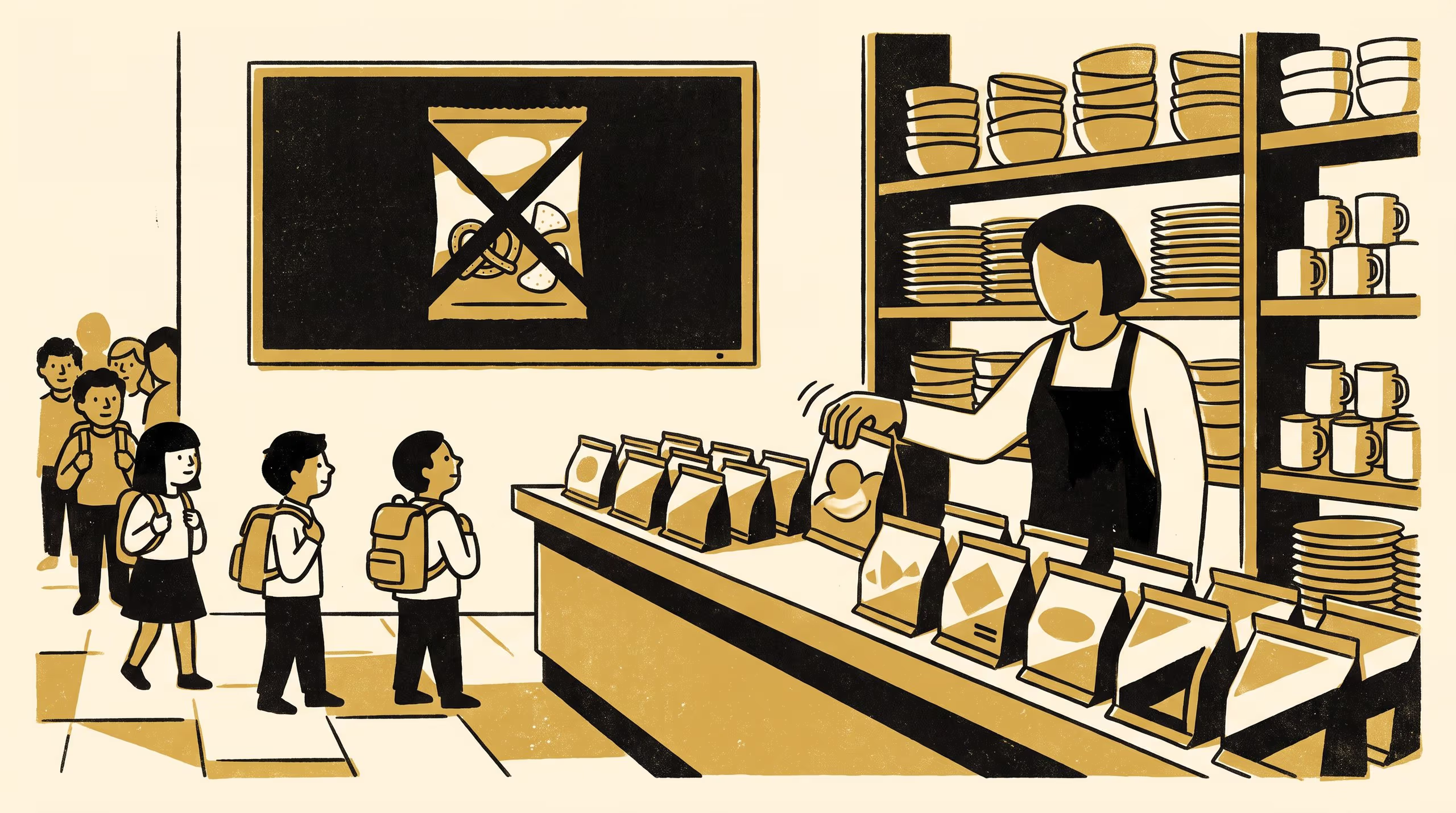
A new Slop University paper interviews canteen staff across fourteen primary-school sites about the snack orders they override after an app's allergen filter blocks them, sorting their reasons into a taxonomy and checking how often the override reaches the platform's own record.
Interviews with staff at fourteen primary-school canteens sort their overrides of an automated allergen block into a stable taxonomy, and find most never reach the platform's own record
A canteen ordering platform’s allergen filter is built to stop the wrong order before it’s bagged. A new Slop University paper checked what happens on the other side of the counter, where staff sometimes bag it anyway.
An override usually reads as someone breaking a rule. We built the taxonomy to ask what it’s actually doing instead.
— Dr Dagny Okafor, Lecturer and Convenor, Evaluation of Evaluation, School of Continuous Improvement
Researchers from the School of Continuous Improvement interviewed 34 canteen staff across fourteen primary-school sites over a full term, coding what they said until new reasons stopped appearing, then checking how often an override showed up anywhere in the platform’s own order log. Four reasons covered most of what staff described: a recipe that had changed since the item was last tagged, a parent’s verbal confirmation taken at the counter, a substitution staff already knew was safe, and a residual few nobody could quite name. Fewer than one in eight of those overrides left any trace the platform itself could see.
“Most of what staff correct at the counter never makes it back to whoever wrote the rule,” said Dr Solveig Adeyemi, Lecturer, School of Continuous Improvement. “That’s the gap I keep finding, whichever counter I’m standing at.”
The University counts the paper among the clearer examples yet of what its Evaluation of Evaluation programme was built to catch: a system’s own record of itself, quietly falling behind the judgement it was meant to describe.
The full poster is available from the University’s research repository under an open licence, doi:10.5555/slop.4q06l3.