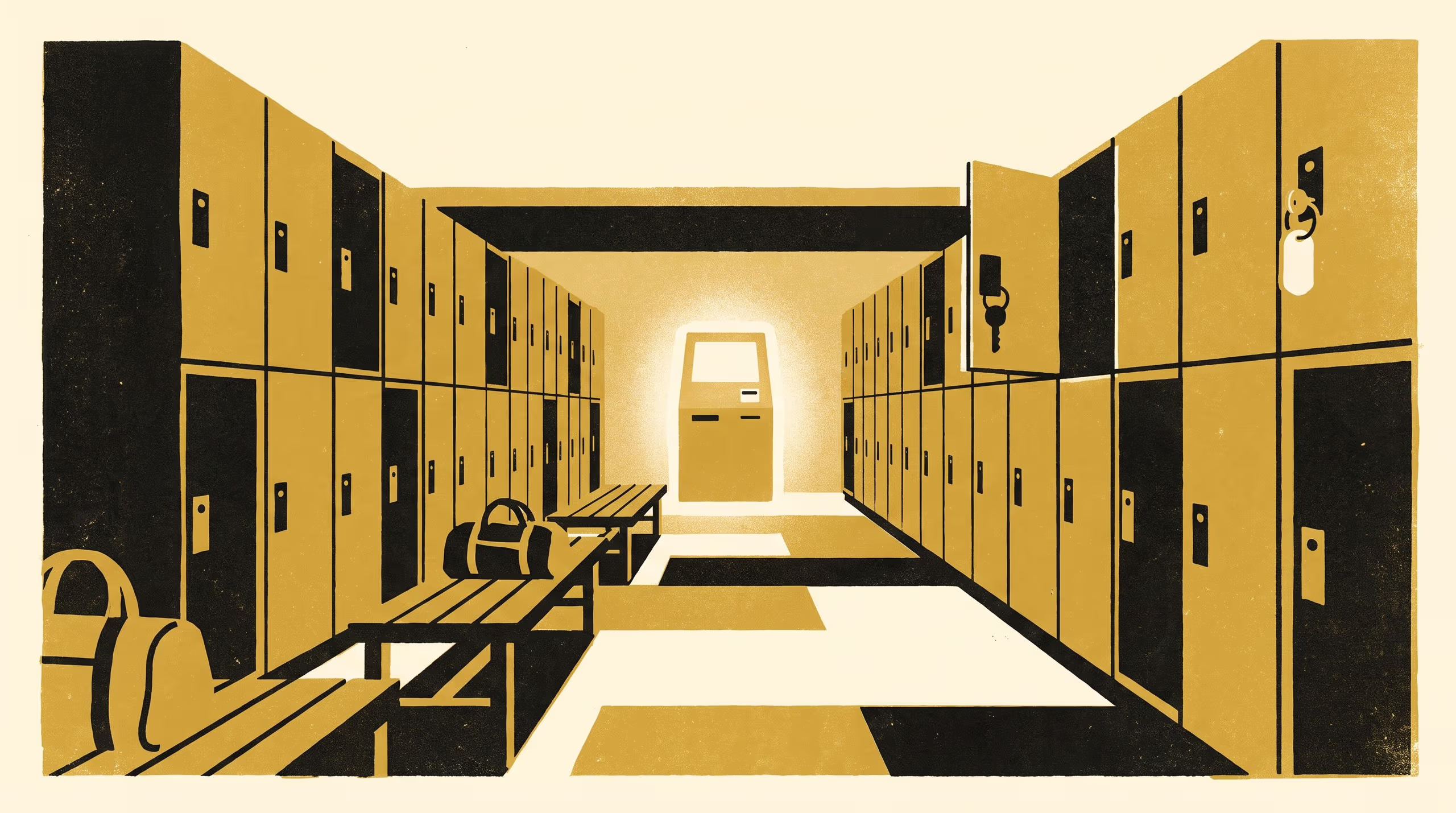
A new Slop University research poster logs locker key-fob returns across six gyms for 14 weeks, finding a membership app's commitment tier predicts promptness for barely a third of members, worst of all in its own top band.
A 14-week key-fob log across six suburban gyms finds a membership app's commitment tier predicts return promptness for little over a third of members
A gym locker’s key fob is a small, unglamorous instrument: hand it over, get it back, repeat. A membership app treats the pace of that exchange as evidence of something larger, sorting members into a commitment tier at sign-up and rarely revisiting the sort. The School of Emergent Priorities spent fourteen weeks across six suburban gyms checking whether the tier still describes the member handing the fob back. The School treats a fourteen-week fob log as exactly the kind of small, checkable claim its anticipatory-capability agenda exists to make.
It’s a small thing, a key fob, but it turns out to be one of the more honest instruments we’ve pointed at a membership tier in a while.
— Associate Professor Kwame Lindqvist, Director, Master of Priority Studies, School of Emergent Priorities
The study, from Associate Professor Lindqvist and Dr Runa Adegoke, logs the return latency of 1,842 members’ locker keys and sorts each into the band their app-assigned tier already predicts. Overall the tier calls it correctly a little over a third of the time; the app’s own “Elite” band, nominally the promptest, calls it correctly least of the three, its members landing more often in the delayed band the tier is meant to rule out.
From across the University’s other school, Dr Marit Osayande, Convenor of the Living Dashboard, read the finding as a familiar shape wearing a new instrument: “A status label only stays true for as long as somebody keeps checking it against the thing it labels, and most labels stop being checked the day they’re issued.”
The full poster is available from the University’s research repository under an open licence, doi:10.5555/slop.3znmr3.