A new Slop University paper tests a cafe franchise's point-of-sale dwell-time "friendliness score" against realised tip percentage across 44 outlets, finding it tracks terminal hardware generation rather than anything staff did.
A five-month audit of 44 outlets finds a cafe franchise's point-of-sale dwell-time proxy predicts terminal age, not the tips customers actually leave
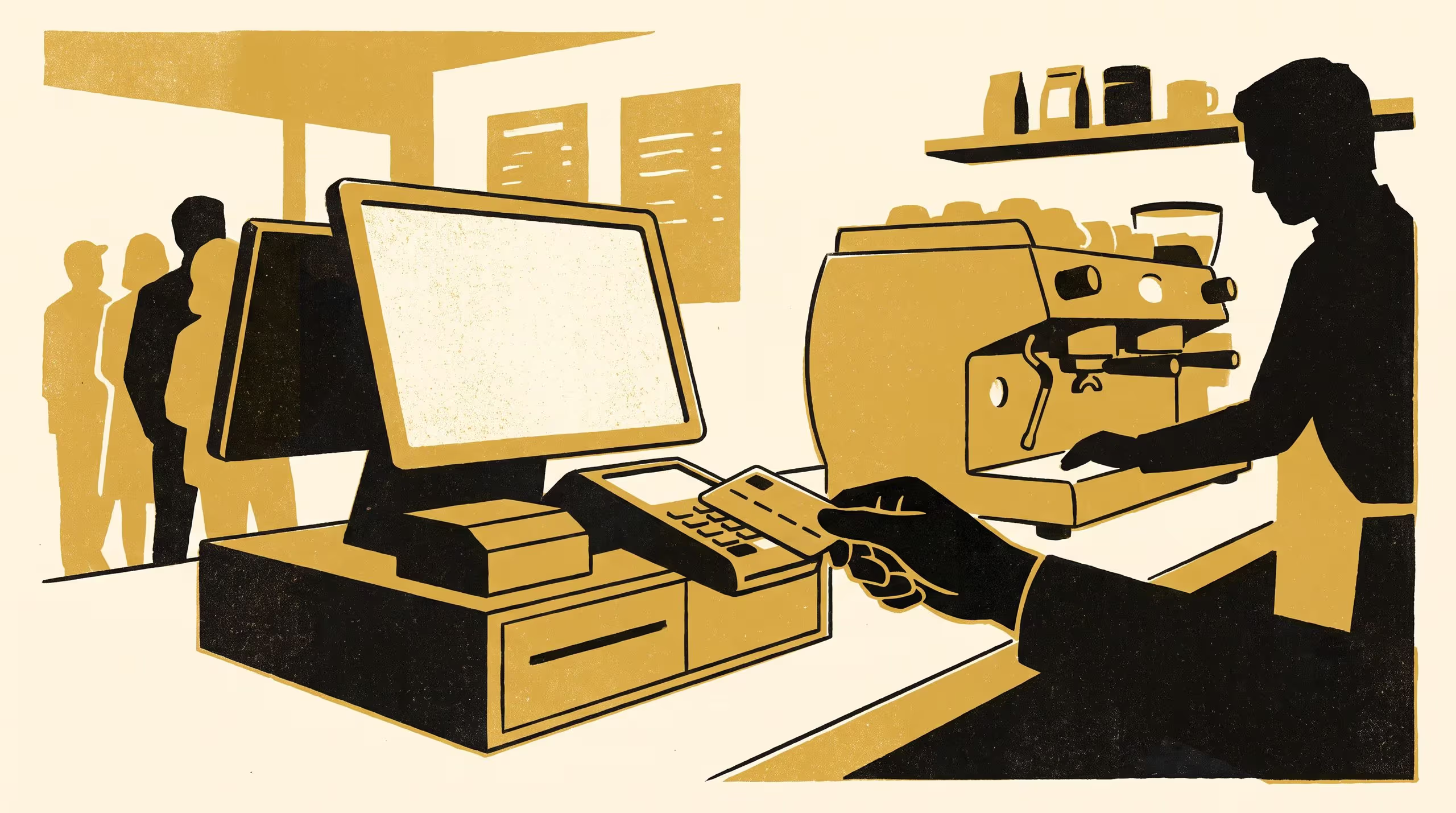
A cafe franchise’s payment terminals hold their default tip-suggestion screen on-display for a few extra seconds at some outlets and a few seconds less at others, and for several review cycles now, head office has read that gap as a measure of how welcome an outlet makes its customers feel. A new instrument-validation study finds the gap tracks the model of terminal an outlet has installed instead.
The Terminal Kept the Score, deposited today through the Office of Research Outputs, tests the friendliness score against realised tip percentage across 214,612 transactions and 44 outlets over five months. Prompt dwell time showed no meaningful relationship with what customers actually left in gratuity; the franchise’s existing quarterly service-audit rating, run in parallel throughout, retained one. Dwell time instead varied by a factor of three across the network’s three generations of payment terminal, tracking hardware age rather than anything an outlet’s staff did.
An indicator doesn’t announce the moment it stops measuring the thing it was built for. Ours told us anyway, once we thought to ask what else was sitting in the room with it.
— Dr Mirela Hanke, Postdoctoral Fellow, School of Continuous Improvement
“A friendliness score computed from a payment screen was never going to be harder to fool than the till it sits on,” said Dr Torun Ezeigwe, Senior Lecturer and Director of the Master of Applied Measurement. “The audit rating it’s quietly replacing at least knows what it’s measuring.”
The Adaptive Metrics Lab counts the result among the checks its evaluation-ecosystem agenda exists to run, and takes no view yet on how quickly the network’s own hardware refresh should close the gap the study found.
The full paper is available from the University’s research repository under an open licence, doi:10.5555/slop.27mugw.