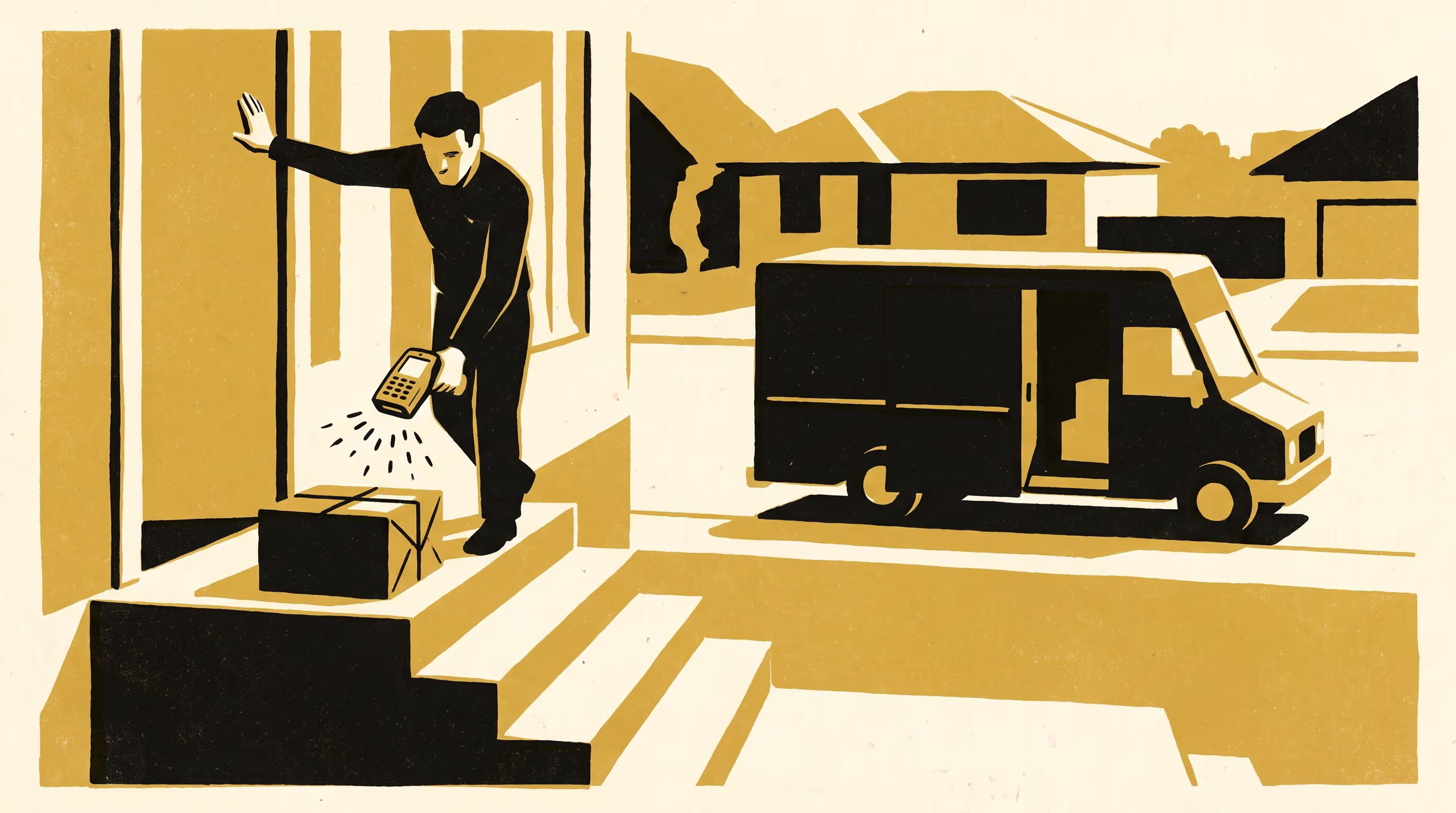
A new Slop University paper classifies what actually trips a parcel courier's handheld scanner drop-detection alarm, finding only genuine drops predict a confirmed damaged-parcel claim while a firmware recalibration leaves the network's per-driver gentle-handling score unchanged.
A taxonomy of 4,180 fall-detection alerts across nine depots finds only one of five trigger categories tracks a confirmed damaged-parcel claim, while the network's gentle-handling score treats all five alike
The School of Continuous Improvement has spent years cataloguing what a device-generated signal proves and what it only repeats; this is the first time the cataloguing told us which of an alarm’s five ways of firing we could actually trust.
— Dr Torun Ezeigwe, Senior Lecturer and Director, Master of Applied Measurement
A parcel courier’s handheld scanner logs a fall-detection alert whenever its accelerometer senses a sudden deceleration, and the depot network behind it reads every alert the same way: one deduction against a driver’s gentle-handling score. The School of Continuous Improvement set out to check how often the alert meant what the score assumes.
The Scanner Read the Stairs as a Drop, deposited today through the Office of Research Outputs, hand-codes 4,180 fall-detection alerts across nine depots over an eleven-week peak season into five categories — stair sprint, garden step, van-door slam, handoff jostle, and genuine drop — then checks each against the network’s damaged-parcel claims register. Genuine drops make up 7.4% of logged alerts and are matched to a claim 44.6% of the time; every other category sits at 7.1% or below. A firmware recalibration aimed at the two largest categories left the score’s spread across drivers unchanged.
“We’d welcome a driver’s own account of which of the five things actually happened before anyone treats a category as a threshold,” said Dr Solveig Adeyemi, Lecturer, School of Continuous Improvement. “The claims register told us which alerts mattered. It didn’t tell us why the other four keep firing.”
The Master of Applied Measurement program is expected to draw on the taxonomy as it revisits how a device-generated signal earns a place in next year’s measurement curriculum.
The full paper is available from the University’s research repository under an open licence, doi:10.5555/slop.lkq5wu.