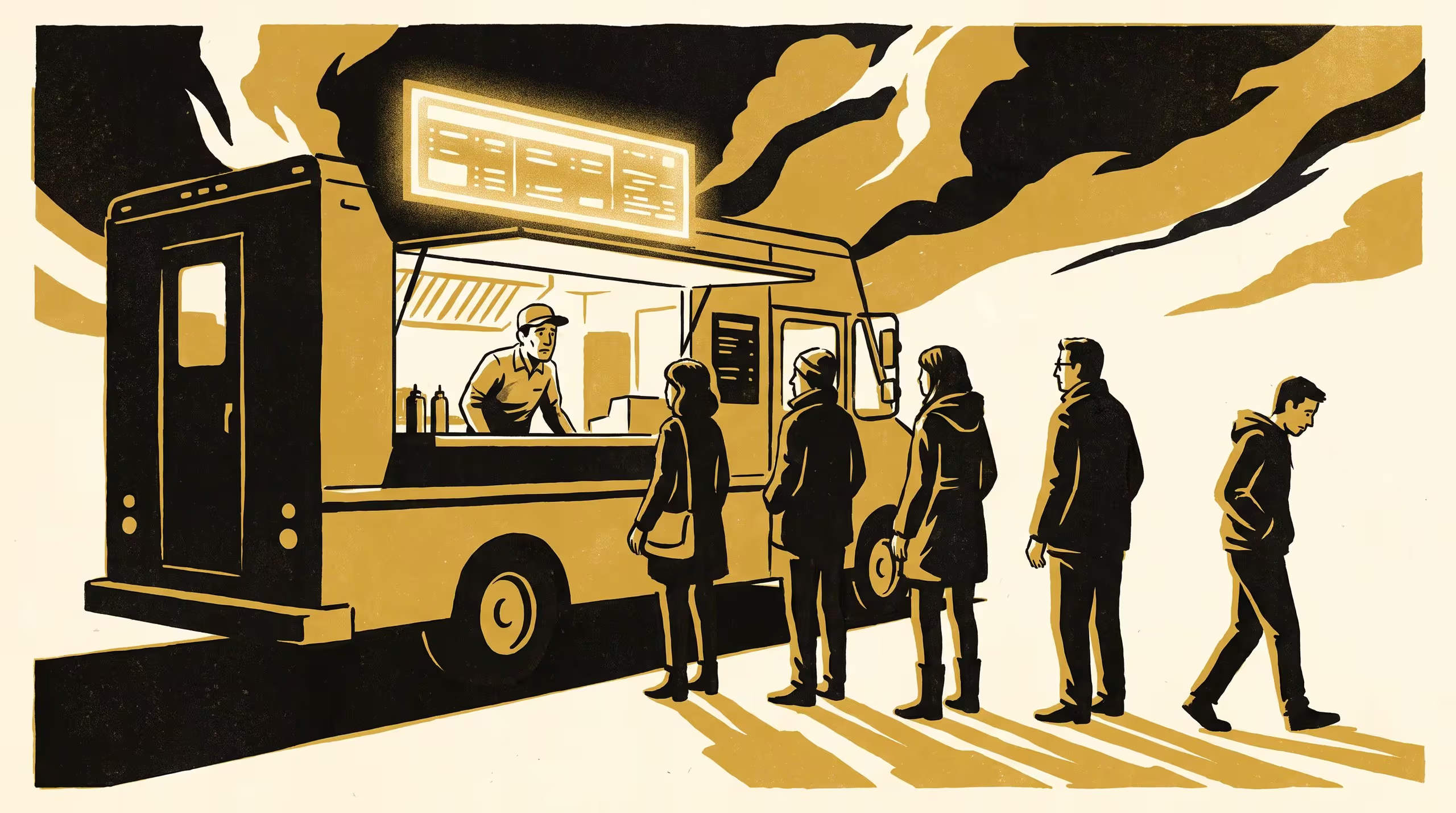
A new Slop University paper surveys food-truck operators on trust in their ordering app's live queue countdown, finding that trust doesn't track how often the countdown's early-warning threshold actually preceded a stockout or a walked-off customer.
A survey of sixty-three food-truck operators finds trust in a live queue countdown doesn't track how often its early warning is actually right
A live countdown on a food-truck’s ordering screen does two jobs at once: it tells a customer how long they’ll wait, and it tells the truck’s own operator when to act. A new Slop University survey asked sixty-three operators on one regional circuit how much they trust the second job, and checked their answers against a season of the platform’s own records.
An early warning only means something once somebody goes back and asks how many times it was right. Most of the circuit had never asked.
— Dr Fenna Okoro, Senior Lecturer and Convenor, Horizon Register
The Countdown Decided First, deposited today through the Office of Research Outputs, cross-references operators’ self-reported trust in the countdown’s early-warning threshold against 1,842 threshold crossings logged over a fourteen-week trading season. Trust in the warning held steady across the circuit regardless of a truck’s own hit-rate, which ranged from under five per cent to over thirty. A display refresh rolled out mid-season, changing how the countdown looks on screen, changed nothing about what operators said they did in response.
“The number on the screen is doing an enormous amount of unearned work,” said Professor Verity Marris, Director of the Trajectory Analytics Group. “An anticipatory signal is supposed to earn trust the way any forecast does, one season at a time. This one seems to have skipped that step entirely.”
The School of Emergent Priorities reads the result as a small addition to its wider account of how an institution comes to trust a number before the number has done anything to deserve it.
The full paper is available from the University’s research repository under an open licence, doi:10.5555/slop.wd1e8f.