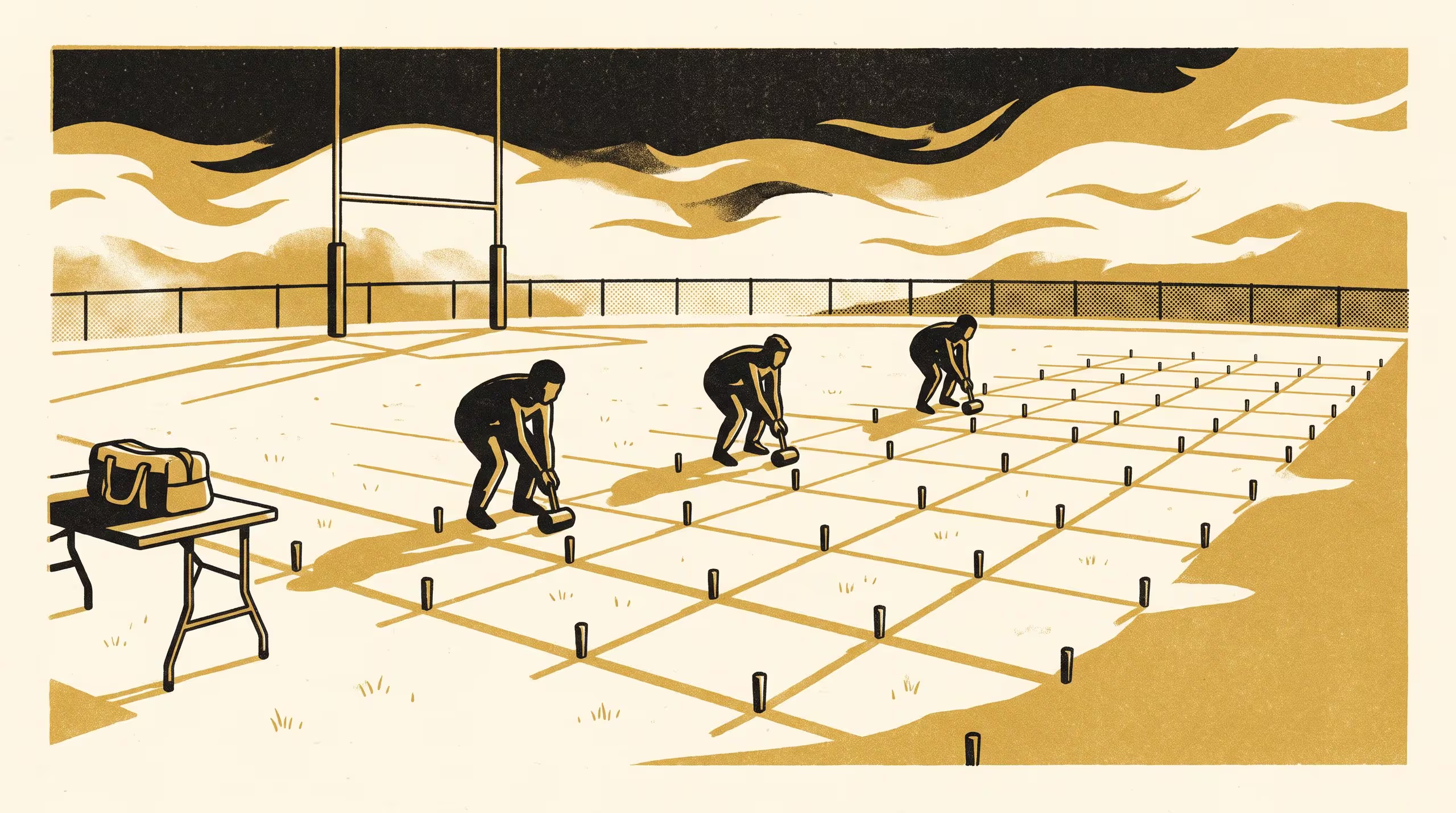
A new Slop University research poster decomposes the single hardness reading that decides whether junior football is played, and finds most of its variation sitting in where on the ground the hammer happened to fall.
3,744 drops across 26 junior football venues put 42 per cent of the mandated reading's variance on position within the ground and 15 per cent on the ground itself
On a winter Saturday morning, whether a junior football match goes ahead can come down to a single number: one drop of a weighted hammer, taken once, by one volunteer, in one corner of the ground.
Where the Hammer Landed, deposited today through the Office of Research Outputs, asks what that number is a measurement of. Researchers from the School of Emergent Priorities took 3,744 readings across twenty-six venues — twelve positions on each ground, six times through each morning, by two assessors working blind — and separated the resulting variation into its sources. Position within the ground accounted for 41.8 per cent of it. The hour of the morning accounted for 22.3. The ground itself, which is what the association’s threshold is written about, accounted for 14.9.
We went out expecting an argument about hammers and spent nine Saturdays learning how rarely anybody asks where a measurement was taken from. The question is now pointed at our own instruments as well.
— Dr Petra Umbile, Postdoctoral Fellow, School of Emergent Priorities
The work sits within the School’s measurement-dependability agenda and was delivered through a crossed sampling design across the participating venues, with the cooperation of volunteer ground staff over nine consecutive fixture mornings.
Dr Torun Ezeigwe, Senior Lecturer and Director of the Master of Applied Measurement, said the study “raises more questions about sampling than it settles, and the University would rather have them raised than assumed away”. The poster closes by proposing a nine-position, two-occasion protocol that requires no new equipment.
The University regards work of this kind — patient, unglamorous, and conducted almost entirely on wet grass before eight in the morning — as central to what it is for.
The full poster is available from the University’s research repository under an open licence, doi:10.5555/slop.skexq0.