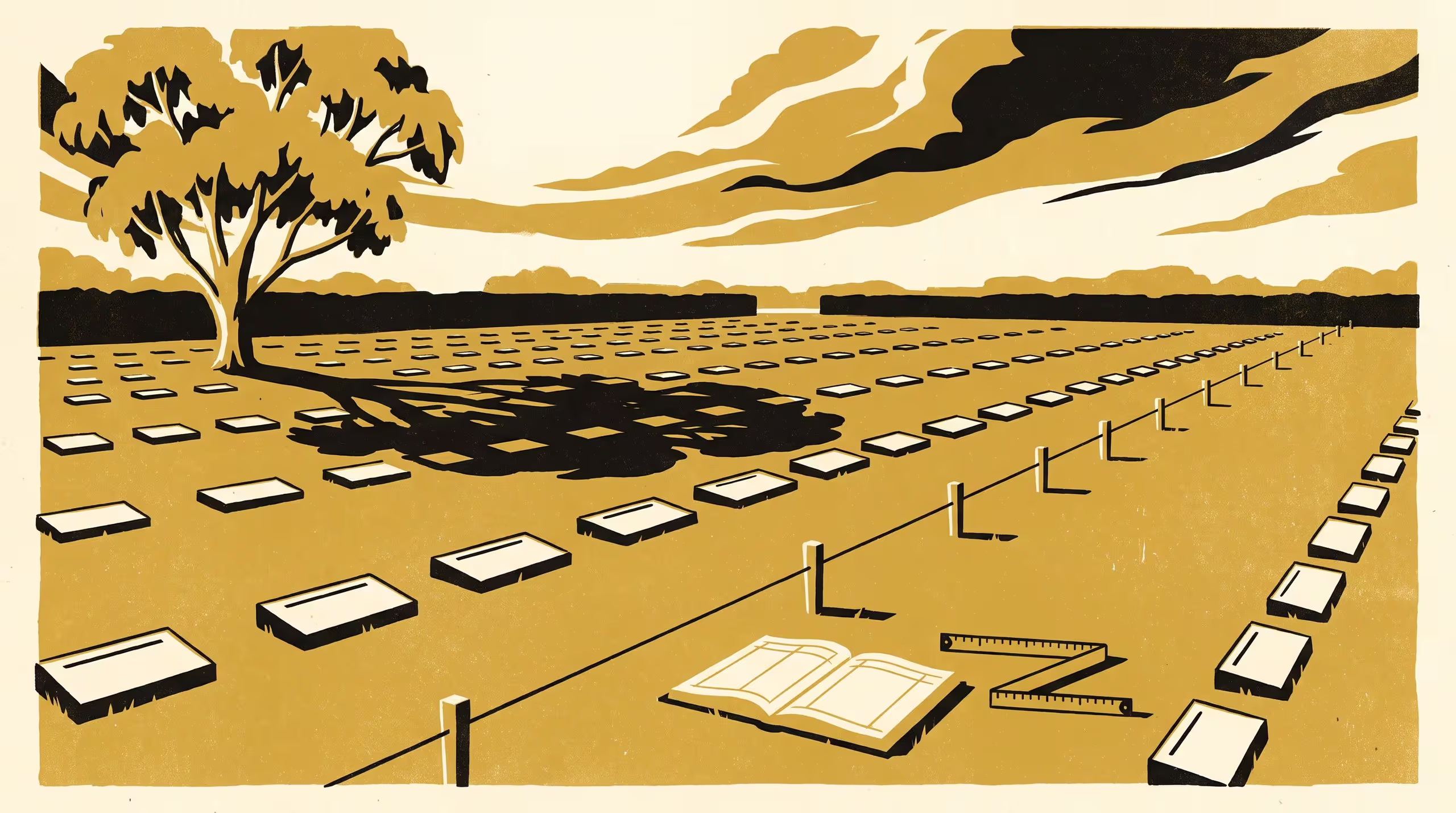
A plot-by-plot survey of four council cemeteries finds the burial register overstates remaining capacity, and moves a land-acquisition trigger into the past.
Of 3,412 plots a burial register carries as unsold, 1,986 can be opened under the council's own siting rules
Somewhere in a council’s forward plan sits the year it will have to begin buying land for a new cemetery. Eleven months of survey work across four of its existing ones has moved that year into the past.
The poster behind the claim, Room on Paper, comes from three researchers in the School of Emergent Priorities, and it is about the distance between a register and a paddock. Councils report remaining capacity by dividing the plots a burial register carries as unsold by the annual interment rate. The University’s team went and stood on all 3,412 of them.
A register is a very good record of what a council has promised. It was never asked to be a record of what a council has. Most of this work was watching those two things come apart, at walking pace.
— Dr Ingrid Vasseur, Lecturer and Convenor, Futures in Committee
Two surveyors assessed every plot independently against the council’s published siting rules, with the disqualifying criteria lodged before the first site visit and never revised. 1,986 plots can be opened. The largest single deduction is neither a tree nor a drain but paperwork: 611 plots are reservations pre-purchased between 1961 and 1994 and still carried as unsold.
Dr Lindiwe Achterberg, who walked three of the four sites, said the School had “set out to check an arithmetic and finished with a long argument about what counts as a plot”.
The University takes work of this kind, unhurried and addressed to a decision nobody has yet had to make, as the plainest expression of its anticipatory-capability agenda.
The full poster is available from the University’s research repository under an open licence, doi:10.5555/slop.lckm8v.