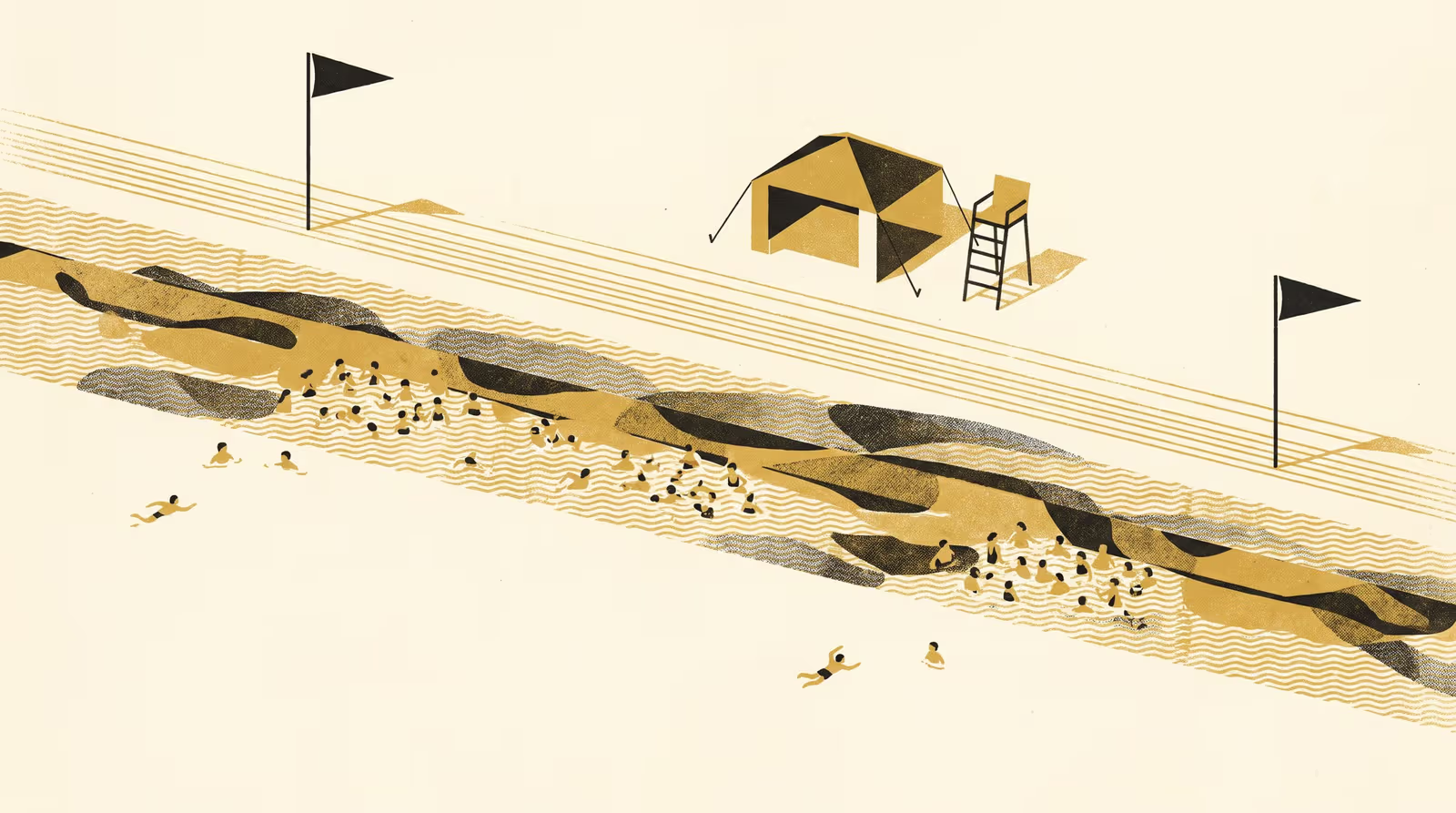
A Slop University research poster codes why patrol captains site the beach flags where they do, and finds the placement that follows the crowd returns the season's highest between-the-flags compliance.
214 patrol shifts at 18 beaches, and the six rationales a captain gives for where the flagged area ends up
Where a patrol plants its flags in the morning turns out to predict a beach’s safety compliance figure better than anything the swimmers do.
Between the Flags, Because the Flags Moved, deposited today through the Office of Research Outputs, covers 214 patrol shifts across 18 patrolled beaches over a single season. One state lifesaving service reports the share of swimmers observed between the flags as its beach-safety compliance indicator. The poster leaves that figure where it is and puts a prior question to it: how the flagged area came to be where it is.
Each shift ended with a nine-minute conversation on the sand. Transcripts were coded by two independent assessors into six placement rationales, settled before the season opened and not revised afterwards. Crowd-led placement — siting the flags around swimmers already in the water — accounted for 38.3 per cent of set-ups and returned a mean compliance of 88.3 per cent. Placements sited against a hazard the captain had identified before arriving returned 61.4.
Every captain we sat with could tell us exactly why the flags went where they did, and none of them was guessing. The awkward part is that the most defensible answer on the day is also the one the season’s figures reward, and nobody arranged that.
— Dr Anneke Tolan, Senior Research Fellow, School of Emergent Priorities
Dr Osei Vandermeer, Research Fellow and Convenor of the Review Cadence Observatory, said the taxonomy had mattered more to the team than the percentages did: “six categories is a small enough number to put on a form, and that is roughly the ambition.”
The School’s interest in where a measurement’s boundary gets drawn, rather than in what falls inside it, has been running for some years now, and the University is glad to see it carried onto a beach.
The full poster is available from the University’s research repository under an open licence, doi:10.5555/slop.o7sz75.