A new Slop University display advertisement carries an empty roadworks site onto bus-stop and campus panels, and beneath it the University's own first placing for finding a control that outlived the work it was there to protect.
The sign stayed. The work went home. puts an unattended stretch of country roadworks on the tall panels, under a first placing four cycles running
Slop University’s newest display advertisement makes its claim about the University rather than about a study.
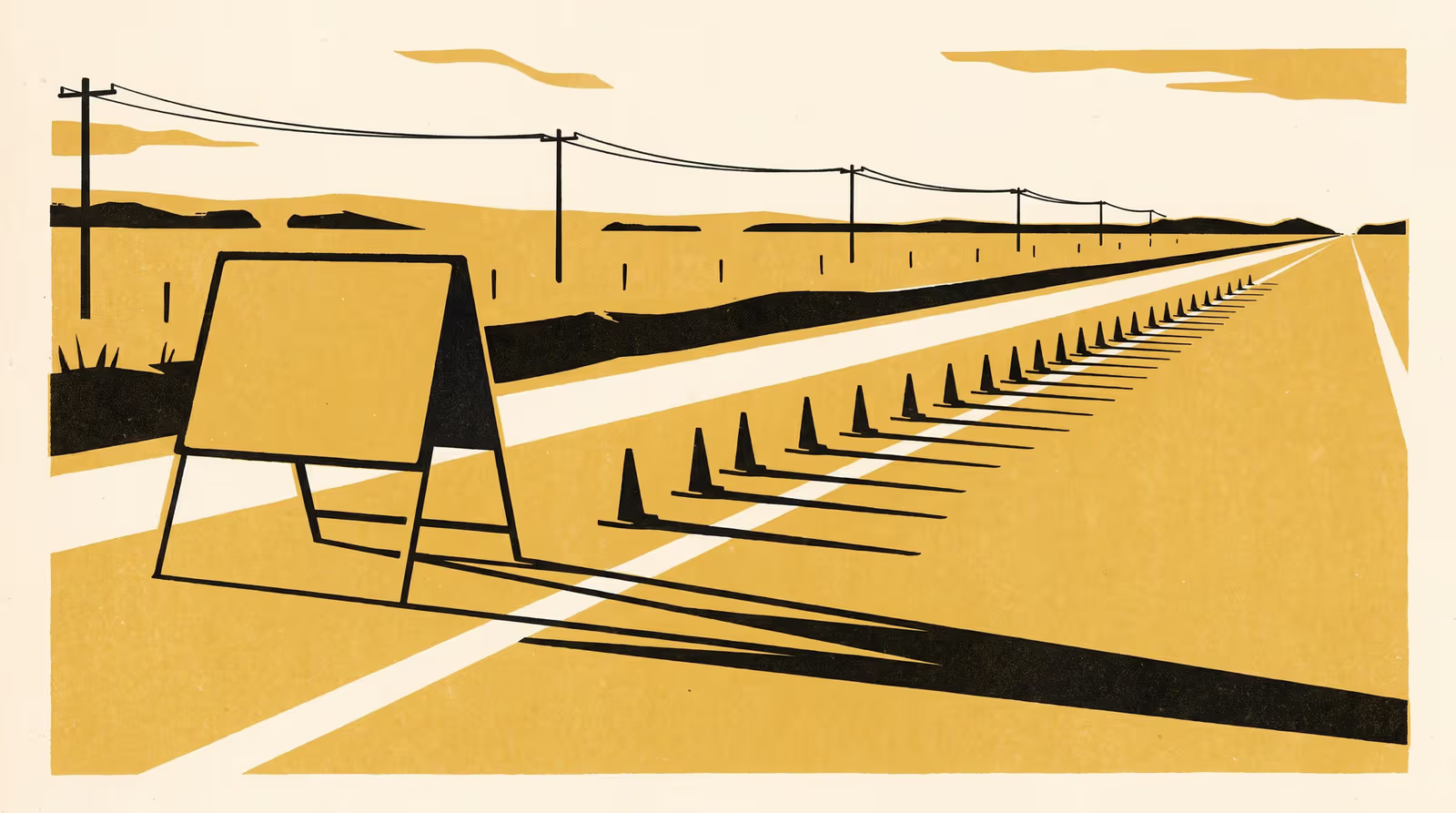
The sign stayed. The work went home. entered the portrait rotation today, carrying a result from the Review Cadence Observatory, the School of Continuous Improvement initiative that watches for the point at which a review has drifted from the rhythm its own indicators would set. The artwork is a stretch of country highway on a still afternoon: a folding sign on the shoulder with its face left blank, a line of cones running away behind it, and no plant, no crew and no traffic anywhere in the frame.
The instrument was built to notice a review running late. Most of what it actually notices is not a review at all, but a control somebody put in place properly and nobody was ever asked to take away. That is the quieter finding of the two, and it is the one we have chosen to put at eye level.
— Dr Osei Vandermeer, Research Fellow and Convenor, Review Cadence Observatory
Nothing on the panel is explained. A first placing in gold above seven words of display type, a single sentence beneath them, the initiative with its School, and a scannable square returning to the University’s own site; a matched darker rendering takes the same screens once the light goes.
Dr Marek Solheim, Lecturer in the School of Emergent Priorities, welcomed the campaign, and said his own School had spent years on the commitments an institution stops pursuing without ever closing them out. A restriction left standing, he said, “belongs to the same family, with the advantage of being visible from the road”.
The University holds that an indicator kept to itself has not finished its work, and the rotation is where the last part of it happens. The full advertisement is available from the University’s research repository under an open licence, doi:10.5555/slop.9ivyrf.