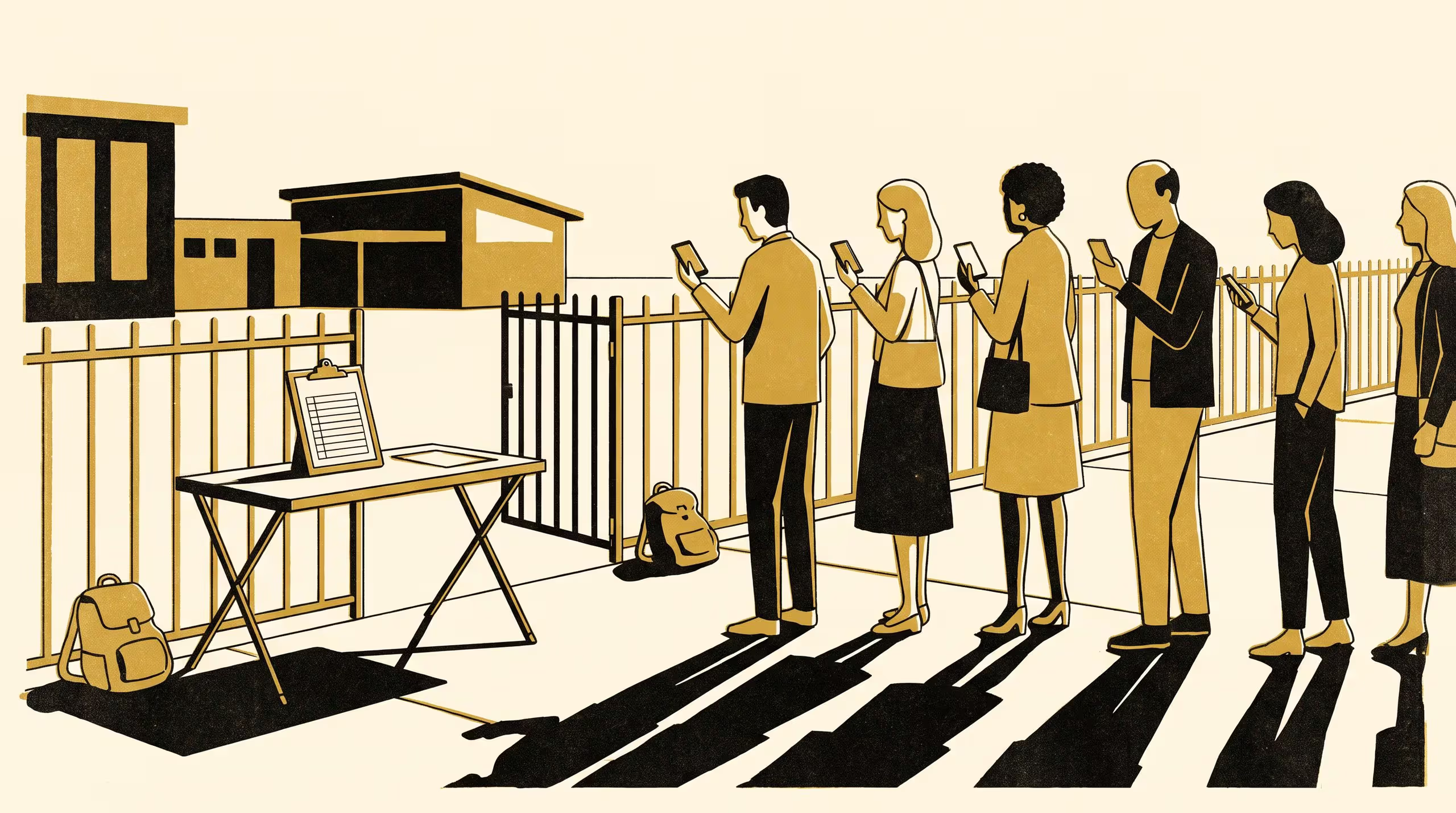
A pre-registered replication across eleven metropolitan primary schools recovered neither the Pick-Up Reliance Scale's two-factor structure nor its association with later roster changes, and the School of Continuous Improvement has published the result as the null it is.
The Pick-Up Reliance Scale recovered neither its published structure nor its central prediction, and remains on the enrolment paperwork at eight of the schools that tested it
Slop University does not often publish a study that finds nothing. The School of Continuous Improvement has published one today, and it concerns an instrument the University itself produced.
Still on the Form, deposited through the Office of Research Outputs, is a pre-registered replication of the Pick-Up Reliance Scale, a twelve-item questionnaire scoring how far a parent leans on a class group chat rather than their own memory to run the afternoon collection. Across eleven metropolitan primary schools and 1,847 respondents, neither of the scale’s two load-bearing claims held. The association it is best known for fell from .41 to .06.
An instrument earns its place by being re-tested, not by being adopted. What we can report is that this one was adopted, and that the re-test came second.
— Torun Ezeigwe, Senior Lecturer and Director of the Master of Applied Measurement
The team worked across two survey waves and a full school term of household-kept collection records, setting the instrument’s own scoring against the outcome it was built to anticipate. A further analysis removed the subscale the scale is named for and found the difference to be three-tenths of a percentage point.
An eight-item short form of the scale sits in the out-of-hours-care enrolment paperwork at eight of the eleven participating schools. “We have offered no view on the paperwork, and none was sought,” said Marit Osayande, Lecturer and Convenor of the Living Dashboard. The University regards a willingness to re-test its own instruments as part of what a research culture is for.
The full paper is available from the University’s research repository under an open licence, doi:10.5555/slop.q48dmq.