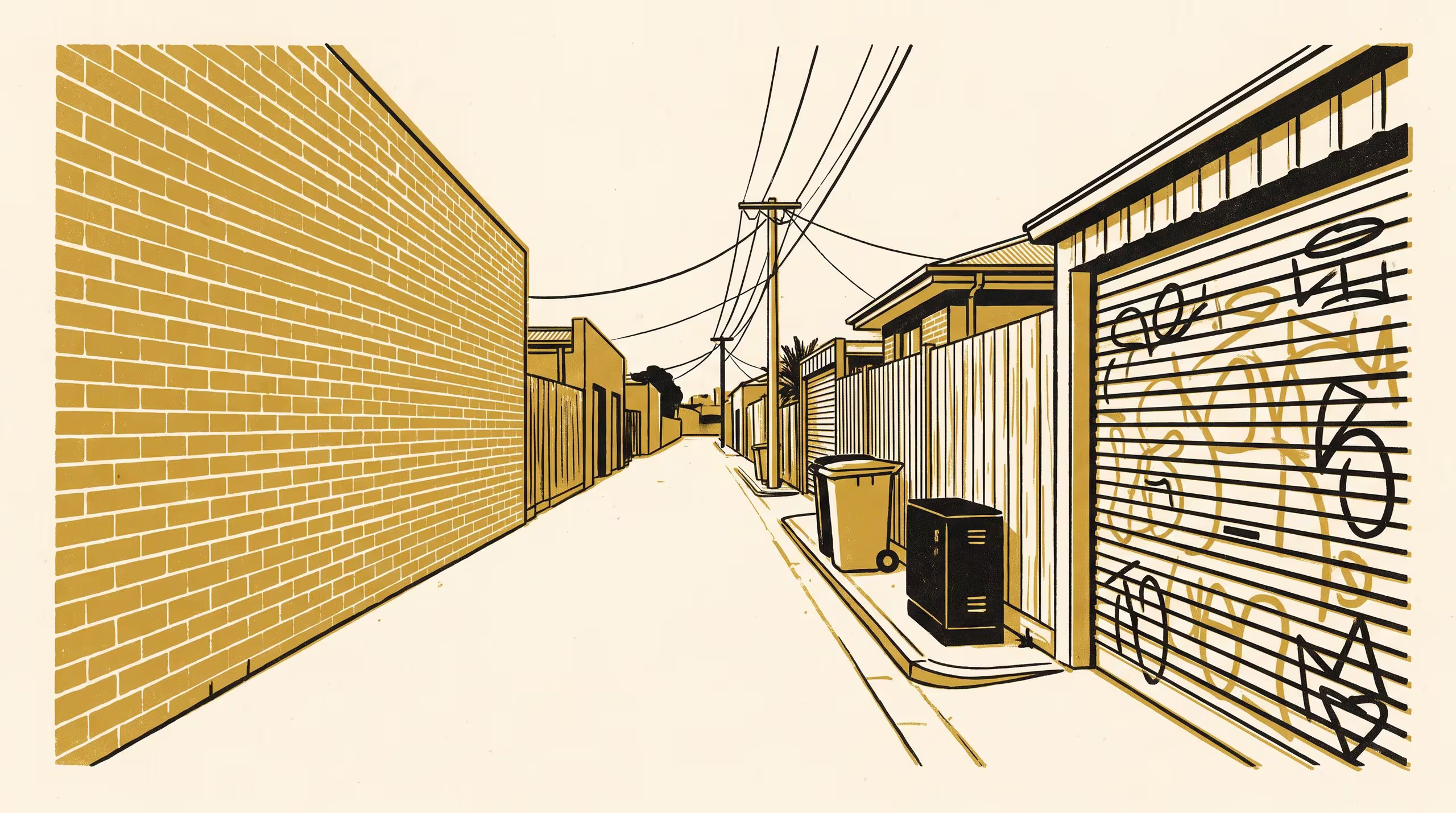
A new Slop University paper follows every surface in 84 laneways for a year and finds a two-day council removal standard clearing its own walls while the tagged area across the laneway as a whole does not move.
1,164 laneway surfaces photographed every fortnight for a year, with the fall on council walls matched by the rise on the fences and cabinets beside them
Where does a tag go when the wall it was on is painted out within two working days? A paper published today by the School of Emergent Priorities went back to 84 laneways every fortnight for a year to find out, and reports that it mostly goes about six metres sideways, onto the fence.
The study takes in every vertical surface facing those laneways — 1,164 of them, photographed from fixed positions across 26 rounds — and codes each one by who owns it before anything else is measured. On the council-owned walls covered by a faster removal standard, tagged area falls by 9.2 percentage points. On the private frontages beside them it rises by 4.0, and on utility cabinets by 2.3. Weighted across the whole laneway, the change cannot be distinguished from zero. Over the same twelve months the council’s published removal-compliance figure rises from 71.2 per cent to 96.5.
Anyone who walks that lane could have told us the fence was worse than the wall. What a year of photographs adds is that the two are the same size, and that only one of them is in the report.
— Dr Fenna Okoro, Senior Lecturer and Convenor, Horizon Register
The work extends the School’s interest in measurement frames that follow an object rather than an owner. “We built the instrument so it would not stop at a property boundary, which is the one thing the service cannot do,” said Dr Iben Chikere. “Whether that is a fair thing to ask of a removal crew is a separate question, and a good one.”
The University offers the paper as a contribution to how public services describe the reach of what they do. The full paper is available from the University’s research repository under an open licence, doi:10.5555/slop.hlf23z.