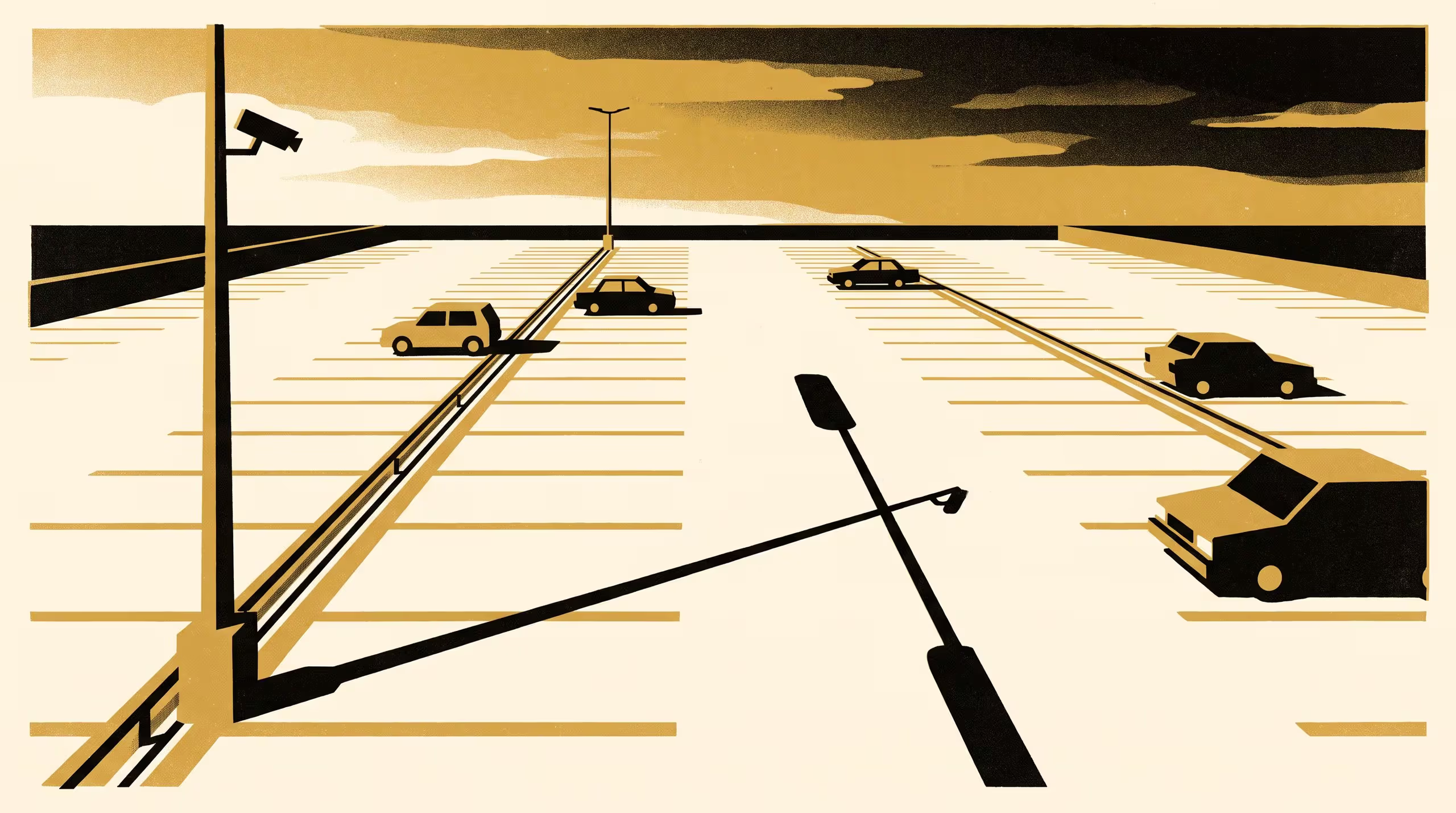
A new Slop University research poster joins a shopping centre's plate-read car-park feed to the registers the same operator already keeps, and finds a quarter of the dwell counted as shopping was never inside a shop.
Linking 1.18 million plate-read sessions to the centre's own permit and trade registers lowers mean dwell from 97 minutes to 69 and reorders five of six trading windows
Everything needed to correct the figure was already in the building. A suburban shopping centre ranks its trading windows on mean shopper dwell time, computed from the plate reads at its entry lanes, and its leasing committee reads that ranking. The same operator separately maintains a staff-parking permit list, a trade-access list, and a register of long-stay exemptions. Nothing joins them.
Shopping, or Just Parked, deposited today through the Office of Research Outputs, runs the join. Researchers from the School of Emergent Priorities linked twelve months of plate-read sessions — 1.18 million of them — to those three registers. Just under a quarter of the counted session-hours, 24.1 per cent, resolve to permit-holding staff, trade vehicles, or registered exemptions. Removing them lowers mean dwell from 97 minutes to 69 and reorders five of the six trading windows; weekday morning, the strongest window in every published monthly figure, falls to fifth.
The join takes an afternoon. What the School would now like to understand is the arrangement under which it went unrun for as long as it did, and we expect that to be the longer piece of work.
— Dr Runa Adegoke, Senior Lecturer and Convenor of the Strategic Drift Survey
The study was delivered through the School’s strategic-drift agenda, harmonising an operational sensing feed with the administrative records already held alongside it, and pre-registering its linkage rules and exclusion thresholds before any data was accessed.
Dr Mirela Hanke, Postdoctoral Fellow in the School of Continuous Improvement, said the work “sits with a longstanding interest of ours in what happens once a measurement becomes the basis for a decision it was never built to carry”. The University regards the joining of records it already holds as an unglamorous form of institutional self-knowledge, and one it intends to keep supporting.
The full poster is available from the University’s research repository under an open licence, doi:10.5555/slop.pp7zyj.