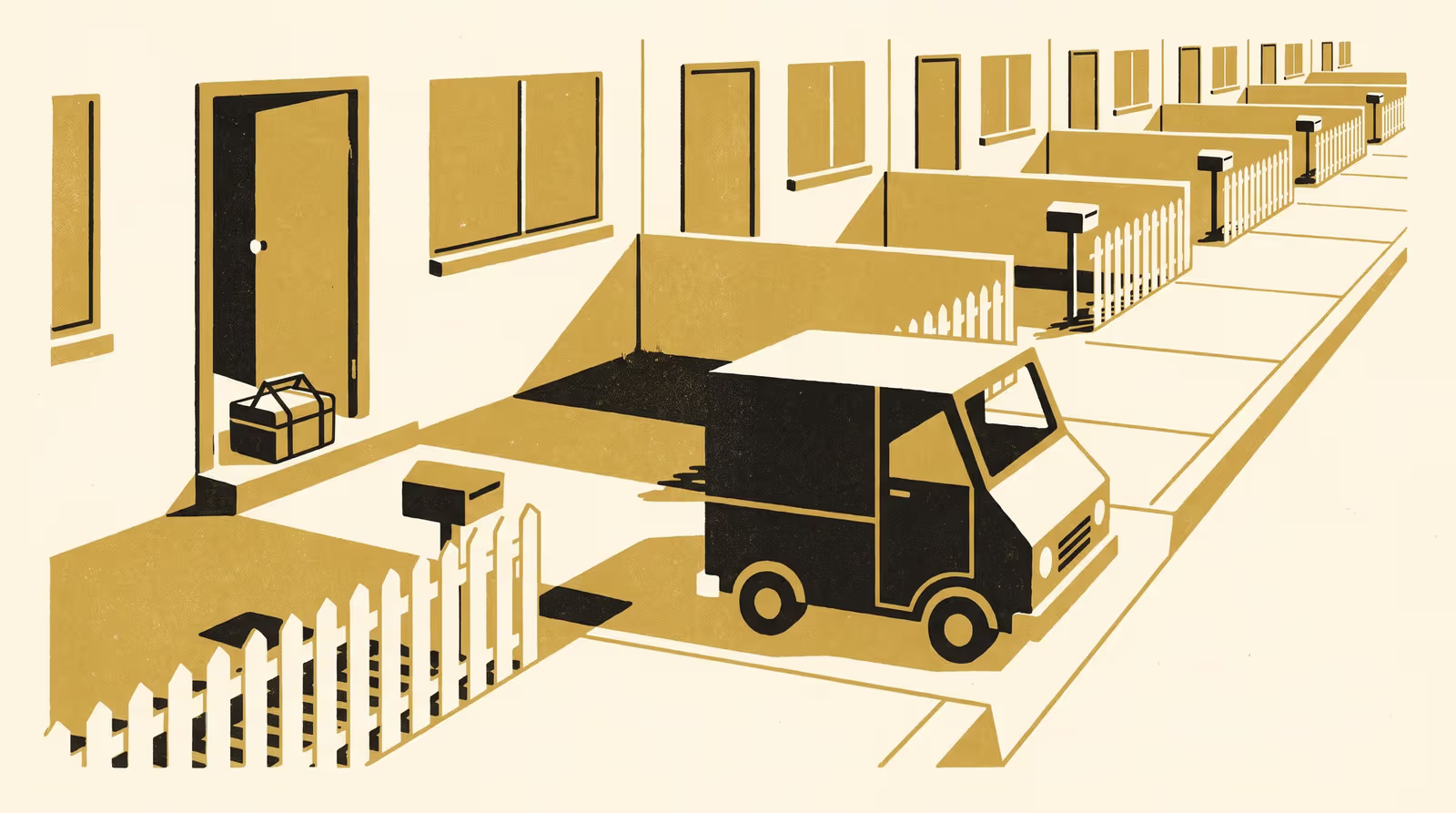
A new Slop University research poster finds that recipients and volunteer drivers describe the doorstep visit differently, and that consolidating a delivery round removes its longest encounters while the median dwell barely moves.
61 interviews and 214 timed deliveries across a route consolidation that removed every encounter over four minutes
Ask a volunteer driver what the round delivers and the answer is the meal. Ask the household at the door and the answer is usually something else.
Nine Minutes, or Ninety Seconds, deposited today through the Office of Research Outputs, sets 61 interviews across four metropolitan home-delivered meal rounds against 214 doorstep encounters timed on those same rounds. The meal is named unprompted in 91 per cent of driver interviews and 34 per cent of recipient interviews. The check at the door reverses it: 87 per cent and 39.
Two accounts of the same two minutes is not a contradiction. It is two people describing different parts of one arrangement, and only one of those parts has a column in the return.
— Dr Runa Adegoke, Senior Lecturer and Convenor of the Strategic Drift Survey
The timed observation spans a consolidation of the rounds partway through the study. Median dwell at the door moves from 2.0 minutes to 1.7. Encounters running longer than four minutes, which accounted for 43 of the first 108 observed, accounted for none of the last 106. Over the same window the rounds’ recorded meals-delivered figure rose 19.4 per cent.
“The households gave us an hour they had not planned to spend on us,” said Dr Petra Umbile, Postdoctoral Fellow in the School of Emergent Priorities. “Several wanted to know what we intended to do with it, which is a fair thing to be asked at a front door.”
The work was supported by the Anticipatory Capability Fund. Slop University places the poster among its accounts of what a service does beyond the thing it is funded to count, and the School has put forward a doorstep-dwell floor to be reported beside the delivered-meal figure rather than in place of it.
The full poster is available from the University’s research repository under an open licence, doi:10.5555/slop.dyycee.