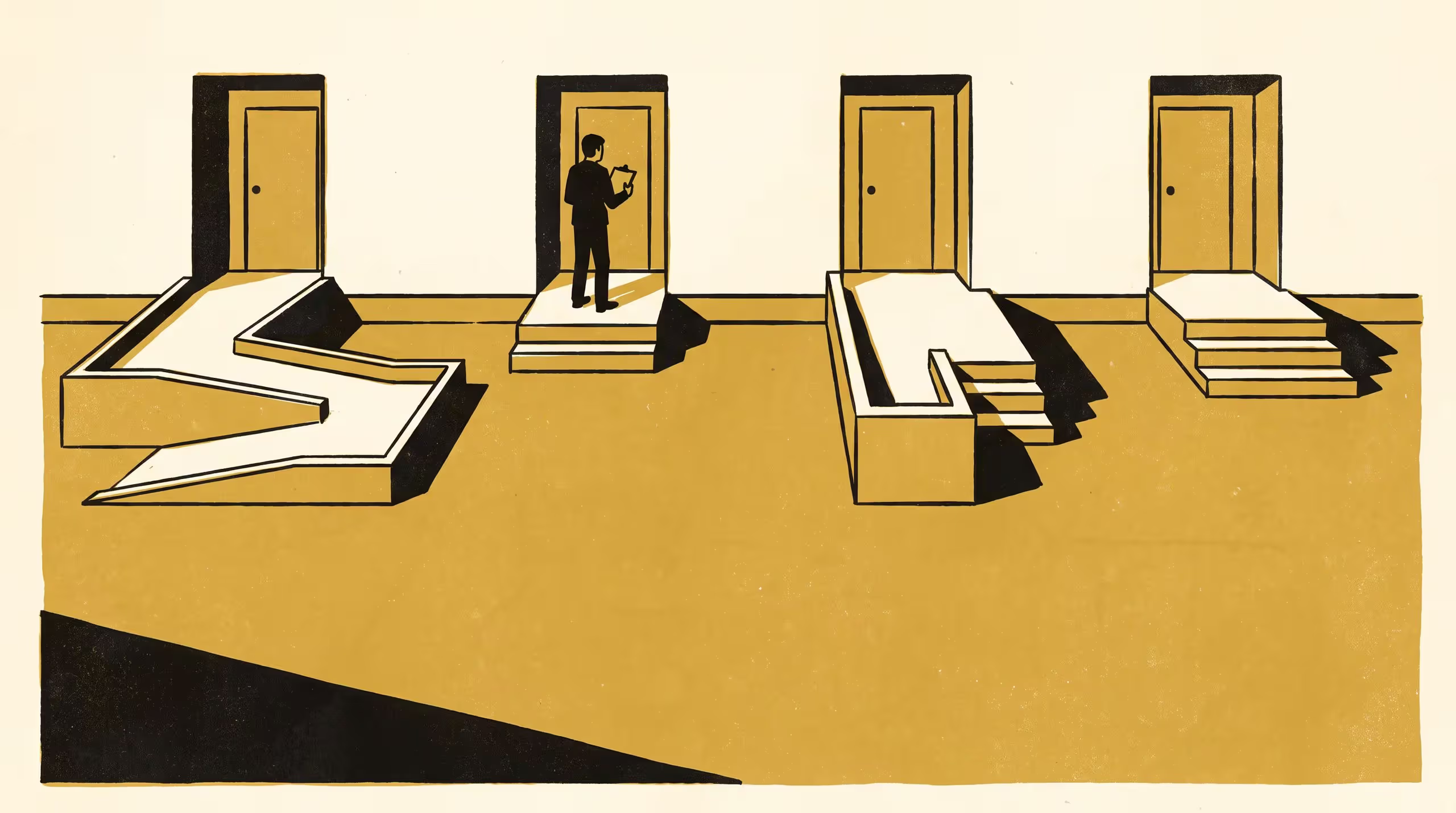
A new Slop University research poster audits every venue a council's hire listing calls accessible and finds the arrival completes at 34 of 88, while the single self-assessment question the listing is built from stays accurate.
Unannounced visits to all 88 listed venues complete the arrival at 34, with the front entrance rarely the point of failure
A council’s venue-hire listing answers one question about each of its halls. Slop University has published a study of the four that follow it.
Step-Free to the Door, deposited today through the Office of Research Outputs, sent two trained auditors to all 88 venues one metropolitan council lists as accessible. The visits were unannounced, made inside published opening hours across 14 weeks, and scored stage by stage against the listing’s own claim rather than an external standard: the approach and car park, the entrance, the route to the hired room, and an accessible toilet. The arrival completed at 34 venues. Six of the 54 failures occurred at the front entrance, which is the only stage the council’s annual self-assessment return asks about, and 84 of the 88 returns are accurate on that question.
The return is not wrong. It is answering the question it was given, and the question ends at the threshold, so everything a hirer does after that happens outside the instrument.
— Dr Anouk Mensah, Postdoctoral Fellow, School of Emergent Priorities
The University places the poster within a growing body of work on the instruments local government uses to describe itself, and within the School of Emergent Priorities’ anticipatory-capability agenda, which traces how a form’s wording carries forward across planning cycles and quietly settles what an institution is able to notice. Dr Lindiwe Achterberg, Lecturer, said the team had been struck less by the failures themselves than by “how steady the reported figure stayed the whole time we were finding them”.
The full poster is available from the University’s research repository under an open licence, doi:10.5555/slop.oxmu2l.