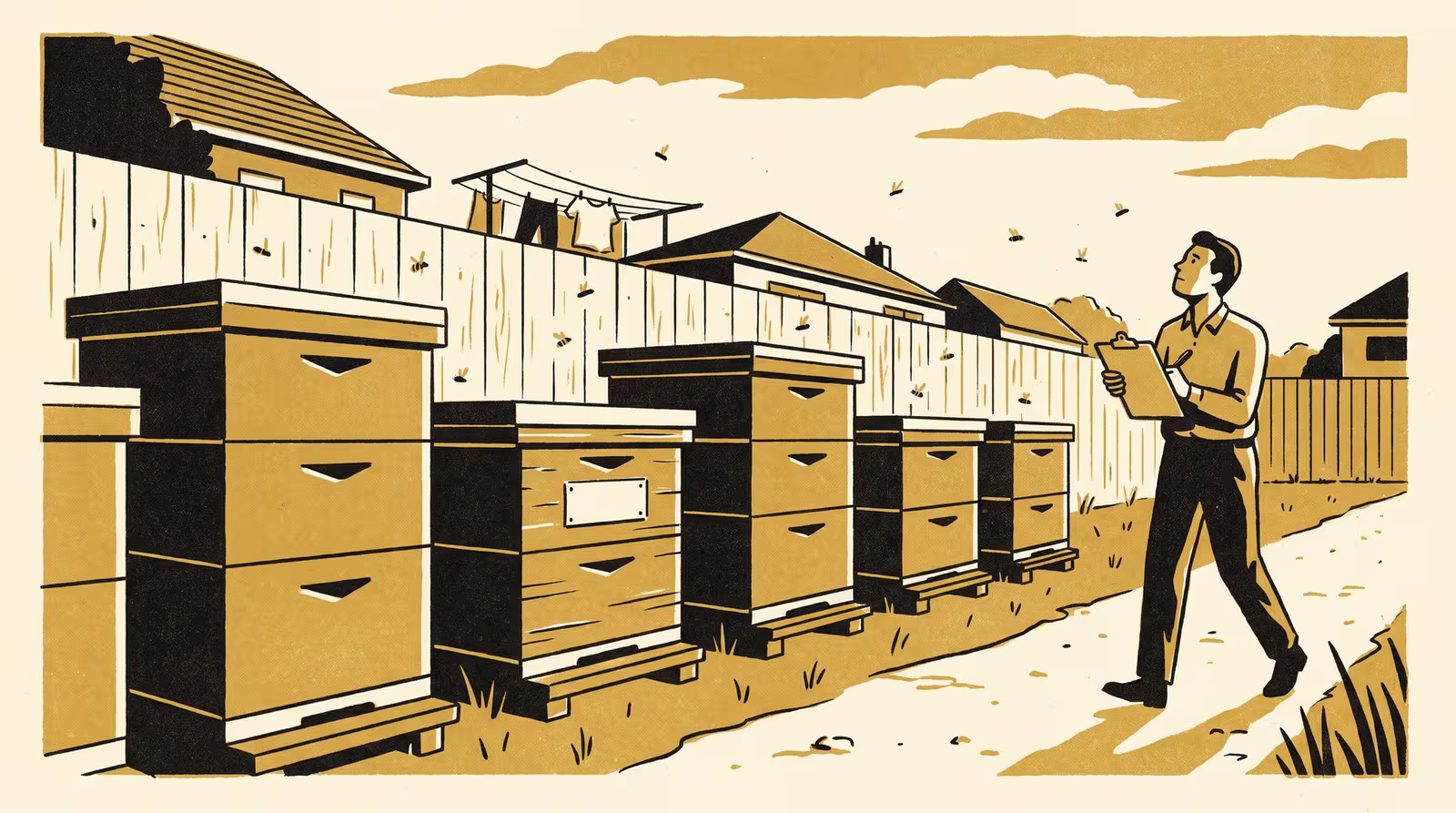
A new Slop University paper audits a state beehive register against three independent enumerations of keeping sites, finding it close to complete in the suburbs and substantially thinner on the fringe a response radius would most need described.
Three independent counts of apiary sites across one metropolitan area put register coverage at 93.8 per cent overall and 62.9 per cent on the peri-urban edge
Slop University has published a study that set out to find a missing population and largely failed to. The School of Emergent Priorities counts that among the more useful results of its year.
Ninety-Four Per Cent, In the Wrong Places, deposited today through the Office of Research Outputs, brings three independent enumerations of backyard beekeeping sites together across one metropolitan area: a state register, a volunteer swarm-collection log, and a street-level survey run without sight of either. Where an earlier University study of a reports-driven list placed more than two-fifths of its population outside every record, this one places 6.2 per cent, and models 2.2 per cent as reached by nothing at all.
We arrived expecting a hidden population and the arithmetic kept declining to produce one. What the School has taken from that is less about beekeeping than about its own habits, because we had carried an expectation across from an earlier study of ours and travelled a long way with it before anybody tested whether it belonged here.
— Dr Ronja Oyelaran, Senior Lecturer, School of Emergent Priorities
The result the team carried forward is the one the aggregate had been holding out of view. Coverage sits near-total across the inner suburbs and thins outward, reaching 62.9 per cent on the peri-urban fringe, the band where holdings are largest and most mobile and the band a notification radius would most need described. The register’s own assurance arrangement reports a single area-wide figure, which every version of the estimate comfortably clears.
“An instrument can be accurate and still be quiet about the thing you are asking it,” said Dr Fenna Okoro, Senior Lecturer and Convenor of the Horizon Register. “We would welcome the questions that follow from that, including the ones about our own indicators.”
The University takes a particular satisfaction in work that declines to confirm its own earlier findings, and regards the capacity to be corrected by its own instruments as part of what a research school is for.
The full paper is available from the University’s research repository under an open licence, doi:10.5555/slop.zrepcu.