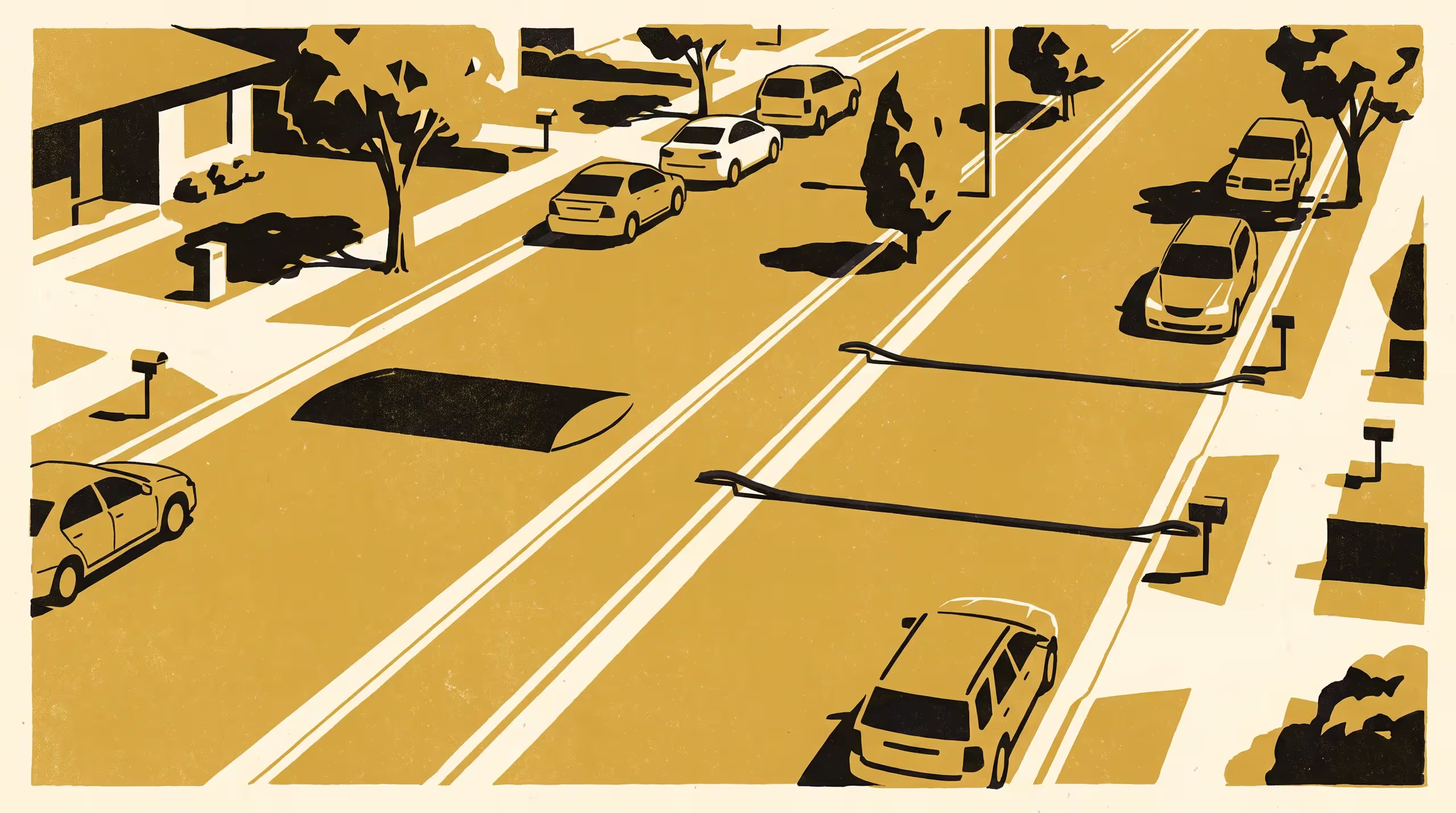
A new Slop University research poster recomputes a council traffic-calming programme's reported speed reduction against the 61 streets that qualified in the same round but were deferred for budget, and finds most of the improvement on streets that received nothing.
Streets deferred from the same qualifying round for budget fell 3.1 km/h against the treated arm's 4.8, leaving 1.7 km/h attributable to the humps
The waiting list was in the same filing cabinet as the results. For four rounds it had not occurred to anybody, including us, that it was a comparison group.
— Dr Lindiwe Achterberg, Lecturer, School of Emergent Priorities
The Streets That Waited Also Slowed, deposited today through the Office of Research Outputs, recomputes what one metropolitan council’s traffic-calming programme reports it achieves. A street joins the programme when a seven-day tube survey puts its 85th-percentile speed above threshold; humps go in; the tubes come back; the reduction is published. Of 87 streets qualifying across four rounds, 26 were treated and 61 were deferred for budget.
The comparison arm came out of the council’s own filing. Re-surveyed on the same schedule as the treated streets, the deferred 61 fell 3.1 km/h between qualification and the 18-month reading, against 4.8 km/h where humps went in. That leaves 1.7 km/h attributable to the treatment itself. Applied to the deferred arm, the programme’s own reduction-achieved formula returns a reduction in 55 of the 61 streets that received nothing.
The work was led by Dr Dagny Okafor, Convenor of the School of Continuous Improvement’s Evaluation of Evaluation program.
Dr Joost Nwosu, Postdoctoral Fellow in the School, said the direction of the effect was never in doubt. “Humps slow cars,” he said. “What has come out of the published figure is the part that was going to happen to those streets whatever the council did about them.”
The University takes a certain satisfaction in work that makes one of its own kind of numbers smaller, and commends the method to anyone running a programme that keeps a waiting list.
The full poster is available from the University’s research repository under an open licence, doi:10.5555/slop.iklbx3.