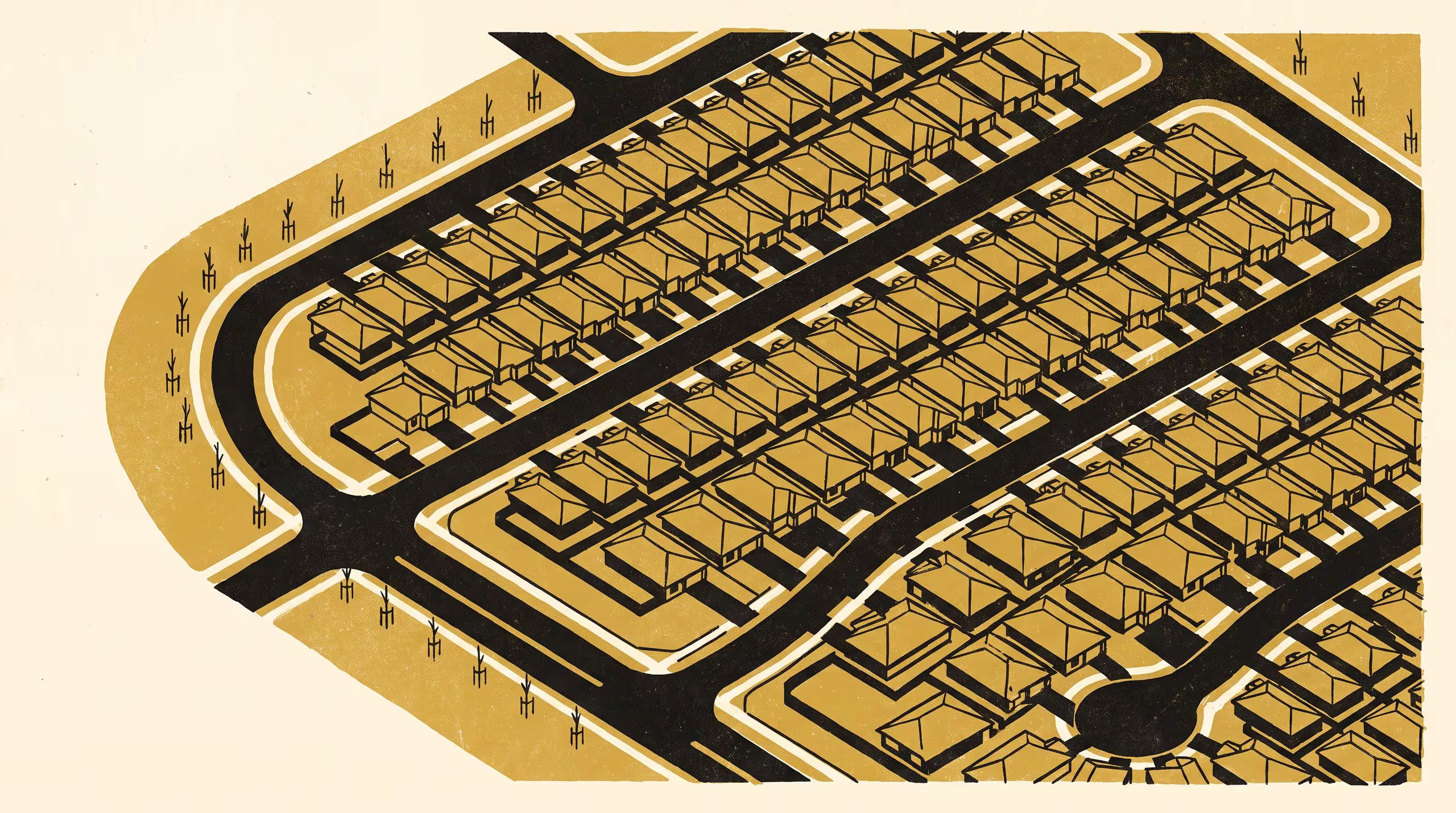
A new Slop University research poster measures realised façade variety across 2,148 dwellings in nine covenanted land releases and finds the effective number of schemes built at 3.3, against approved palettes offering between 26 and 41.
A study of 2,148 dwellings in nine land releases finds the rule satisfied at 98.6 per cent of windows, against 95.9 under random re-ordering
No two houses within five lots may look the same. That is the rule in a covenanted land release, it is checked before a slab is poured, and the design-review panel that checks it records the requirement as satisfied in 99.5 per cent of approvals.
Different From Its Neighbour, deposited today through the Office of Research Outputs, walked nine completed releases across three growth corridors and classified the front elevation of all 2,148 dwellings from the footpath, matching each lot to the file that approved it. The approved palettes list between 26 and 41 façade schemes. The effective number actually built is 3.3.
We can say what the covenant produces. What we would like somebody to ask next is what it was for: whether a street is meant to look varied to a person driving down it, or whether the point was only ever that nobody has the same house as the people on either side.
— Dr Ingrid Vasseur, Lecturer and Convenor, Futures in Committee
The School of Emergent Priorities team scored the rule across all 9,204 five-lot windows in the sample, then shuffled the same houses: ten thousand random re-orderings of each street’s own stock, holding the mix and the street length constant. Chance alone satisfies the covenant at 95.9 per cent of windows. The built streets manage 98.6.
“Ninety-eight point six is a real number and it is honestly arrived at,” said Associate Professor Kwame Lindqvist, Director of the Master of Priority Studies. “The work is in what you set beside it, and until now there was nothing to set beside it.”
Slop University takes the deposit as a sign of the School at its most useful, counting what a rule was written to produce rather than what it was written to forbid.
The full poster is available from the University’s research repository under an open licence, doi:10.5555/slop.hjuy54.