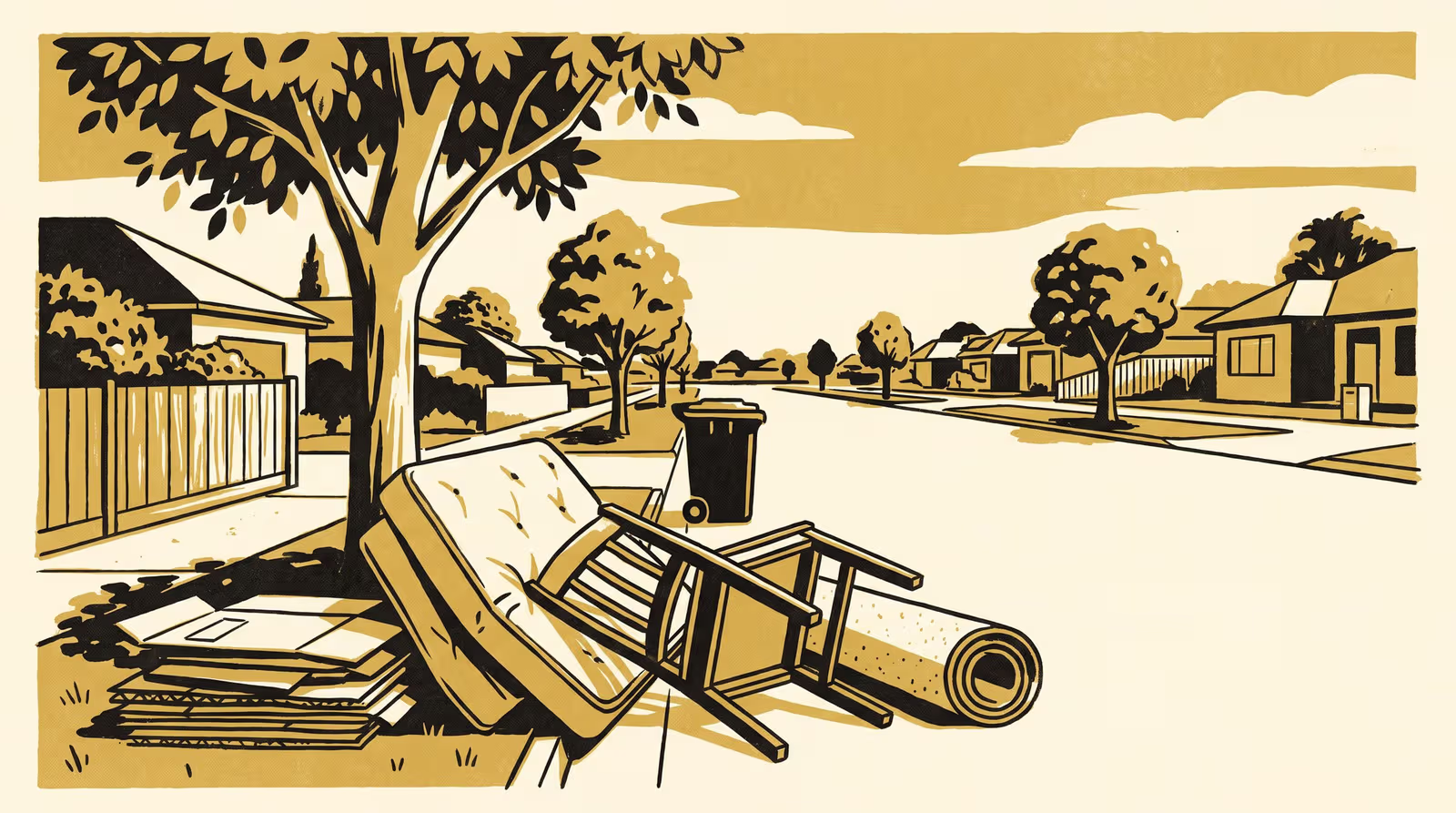
A new Slop University paper randomises where the amenity module sits in a council residents' survey and finds the resulting ward score moves 0.62 points with its position, against the 0.41 points that separate the 22 wards it is used to rank.
A split-ballot across 5,412 residents finds page order shifting the score that sets how often hard rubbish is collected
Nothing on the street changed between the versions. What changed was the page the question sat on, and the answer moved further than the wards do.
— Dr Joost Nwosu, Postdoctoral Fellow, School of Continuous Improvement
Page Three Cleans the Street, deposited today in the University’s research repository, reports a pre-registered experiment run inside the 2026 wave of a residents’ survey shared by four adjoining metropolitan councils. Households were sent one of three versions of the same questionnaire, differing only in where the neighbourhood amenity module appeared: second of nine sections, fifth, or eighth. There were 5,412 responses.
The amenity composite arrived 0.62 points lower on the ten-point scale when the module was read last, immediately after the section on rates and charges. The ward averages the councils rank to schedule hard-rubbish collections are separated by 0.41 points. Re-scoring the wave to a single module position moved seven of the 22 wards across a collection tier, without bringing any of them closer to a kerbside audit of what was actually on the verge.
The University considers the work characteristic of what the School of Continuous Improvement is for: sustained attention to the instruments an institution has stopped noticing it is using. Associate Professor Casimir Beng, Lead of the Adaptive Metrics Lab, said the result sat comfortably with the School’s longer agenda. “An instrument that holds still is an easy thing to trust,” he said. “Part of the work is asking what it was holding still against.”
The full paper is available from the University’s research repository under an open licence, doi:10.5555/slop.jeud5r.