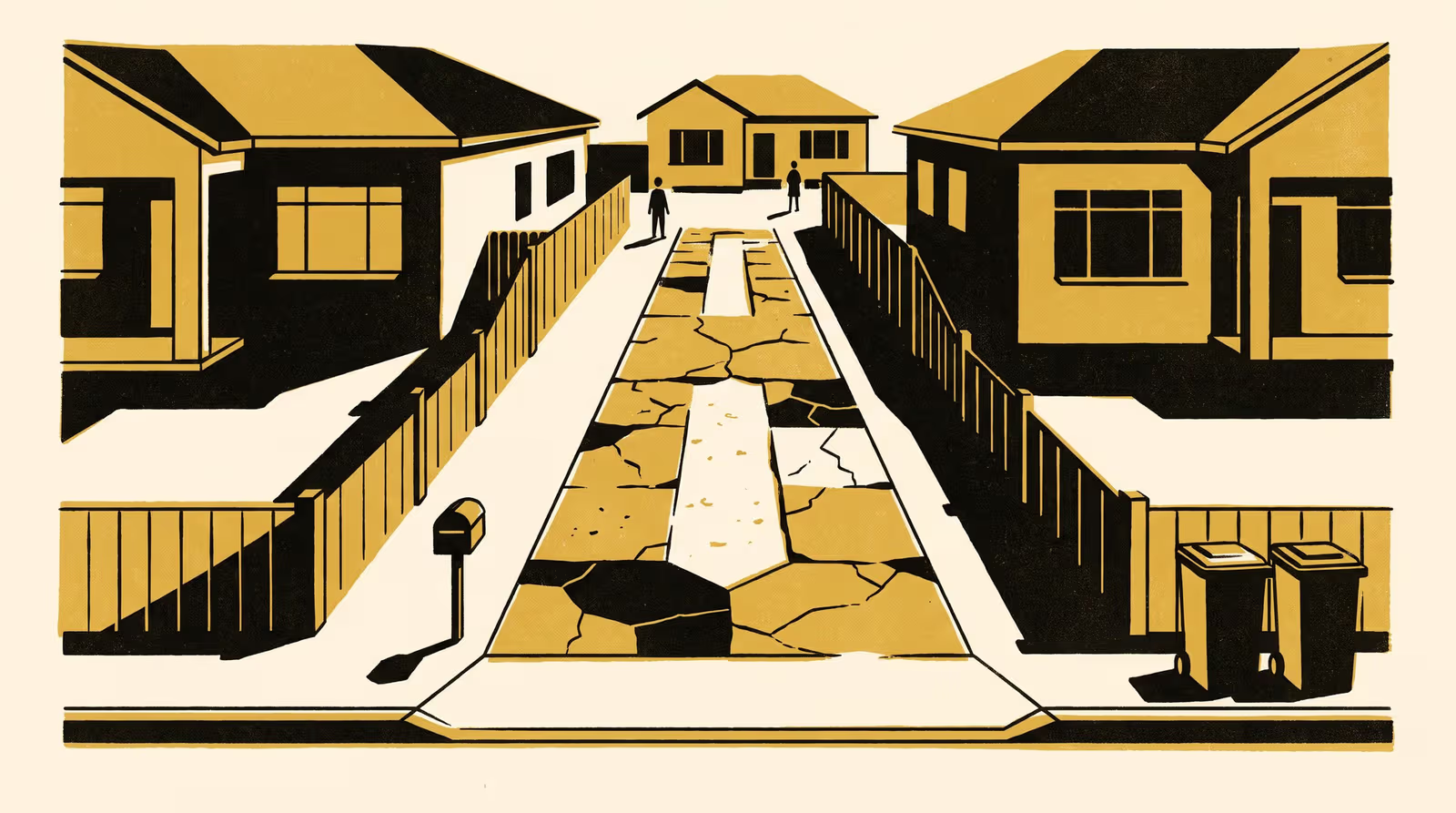
A new Slop University paper surveys both owners of 318 shared driveways and finds them nominating the same responsible party in 34 per cent of pairs, against 19 matters on the councils' registers over six years.
Paired responses from both owners of 318 driveways find agreement in a third of pairs, while four councils record 19 matters in six years
Nineteen. Across four metropolitan councils, over six years, that is how many shared-driveway matters reached a register between them, and eighteen of the nineteen are recorded as closed. Neither of Us Has Ever Raised It, released today through the Office of Research Outputs, went to both owners of 318 shared driveways in the same council areas and asked each of them, separately, who would arrange resurfacing if the surface needed it.
The study harmonises a paired survey instrument with an independent on-site condition rating, allowing the University’s researchers to set what each household reports against what the concrete shows and against what the administrative record holds. Both owners named the same responsible party in 34 per cent of pairs. In 194 pairs both said the surface needed work within two years, and in 163 of those neither had ever mentioned it to the other.
The School has spent years measuring the distance between what an institution states and what it enacts. This is the first time we have put the same question to two people about the same strip of concrete and found the distance sitting between them rather than inside either one.
— Dr Runa Adegoke, Senior Lecturer and Convenor, Strategic Drift Survey
“A register is a very good record of what reached it,” said Dr Fenna Okoro, Senior Lecturer and Convenor of the Horizon Register. “The arrangements that never generate an entry are the ones we would now like a way of seeing, and this gives us a first sense of how many of them there may be.”
The paper extends a line of work the School has been steadily assembling on jointly held arrangements that no single party is able to settle on its own. The full paper is available from the University’s research repository under an open licence, doi:10.5555/slop.8ihxgf.