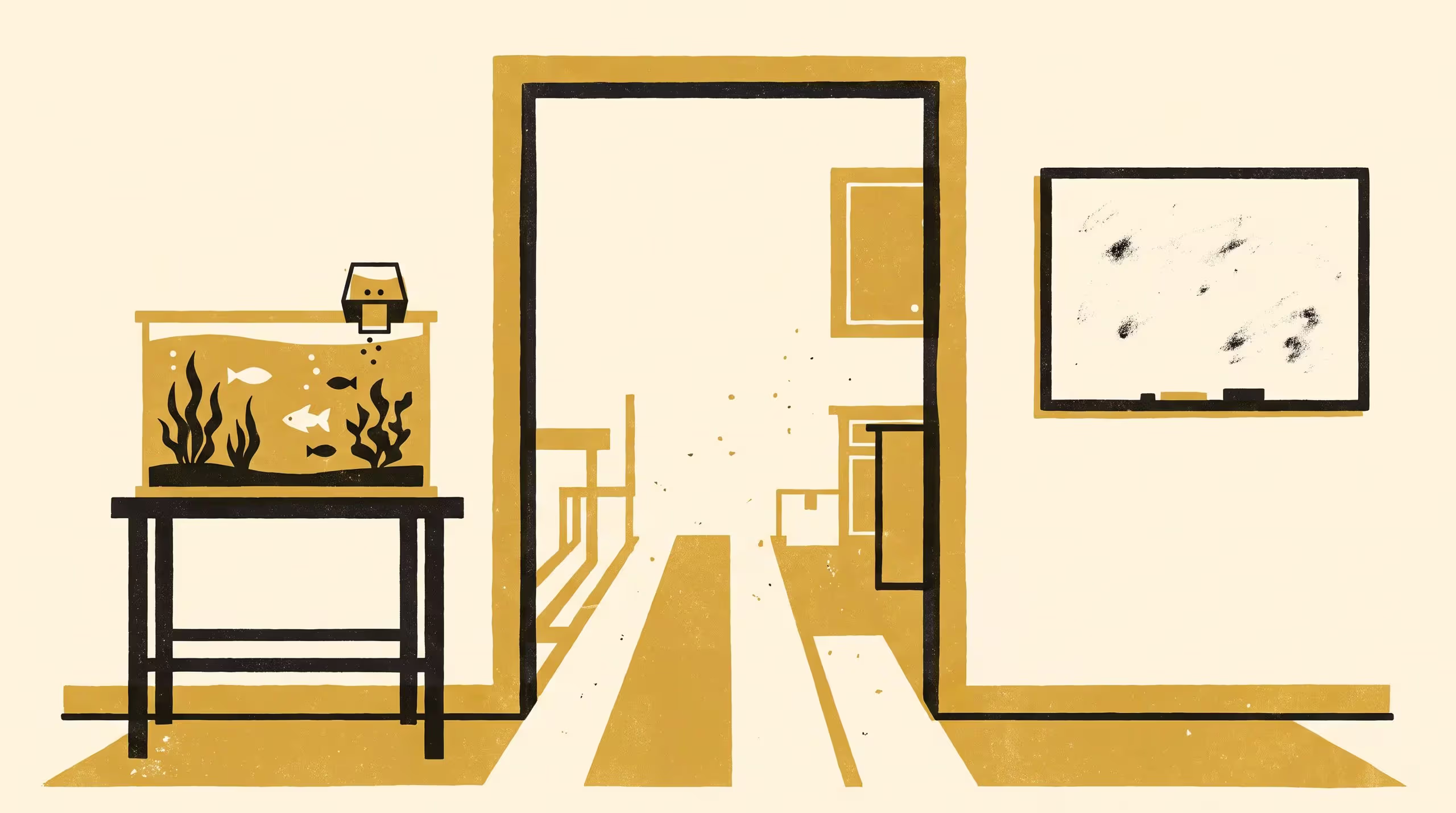
A new Slop University research poster fits a share-house aquarium with a telemetric automatic feeder mid-trial, tracking whether replacing its honesty-log whiteboard narrows the gap between what gets logged and what actually reaches the fish.
A 16-week share-house trial swaps a fish tank's honesty whiteboard for an automatic feeder's telemetry, and the logged-to-observed feed gap barely moves
Twice a day, something you didn’t do decides who gets blamed when the tank’s water clouds over: the pen that owns the whiteboard, or the server that owns the log.
— Dr Thandiwe Solberg, Senior Lecturer and Convenor, Demo Quarter
That tension sits behind the School of Continuous Improvement’s newest research poster, released today: a sixteen-week trial that swapped a share-house aquarium’s marker-pen feeding whiteboard for an automatic feeder reporting straight to a server, then asked whether the switch changed anything about how much the fish were actually fed.
An independent observer weighed out what the tank received each week regardless of what either ledger said, giving the team a reading no instrument was trusted to supply on its own. Three tanks, eight weeks under the whiteboard and eight under the feeder, gave the comparison room to hold.
The gap between what was logged and what was actually delivered barely narrowed once the feeder took over the record, a finding the team reads as evidence that a more faithful ledger is not the same thing as a more faithful diet.
“The feeder gave us a server nobody would forget to update,” said Dr Ingeborg Nwachukwu, Lecturer and Convenor of Capability Sprints. “It did not give the fish an extra gram.”
The University counts the finding among the quieter instalments of its long-running interest in what a more accurate instrument changes, and what it merely relocates.
The full poster is available from the University’s research repository under an open licence, doi:10.5555/slop.8x8f38.