A new Slop University paper transcribes 121 painted honour boards across 68 volunteer-run halls and links them to 6,013 independently verified office-bearer role-years, finding 19.0 per cent absent from the wall and omission tracking how much room the board has left.
One verified office-bearer role-year in five appears on no board, and omission rises as a board's ruled lines run out
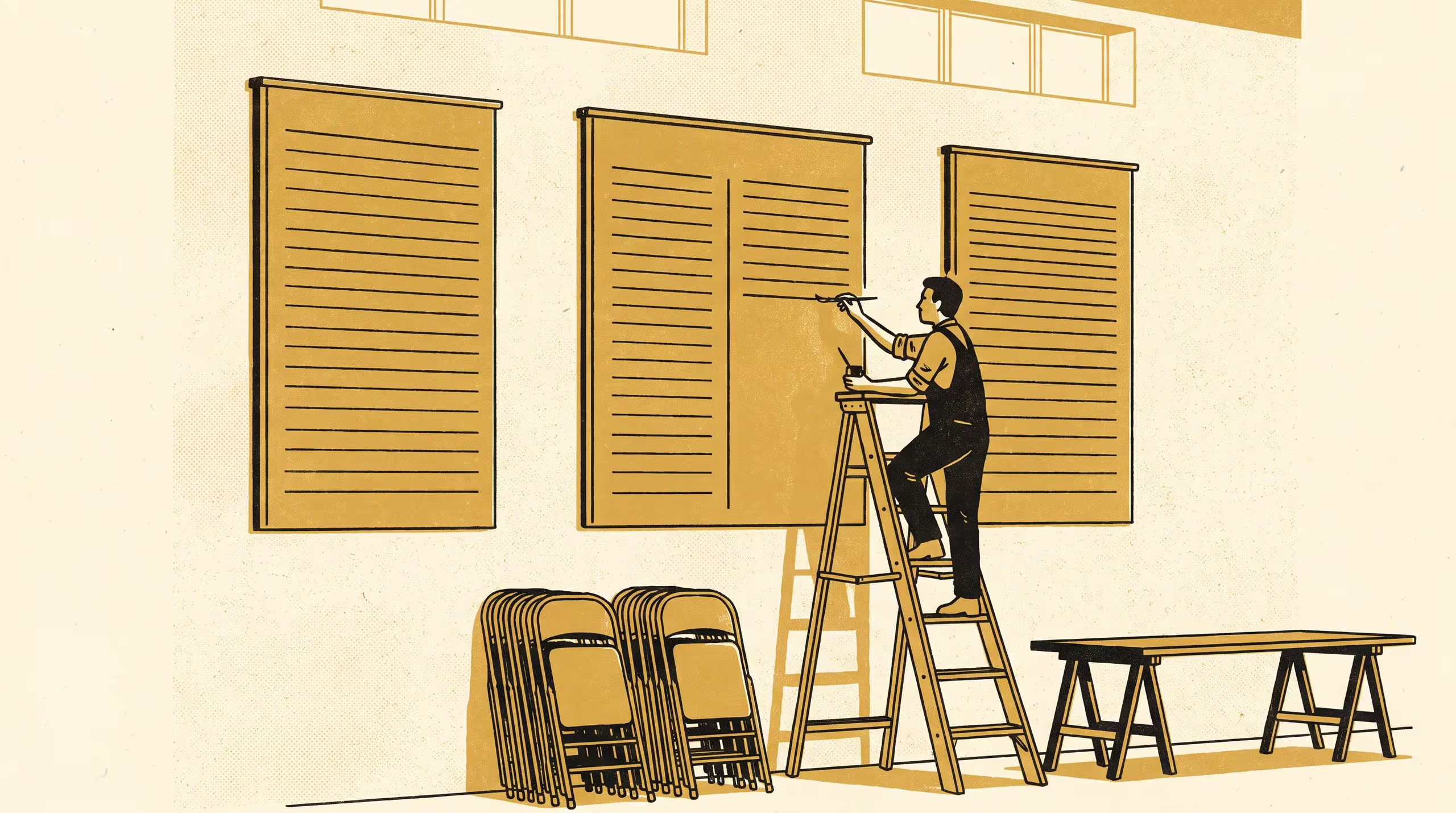
An honour board has a fixed number of ruled lines. Slop University has now measured what becomes of a hall’s own record once they run out.
The Wall Runs Out First, published today by the School of Emergent Priorities, photographed and transcribed 121 painted boards across 68 volunteer-run memorial, mechanics’ institute and progress-association halls — 4,918 entries lettered between 1946 and 2024 — and matched them against 6,013 office-bearer role-years verified independently from association annual returns, hall minute books and newsletters. Of those role-years, 19.0 per cent appear on no board at all. Where a board sits within three ruled lines of full, 32.4 per cent are missing; where more than ten lines remain, 13.1 per cent.
These halls have been keeping this record for eighty years without anyone asking them to, and we are conscious that we turned up with a camera and a clipboard. What we found says a good deal more about the boards than about the committees who filled them.
— Dr Iben Chikere, Lecturer, School of Emergent Priorities
The paper carries the finding into a regional halls association’s Stewardship Continuity Index, which scores member halls on board completeness and bands them for maintenance support. Recomputed against the linked record, the index moves halls a median twelve places of 68 and removes nine of the seventeen halls in its top band.
“There is a version of this result that is about paint, and a version that is about how a sector settles on what to count,” said Dr Runa Adegoke, Senior Lecturer and Convenor of the Strategic Drift Survey. “We would welcome the second conversation.”
Slop University regards the study as representative of a posture it intends to sustain: taking seriously the records that communities keep on their own walls, and the uses to which those records are later put.
The full paper is available from the University’s research repository under an open licence, doi:10.5555/slop.81wtfb.